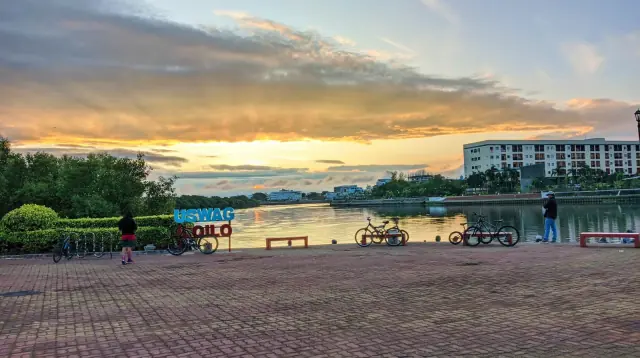
Retirement & Pension in the Philippines: Getting Paid, Taxes and How Much You Need
Overview
Almost every retiree who writes to me about the Philippines asks the same three things, and nearly always in the same order. Will my pension actually reach me there? Who gets to tax it? How much do I really need each month? Forum threads answer all three with a lot of confidence, and a good part of what they say is wrong or ten years out of date.
This guide covers the money side only: how US Social Security, the UK State Pension, the Australian Age Pension and Canada's CPP and OAS get paid to someone living here, which country taxes them, how the cash actually turns into pesos, and a realistic 2026 monthly budget. The rest of the checklist (visas, healthcare, picking a city, daily life) lives in my retiring in the Philippines guide. Read that one for the lifestyle side and this one for pension money, tax and budget.
The first step is moving the pension into pesos.
Move your pension into pesos with Wise Some links here earn a commission at no extra cost to you; see how recommendations work.
One thing to be clear about up front: this is not tax, legal or financial advice. I've read the official sources and linked every one, but pensions and treaties turn on personal details. Before you move money or file anything, confirm with the agency that pays you (SSA, HMRC, Services Australia or Service Canada), with the Philippine Retirement Authority if you're applying for an SRRV, and with a cross-border tax professional.
Last verified: 13 October 2026.
The Basics
For almost every foreign retiree, three things hold true:
- Your pension generally keeps paying while you live abroad, but every country has its own conditions. US citizens are generally fine. Non-citizens with a US work record need to check. Canada's OAS only goes abroad if you've got 20+ years of residence. Australia can cut you to a proportional rate after 26 weeks. The details are below, country by country.
- The Philippines generally doesn't tax a foreign national's foreign pension. As the Tax Code reads, Section 23(D) says "an alien individual, whether a resident or not of the Philippines, is taxable only on income derived from sources within the Philippines." A pension paid from abroad for work done abroad is, on our reading, foreign-source income.
- Your home country still might tax it. This one matters most for Americans, because the US taxes its citizens on worldwide income no matter where they live.
Most of the bad advice I see comes from mixing up points 2 and 3. "The Philippines doesn't tax my pension" is often true. "So my pension is tax-free" doesn't follow from it.
The "pensioner visa" myth: SRRV and 13(a)
People ask me about the "Philippine pensioner visa" all the time. We couldn't find any Philippine visa category by that name in the official sources we checked. Where the word "pensioner" does show up is inside the SRRV, the Special Resident Retiree's Visa. PRA describes it as "a special non-immigrant visa issued by the Bureau of Immigration of the Philippines, under the retirement program of the Philippine Retirement Authority (PRA)." The principal applicant has to be 40 or older.
On the PRA SRRV page, "pensioner" is a deposit tier inside SRRV Classic. If you can prove a pension, you park a smaller dollar deposit:
| SRRV Classic applicant | Visa deposit |
|---|---|
| 50 and above, pensioner | USD 15,000 |
| 50 and above, non-pensioner | USD 30,000 |
| 40–49, pensioner | USD 25,000 |
| 40–49, non-pensioner | USD 50,000 |
To get the pensioner tier, PRA wants "proof of lifetime pension of at least USD 800.00/month for single applicants and USD 1,000.00/month for applicants with dependents." Applicants from what PRA calls "PRA Identified Countries" also have a supplementary requirement that includes a "Social Insurance Record or Retirement Certificate."
The other numbers on the PRA page: a USD 1,500 processing fee (or the peso equivalent), USD 300 per joining dependent, and an extra USD 15,000 visa deposit for each dependent beyond two (former Filipinos are exempt from that one). The SRRV Classic annual fee is USD 360 for the principal plus two dependents, plus USD 100 for each extra dependent.
There's also a money-mechanics rule that catches people out. PRA says "the requisite dollar deposit must be sent as an inward remittance from any bank abroad to a PRA-accredited bank of choice." The accredited list is DBP (government), then PNB (all branches), BDO (Pacific Star and Cebu IT Park branches only), KEB Hana Bank Manila, UnionBank, Bank of Commerce and Shinhan Bank Manila. For the private banks you need a PRA Letter of Introduction, which you request through srrvwalkin@pra.gov.ph. The visa mechanics are covered properly on my SRRV page.
If you're married to a Filipino citizen, the 13(a) visa is the other main route. It's a non-quota immigrant visa based on marriage. On the consular route, pension documentation is one of the accepted ways to show you can support yourself. We didn't find a pension minimum for the 13(a), so I'm not going to give you one.
You don't need a pension to retire here
You don't. The SRRV has non-pensioner tiers, and they just mean a bigger deposit. The 13(a) doesn't run on a pension requirement at all. The pension mainly decides how much capital you have to lock up.
Whether Social Security counts as your "lifetime pension"
PRA asks for proof of a lifetime pension but doesn't say on its page which kinds of pension qualify. We couldn't find a PRA statement that names US Social Security specifically. My advice is to email PRA and get it in writing before you plan around the USD 15,000 tier. If they say no, the 50+ deposit doubles to USD 30,000, which is a big difference.
US Social Security in the Philippines
Can you collect it here?
If you're a US citizen, generally yes. SSA's Country List 1 page says: "If you are a U.S. citizen, you may receive your Social Security payments outside the U.S. as long as you are eligible for them." SSA's Federal Benefits Unit (FBU) at the US Embassy in Manila handles Social Security for people living in the Philippines, and SSA can pay by direct deposit into a peso account at a Philippine bank.
If you're not a US citizen, for example a Filipino citizen who worked in the US, or a third-country national with a US work record, it's less straightforward. That same SSA page lists citizens of certain countries who keep getting paid "no matter how long you stay outside the U.S.," and the Philippines isn't on that list. Run SSA's Payments Abroad Screening Tool. It tells you whether your payments "will continue indefinitely, stop after six consecutive calendar months, or if certain country specific restrictions apply." Exceptions do exist, but we haven't verified them, so let the tool give you the answer rather than a forum post.
Two ways to get it into pesos
Route 1: SSA international direct deposit to a Philippine bank. According to SSA's POMS GN 02402.401, "beneficiaries in the Philippines can only receive IDD payments in PHP accounts." A dollar account at a Philippine bank won't work for this. The payment goes through the Federal Reserve Bank of Kansas City and a processor bank in the Philippines, then to your local bank. SSA takes your bank details from a blank check, from form SSA-1199-OP77 (the International Direct Deposit Signup Form), or from documents showing the banking info. It needs your account number, account type, a street address (no P.O. box) and the bank's SWIFT-BIC. If anything is missing, the payment is rejected and goes back to SSA.
To set it up, the U.S. Embassy Manila's SSA FAQ says to email FBU.Manila@ssa.gov with the subject line "Change of Bank." Include:
- Your full name and SSN
- The bank's name and address
- Your account number and account type
- The SWIFT code
If what you send is incomplete, they may ask you for a Direct Deposit Sign-Up Form.
Route 2: keep it landing in your US account and move it yourself. Your benefit stays in dollars in the US account, and you send pesos over when you need them, usually with Wise. I go through the mechanics of that in the rails section below. I can't tell you which route gets the better exchange rate on a given day. We haven't verified that, and anyone who says they know for sure is guessing.
Keeping it flowing
Most suspended payments I've heard of came from paperwork, not policy. The Embassy FAQ covers the main things:
- Address. Email FBU.Manila@ssa.gov with the subject "Change of Address." If you're moving from the US to another country, "you must submit a completed and signed Form SSA-21."
- Annual report. Some beneficiaries abroad have to complete Form SSA-7161 or SSA-7162. It's sent every year or every other year depending on the country, first mailed in June with follow-ups in October. If a payment doesn't arrive starting in February, the Embassy says your payments "may have been suspended due to the non-receipt of the Report." Watch your mail.
- Missing payment. For direct deposit, ask your bank first, then contact the FBU if the money hasn't reached your account by the 10th of the month. For paper checks, wait until the 25th.
- mySocialSecurity. You can change your address, start or change direct deposit, and download a proof-of-benefits letter or a replacement SSA-1099/SSA-1042S. If you only have a foreign address, the Embassy suggests trying the ID.me sign-in.
- Medicare Part B. You end Part B with Form CMS-1763. If you want it back later, re-enrollment generally runs January 1 to March 31 each year (Form CMS-40B). Medicare generally won't pay for care here, so read the retiring guide and my health insurance guide before you decide either way.
More US-specific move prep is in moving from the USA.
UK State Pension
GOV.UK says you claim through the International Pension Centre, and you "must be within 4 months of your State Pension age to claim." The pension can go to a bank in the country where you live, or to a UK bank or building society. For an overseas account you give either an IBAN and BIC, or a bank code and account number. GOV.UK says "the amount will usually be converted into your local currency using the exchange rate at the time of the conversion. There's a conversion charge of 0.39% before payment." Payments come every 4 or 13 weeks. If you split the year between countries, you have to pick one country for payment.
The good news for Brits: the UK pays the State Pension worldwide but only raises it each year in certain places, and GOV.UK's list of countries that get the annual increase includes the Philippines. Canada and New Zealand don't get it. Over a twenty-year retirement, that makes a real difference.
On tax, GOV.UK's tax if you leave the UK page says to tell HMRC if you're leaving permanently. That's form P85 if you don't do Self Assessment, or SA109 if you do, so HMRC can "make sure you pay the right amount of tax on the pension you receive." Non-residents can still owe UK tax on UK income. The UK–Philippines tax treaty (in force since 22 January 1978) says, in Article 17, that pensions paid for past employment to a Philippine resident are taxable only in the Philippines. The treaty doesn't mention the State Pension specifically, so confirm with HMRC how it's treated. A UK–Philippines social security convention has been in force since 1 December 1989. More in moving from the UK.
Australian Age Pension
The DSS Social Security Guide 7.1.1 lists the Age Pension as having unlimited portability for any temporary or permanent absence. The catch is that "payment may be proportionalised after 26 weeks' overseas absence." DSS guidance says that after 26 weeks, people with less than 420 months (35 years) of Australian working-life residence are generally paid a proportional rate. With 420 months or more, the rate isn't proportionalised. Two more traps: if your departure is permanent, the pension supplement stops immediately, and former Australian residents who come back face a 24-month wait before the pension becomes portable again.
Payments arrive in AUD into an Australian bank account, so the usual setup is to keep that account and move the money over yourself. My moving from Australia page has the current overseas rates.
Australia has no social security agreement with the Philippines, so the Age Pension is paid under Australia's own portability rules (proportional rate after 26 weeks if you have under 35 years' working-life residence). Under Article 18 of the Australia–Philippines tax treaty, pensions, including government pensions, paid to a Philippine resident are taxable only in the Philippines.
Canada: CPP and OAS
Canada.ca's living outside Canada page gives the short version:
- CPP retirement pension: you need at least one valid contribution, and it's payable worldwide.
- OAS pension: you need 10 years' residence after age 18 to get it, but it's only payable abroad if you have 20+ years of residence in Canada. The OAS eligibility page adds that you must have been a Canadian citizen or legal resident the day before you left.
- GIS, the Allowance and the Allowance for the Survivor are "not payable abroad for periods of longer than 6 months." GIS requires that you live in Canada. If GIS is a big part of your income, think hard about this before you go.
Canada and the Philippines have had a social security agreement in force since 1 March 1997, with a supplementary agreement from 1 July 2001. It covers CPP and OAS, and Philippine SSS or GSIS periods can help you qualify, but each country only pays for its own creditable periods. If you're applying from the Philippines, the form is ISP5054-PHI.
For Philippine residents, Canada withholds 25% non-resident tax on OAS and CPP. The treaty doesn't lower the rate, but if your total Canadian pensions are CAN$5,000 a year or less you can be exempt by filing Form NR5 and getting CRA's written approval. File by October 31 for the following year, and refile every 5 years. More in moving from Canada.
Who taxes your pension?
The Philippine side. As the Tax Code reads, aliens are taxed only on Philippine-source income (Sec. 23(D)). On top of that, Sec. 32(B)(6)(c) excludes from gross income "social security benefits, retirement gratuities, pensions and other similar benefits received by ... aliens who come to reside permanently in the Philippines from foreign government agencies and other institutions, private or public." Sec. 32(B)(6)(d) separately excludes US Veterans Administration benefits paid to anyone living in the Philippines, and the SRRV benefits list includes exemption from "tax on pensions and annuities." All three point the same way. One caveat: the E-Library text is the 1997 Tax Code as enacted. We didn't find a later amendment to 32(B)(6)(c), but we didn't check every law since, so confirm with a Philippine CPA.
Philippine-source income is different. Rent from a condo here, interest from a Philippine bank or a local job are taxed under the normal rules. See my taxes guide.
The US side. US citizens abroad are still taxed on worldwide income, and the Foreign Earned Income Exclusion doesn't cover pensions or Social Security. Under the US–Philippines treaty, Article 19 says Social Security paid by one country to a resident of the other "shall be taxable only in the first-mentioned Contracting State," which means US Social Security paid to a Philippine resident is taxable only in the US. Article 18(1) lets the country where you did the work tax private pensions for past employment (it doesn't make that the only country), and Article 18(2) makes annuities taxable only where you live. How a 401(k) or IRA distribution fits isn't spelled out in the treaty, so use a cross-border preparer.
Whether your benefits are taxable in the US depends on the IRS base amounts: half your benefits plus all other income (including tax-exempt interest) compared against $25,000 if you're single, $32,000 if you're married filing jointly, or $0 if you're married filing separately and lived with your spouse. Above the higher thresholds ($34,000 / $44,000 MFJ), up to 85% can be taxable. Non-citizens get hit harder. Per IRS Publication 915, "85% of your benefits are taxed at a 30% rate" for nonresident aliens unless a treaty exempts them, and the Philippines isn't on Pub 915's exemption list. Green card holders count as resident aliens and aren't subject to that withholding.
| Income | Philippine view (alien retiree, our reading) | Home-country view |
|---|---|---|
| US Social Security | Foreign-source, so outside 23(D); also excluded by 32(B)(6)(c) for aliens who come to reside permanently | Taxable only in the US (treaty Art. 19); IRS base amounts apply |
| US private pension | Foreign-source; generally not taxed | Art. 18(1): the work country may tax (not the only country); Art. 18(2): annuities taxable only where you live; 401(k)/IRA: cross-border preparer |
| UK State Pension | Foreign-source; generally not taxed | Art. 17: past-employment pensions taxable only in the Philippines; State Pension not named, confirm with HMRC |
| Australian Age Pension | Foreign-source; generally not taxed | Taxable only in country of residence (DTA Art. 18). |
| CPP / OAS | Foreign-source; generally not taxed | 25% non-resident tax; treaty doesn't lower the rate; NR5 if CAN$5,000 a year or less |
| Philippine rent, interest, job | Philippine-source, so taxable | Depends on your home country |
Moving the money: pension rails that work
Here's where the money actually moves, and where I have strong opinions. Each pension arrives in its own currency and on its own rail, and you want the fewest steps between that payment and pesos in your hand.
| Pension or milestone | Rail | Notes |
|---|---|---|
| US Social Security | SSA direct deposit to a PHP account | Must be a peso account; set up via FBU Manila |
| US Social Security | US account, then Wise | Dollars stay in the US; you move them on your schedule |
| UK State Pension | Paid to a Philippine bank | GOV.UK applies a 0.39% conversion charge |
| UK State Pension | UK account, then transfer | Keeps the UK account active |
| Australian Age Pension | AUD to an Australian account, then transfer | Per our Australia guide |
| SRRV deposit | Documented bank wire | PRA wants an inward remittance from a bank abroad |
For anything you're moving yourself, I'd move your pension into pesos with Wise. It sends to Philippine bank accounts and e-wallets through local clearing. Wise shows its exchange rate and fee upfront before you send, so compare the total you receive. Payouts to PH accounts are capped at PHP 500,000 per transaction. Open your Wise account in your home country before you move, because verification is easier with a home address. My sending money to the Philippines guide walks through the setup.
The one exception is the SRRV deposit. For that, I'd use a documented bank wire even though Wise is cheaper for everything else. PRA wants an inward remittance from a bank abroad that the Philippine bank can document, and that's not the moment to try something clever.
A few rules I'd follow whichever rail you pick:
- Keep your home bank account open until the first deposit lands under your new setup. Don't close anything before then.
- Americans: watch the FBAR. If your foreign accounts add up to more than $10,000 at any point in the year, FinCEN reporting applies.
- Use GCash for daily spending. Move pesos into the e-wallet for groceries, the sari-sari store (the neighborhood corner shop) and bills, and keep the bulk of the money in the bank.
Whether Wise can receive SSA direct deposits directly is something we haven't verified, so don't build your plan around it.
How much do you need to retire in the Philippines? (2026 budget)
This is the question everyone actually Googles, and the answers out there run from "$1,000 is plenty" to "$3,000 minimum." Both can be right, because it depends on the city and the lifestyle. Below are the site's own cost-of-living tiers, in USD per month. They're our own estimates, not official data, last updated September 2026.
Monthly budgets by city
| City | Budget | Moderate | Comfortable |
|---|---|---|---|
| BGC (Taguig) | $1,200 | $2,100 | $3,650 |
| Makati | $900 | $1,600 | $2,750 |
| Cebu | $700 | $1,300 | $2,350 |
| Davao | $600 | $1,100 | $1,950 |
| Baguio | $590 | $1,090 | $1,880 |
| Dumaguete | $500 | $900 | $1,650 |
| Bohol | $500 | $850 | $1,400 |
| Iloilo | $500 | $800 | $1,400 |
If you're torn between the cheaper provincial cities, I compare three of them in Cebu vs Dumaguete vs Iloilo for retirement, and there's a wider shortlist on best places for retirees.
What a pension check actually covers
- $1,000/month covers the budget tier in every city above except BGC ($1,200, so you're $200 short). It reaches moderate in Iloilo ($200 left over), Bohol ($150 left) and Dumaguete ($100 left). It won't get you moderate in Cebu ($1,300) or Makati ($1,600).
- $1,500/month covers moderate in Iloilo, Bohol, Dumaguete, Baguio, Davao, and Cebu with $200 left. It covers comfortable in Iloilo and Bohol with $100 left. Makati moderate is $100 out of reach. The BGC budget tier fits with $300 left.
- $2,000/month covers comfortable in Iloilo, Bohol, Dumaguete, Baguio and Davao, and moderate in Makati ($400 left) and Cebu ($700 left). BGC moderate is $100 short.
- $3,000/month covers comfortable everywhere above except BGC, which is $650 short. Makati comfortable leaves you $250.
Don't confuse the SRRV pension proof with a budget. USD 800 a month gets you a lower deposit tier, but it doesn't reach the moderate tier in any city except Iloilo, and there it's exactly $800 with nothing left over.
Remember that your pension comes in dollars, pounds, Australian dollars or Canadian dollars, and you spend in pesos. The exchange rate moves in both directions. Check the BSP's reference rates instead of planning around whatever the rate was the day you read a forum post, and leave yourself a cushion.
The line that's always wrong: health insurance
Our tiers only include a basic health-insurance line. My own health insurance guide says to replace that with a real quote, especially at older ages. For a retiree, this is the line in the budget most likely to be off, and it's off in the expensive direction. The options by age are in that guide, including its FAQ on getting covered over 65.
For a scouting trip, look at SafetyWing for the scouting trip. It's travel medical cover for new, unexpected problems, not long-term retiree cover, and age limits apply (they're in that guide).
The setup year is a different number
Your first year costs more than your monthly number. If you go the SRRV route at 50+ with a pension, you park USD 15,000 as the deposit. That's capital tied up, not money spent, but you won't have it to use. Add the USD 1,500 processing fee and the USD 360 annual fee. Then there's move-in cash of roughly three months' rent, because two months' deposit plus one month advance is common (there's more on that in the retiring guide). Budget for a trial stay before any lease too. I cover that in the money path below.
Savings-only retirees
If you're living on savings with no pension, the math is blunt. $100,000 at $2,000 a month lasts 50 months, just over four years, before any investment return or inflation. At $1,500 a month it's about 66 months, or 5.5 years. Peso swings hit you harder too, because nothing tops the pot back up. If this is you, run the numbers with a financial planner, not with a YouTube video.
Your retirement money path, in order
If I were planning a scouting trip, this is the order I'd do it in:
- Set up your pension rail. Open Wise at home and move your pension into pesos with Wise, or arrange SSA direct deposit to a peso account once you have one.
- Get covered for the trip. SafetyWing for the scouting trip handles new, unexpected medical problems while you look around.
- Live there before you commit. Book a two-to-four-week trial stay before you sign a lease. Brownouts, traffic and the noise from the karaoke next door all look different after week two.
- Price your actual life. Plug your city and lifestyle into the cost-of-living calculator and compare the result to your real pension number. If you're unsure about the visa side, the visa checker is the place to start.
Common Mistakes
- Treating the SRRV pension minimum as a budget. USD 800 qualifies you for a lower deposit. It doesn't fund a moderate life anywhere but Iloilo.
- Assuming PRA accepts your pension type. PRA doesn't say which pensions count. Get confirmation in writing.
- Opening a dollar account for SSA direct deposit. SSA's IDD to the Philippines only goes into peso accounts.
- Missing the SSA annual report. A payment that stops in February can mean the report never reached SSA.
- Non-citizens assuming Social Security follows them. Run SSA's screening tool, because payments can stop after six consecutive calendar months.
- Reading "the Philippines doesn't tax my pension" as "my pension is tax-free." Americans especially still owe the IRS a return, and possibly tax.
- Closing the home bank account too early. Wait until the new setup's first deposit has landed.
FAQ
Can I retire in the Philippines on Social Security alone?
Many people do, and on our numbers it depends on the check. $1,500 a month covers the moderate tier in every city in our table outside Metro Manila. Sort out real health insurance first, because that's the line that breaks small budgets.
Can I retire on $1,000 a month?
In Iloilo, Bohol or Dumaguete, yes, at our moderate tier with $100–$200 to spare. In Cebu or Makati you'd be on a budget-tier life. It's tight, and there's no room for a medical surprise.
Is Social Security taxed in the Philippines?
As the Tax Code reads, a foreign national isn't taxed on foreign-source income, and Sec. 32(B)(6)(c) excludes foreign social security benefits for aliens who come to reside permanently. Under the US–Philippines treaty, US Social Security paid to a Philippine resident is taxable only in the US. Confirm your own facts with a Philippine CPA.
Can SSA deposit straight into a Philippine bank?
Yes, into a peso account only. Email the FBU in Manila with your bank details and SWIFT code.
Does the UK State Pension increase if I live in the Philippines?
Yes. The Philippines is on GOV.UK's list of countries where the State Pension gets the annual increase.
Is there a pensioner visa?
We couldn't find one. "Pensioner" is a lower-deposit tier inside the SRRV Classic. If you're married to a Filipino, look at the 13(a).
How long will $100,000 last?
At $2,000 a month, about 50 months. At $1,500, about 66 months. That's before any investment returns or inflation.
Frank's Take
I've watched friends' parents retire here and the ones who struggled almost never got the city wrong. They got the money plumbing wrong. They closed the US account too early, missed an SSA form, or assumed a forum's word that the SRRV would take their pension at the pensioner tier. My recommendation is boring but it works. In year one, keep your pension landing where it lands now, open Wise before you leave, move pesos over yourself, and only switch to SSA direct deposit (or a Philippine bank for your UK pension) once you've settled in and the account is solid. For the SRRV deposit, use a plain bank wire with paperwork.
On the budget, I'd plan on the moderate tier plus a real insurance quote, not the budget tier. Our numbers are honest, but they're for a life with no surprises, and retirement brings plenty of those. If your check covers moderate in Dumaguete or Iloilo with room to spare, you'll live well here. If it only barely covers the budget tier in Cebu, wait a year and build a cushion first.
Before You Move Money
Last verified 13 October 2026. This is the first version of this guide. Pension rules, SSA procedures, PRA deposit amounts and fees, GOV.UK charges, treaty interpretations and exchange rates all change, some of them without much notice. Check the official pages linked above before you file, apply or move anything. Again, this isn't tax, legal or financial advice: confirm your situation with SSA, PRA, HMRC, Services Australia or Service Canada, and with a cross-border tax professional. If you spot something that's changed, email me and I'll update the guide.
More Expat Guides
- ›
ACR I-Card for Foreigners in the Philippines: Who Needs One
A plain-English guide to the Philippine ACR I-Card: who needs one, the day-59 rule, applying and renewing, BI's posted fees, the Annual Report and leaving.
- ›
How to Open a Bank Account in the Philippines as a Foreigner
What ID each visa status needs, which banks accept foreigners, and a step-by-step checklist for opening a Philippine bank account. Updated 2026.
- ›
Panglao, Dauis or Tagbilaran for a long stay
A practical comparison of where to live in Bohol for expats and digital nomads.
- ›
Can Foreigners Buy Property in the Philippines?
What foreigners can legally own in the Philippines: condo caps, land leases, marriage and former-Filipino rules, purchase taxes and fees, and moving the money.
- ›
Cebu IT Park vs Cebu Business Park
Cebu IT Park vs Business Park for expats — walkability, condos, PRA access, Sugbo Mercado, and which district fits nomads vs retirees.
- ›
Getting a Philippine Driver's License as a Foreigner
How to convert your foreign driver's license or get a new one in the Philippines — the 120-day rule, LTO requirements, fees, and what the process actually feels like.
- ›
Dumaguete, Valencia or Dauin: Which Fits Retirement?
Compare Dumaguete city, Valencia in the mountains, and Dauin on the coast — SRRV counts, hospitals, vibe, and who each spot fits.
- ›
Education and Schools in the Philippines
How to compare school places, curricula, full fees, calendars, and homeschooling options before an expat family moves.
- ›
ECC Exit Clearance: When Foreigners Need It to Leave PH
The Emigration Clearance Certificate explained: who needs it, ECC-A vs ECC-B, timing, and how to avoid getting stopped at the airport.
- ›
First 90 Days in the Philippines: A Moving Budget
Build a realistic Philippines moving budget for your first 90 days, including housing, deposits, monthly costs, visas, and setup.
- ›
GCash for Foreigners: GTourist vs Full Verification
What actually works for foreigners on GCash: the 30-day GTourist route, the resident ID list, real wallet limits, and where each path breaks down.
- ›
Healthcare and Health Insurance in the Philippines for Expats
Expat medical insurance in the Philippines, compared: PhilHealth, local HMOs and international plans — what to buy first and what each layer covers.
- ›
Finding Housing in the Philippines — Rent Bands & Trial Stays
Compare rent bands by city, then book a 2–4 week Agoda trial stay before you pay 3 months upfront — plus SafetyWing, Wise and budget next steps.
- ›
Internet in the Philippines
ISP comparison, speeds, reliability, backup options, and how to get connected as an expat.
- ›
Keeping a US Phone Number Abroad for Bank Verification
How expats in the Philippines keep a US number for bank codes: carrier Wi-Fi calling, Google Voice, NumberBarn, costs, and 2FA backups.
- ›
Making Friends in the Philippines as a Foreigner
How friendships actually form in Metro Manila, where they happen, and why the first easy connections rarely turn into real barkada.
- ›
Moving to the Philippines with Pets
How to bring a dog or cat to the Philippines: BAI SPSIC permits, vaccination rules, airline cargo policies, fees, and arrival quarantine.
- ›
Bringing Prescription Medicine Into the Philippines
What you can legally carry, the 30-day controlled-drug limit, and how to keep a US or UK prescription running once you're based here.
- ›
Retiring in the Philippines (2026): A Readiness Checklist
A plain checklist for retiring in the Philippines: visa, healthcare, pension income, housing and budget, plus how to test a town before you commit.
- ›
Safety in the Philippines: What Expats Actually Experience
What the crime data actually says, where risk changes by region, the scams foreigners run into most, and what to do if something happens.
- ›
SafetyWing in the Philippines: When It Fits (vs World Nomads)
Buy or skip SafetyWing for a Philippines stay: Essential vs Complete, honest World Nomads comparison, island medevac reality — plus trial stay, Wise rails, and budget next steps.
- ›
Best Way to Send Money to the Philippines (2026 Guide)
Compare Wise, bank wires, and remit apps. Why Wise is my default for Philippines transfers in 2026 — plus FBAR, domestic fees, and the paper trail.
- ›
Shipping Belongings to the Philippines: Container or Box?
A practical, opinionated comparison of shipping a container, sending balikbayan boxes, or buying new once you land in the Philippines.
- ›
SIM Cards, Mobile & Internet in the Philippines
How to get a Philippine SIM as a foreigner, register it under RA 11934, pick Globe, Smart, or DITO, and link it to GCash or Maya.
- ›
Starting a Business in the Philippines as a Foreigner
Foreign ownership rules, SEC registration, the 60-40 rule, and practical steps to launch a business.
- ›
Taxes for Expats in the Philippines
Whether foreign nationals owe Philippine tax, BIR TIN registration, the 180-day rule, current tax brackets, and how US/UK/AU/CA treaties apply.
- ›
Getting Around the Philippines
Driving, Grab, jeepneys, ferries, and domestic flights — how to get around as an expat.
- ›
Utilities in the Philippines: Electricity, Water and Internet Setup
A renter's guide to Philippine utilities: who supplies power and water, recent electricity rates, bill deposits, submetered units, brownouts and internet setup.
- ›
Philippines Visa Run vs Residency (2026): Tourist or SRRV?
Tourist extensions, HK/Singapore/KK visa runs, and when SRRV or 13(a) beats the treadmill — plus insurance, overnight stays, and money rails.