Iloilo vs Cebu vs Dumaguete: Best City to Retire?
19 min read
Cebu, Dumaguete, and Iloilo offer different retirement trade-offs. This comparison brings together the two-city decision and the broader three-city shortlist: budget estimates, access to care, transport, and a trial stay before a lease. Use the sections below to decide which trade-offs matter for your ordinary week.
Cebu versus Dumaguete: choosing for your needs
Decision guidance adapted from the two-city article last verified September 13, 2026; it remains editorial judgment, not a measured ranking.
Choose Dumaguete when low-friction daily life matters most
Choose Dumaguete if your priority is a simpler daily routine and a smaller city. Compare like-for-like apartments on the Dumaguete budget page, rather than comparing a basic provincial rental with an amenity-rich Cebu condo. Test the actual neighborhood's noise, utilities, and transport before signing.
Choose Cebu when specialist care and international access are non-negotiable
Choose Cebu if you need a specific specialist, frequent international connections, or a broader urban social scene. Confirm the doctor and insurer network directly. Dumaguete has hospital care too; the decision is whether your own medical needs and backup travel plan work there. The hospital and care checklist helps you check that before committing.
A couple with different preferences should test both cities and agree on a daily routine each can live with. Iloilo offers a third option worth testing against the same criteria; the rest of this article compares all three.
The short answer
Here's the ranking, so you're not scrolling for it: Iloilo, Dumaguete, then Cebu — but that order flips fast depending on your health.
If you're under 70, healthy, and don't need a specialist on speed dial, Iloilo is the best value of the three. Lower cost of living than Cebu, a real regional hospital, and a city big enough that it doesn't feel like a barangay. Almost nobody picks it anyway, because there's no expat Facebook group cheering it on.
Dumaguete is the best community you'll find in this comparison, and it ties Iloilo for the cheapest budget tier. But its hospitals handle day-to-day care, not complications. That's not a knock — it's a plan you need to make before you sign a lease.
Cebu is correct if you have an ongoing medical condition, if you fly internationally more than twice a year, or if you want the Philippine Retirement Authority office in your own city instead of a flight away. Cebu isn't the upgrade. It's the most expensive of the three, full stop. You're paying for access, not for a better life.
Below, I check each city against a Social Security check. Then I lay out how to test-live all three before you sign anything.
If you want the full ranking beyond these three, that's on the best places for retirees page.
What each city actually is
Let's ground this in what these places actually are, because size matters more than people admit when they're choosing a retirement base.
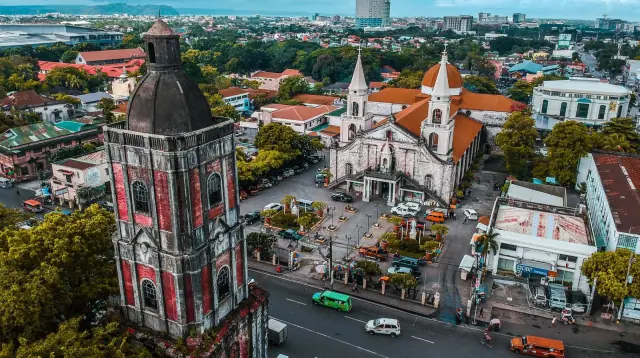
City of Cebu is a 1st income class city with 965,332 people as of the 2024 census. It's the Visayas' main event — an international airport, the deepest hospital bench in the region, malls on malls, and a foreigner population that's been here for decades. It doesn't feel like a small town because it isn't one.
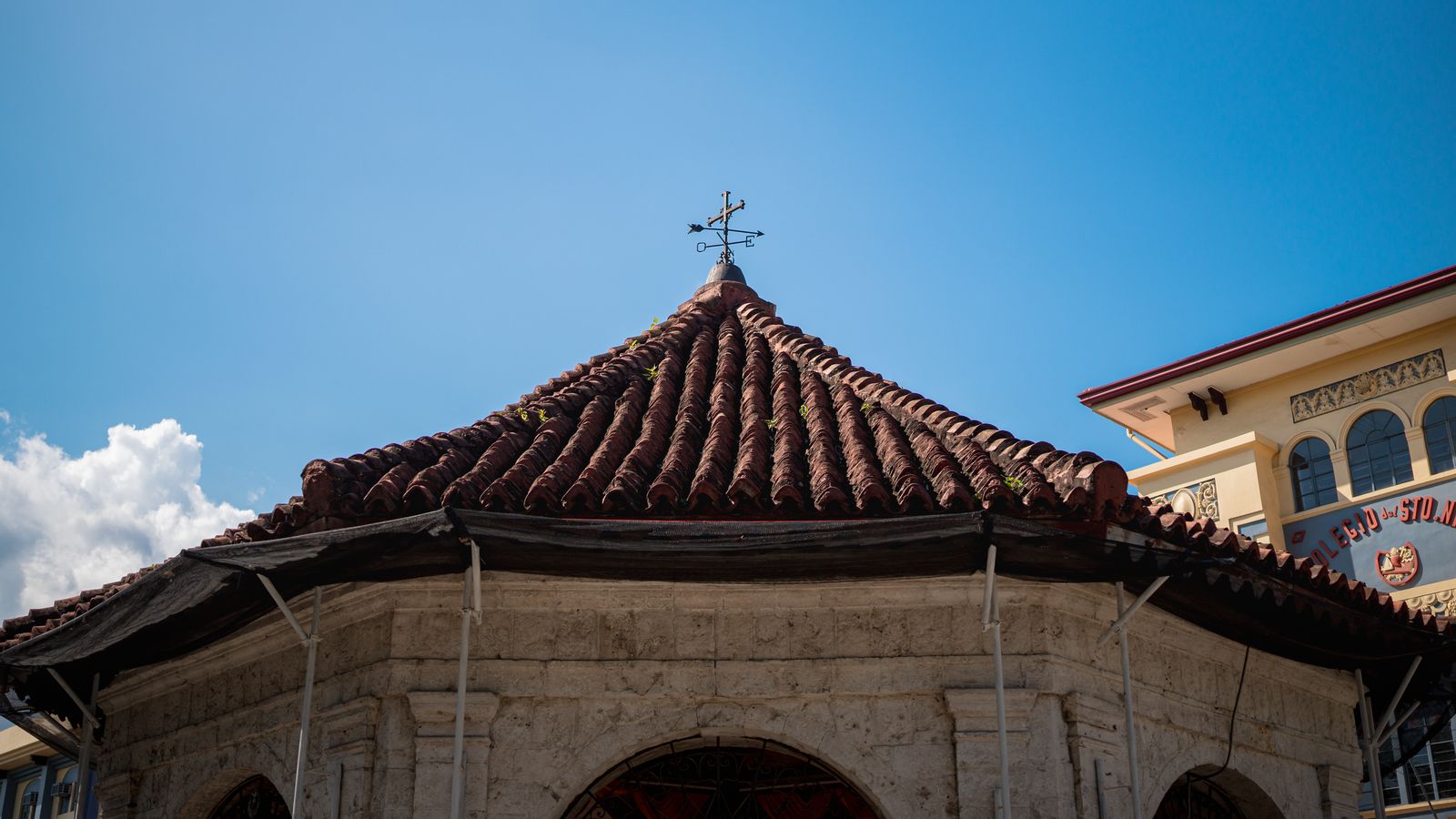
City of Iloilo is also 1st income class, but with less than half of Cebu's population — 473,728 people. That's the sweet spot a lot of people miss: big enough to have real infrastructure, small enough that traffic won't eat your afternoon. Iloilo City has old money — heritage houses, a walking esplanade, a food scene built around La Paz batchoy — and it's building into a business hub while nobody outside the Philippines is watching.

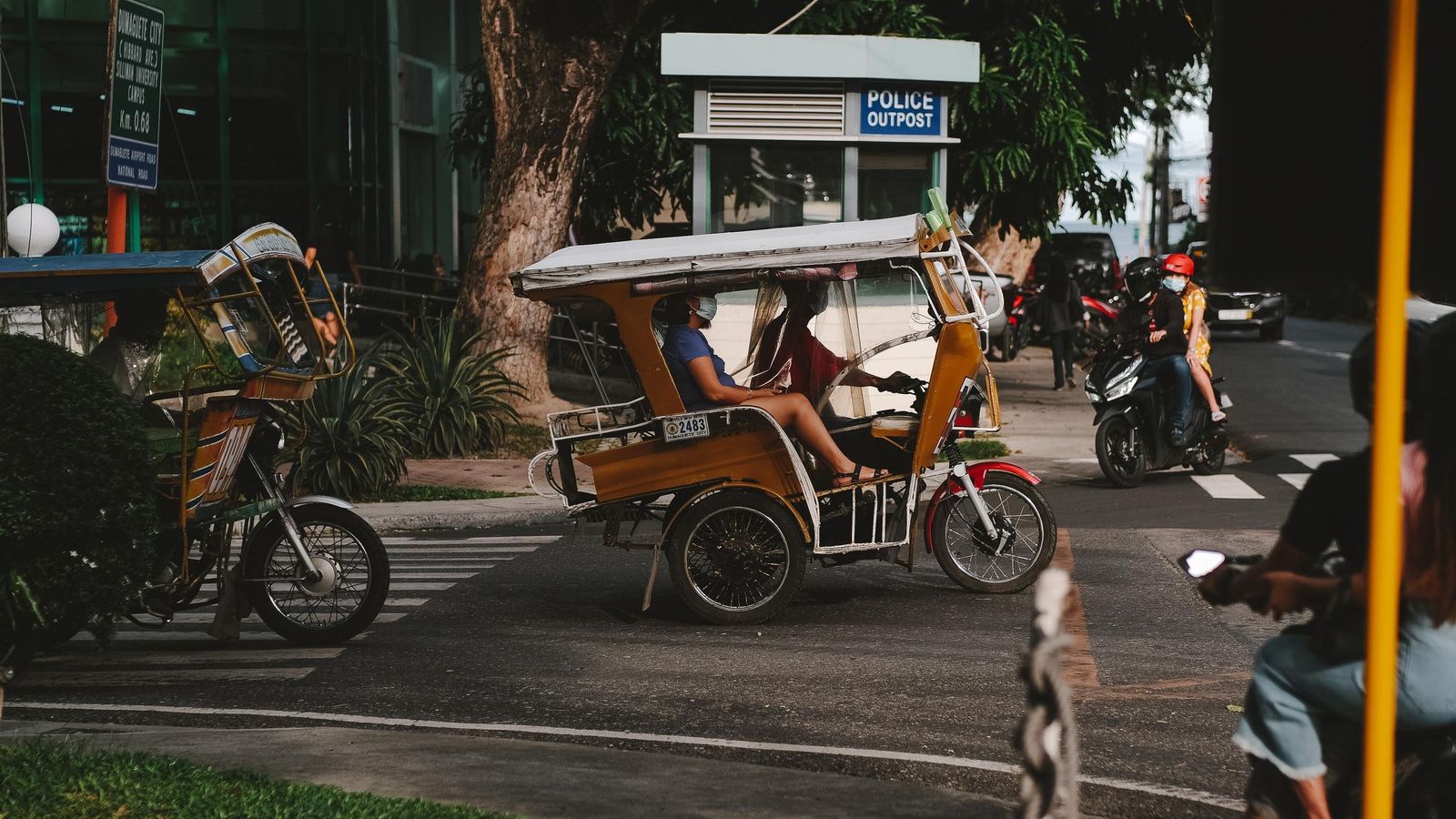
City of Dumaguete is the smallest of the three by a wide margin: 142,171 people, 2nd income class. It's a university town — Silliman University anchors the whole place — and that gives it a specific kind of energy. It's young and walkable, and a little sleepy outside school terms. It's also the one place here where the whole city is small enough that a car becomes genuinely optional.
None of these numbers tell you which one to live in. But they tell you what you're buying. Cebu is a metro area pretending to be a city. Iloilo is a proper mid-sized city. Dumaguete is a small city that punches above its weight because of the university and the coastline.
Cost: Iloilo and Dumaguete are cheaper than you think
Iloilo and Dumaguete are cheaper than Cebu, but the gap is bigger than most guides let on.
A budget lifestyle runs about $700 a month in Cebu, versus $500 in both Iloilo and Dumaguete. Push into "comfortable" territory — a nice condo, help around the house, eating out often — and Cebu runs $2,350 a month against $1,400 in Iloilo and $1,650 in Dumaguete. Rent tells the same story: a one-bedroom in the city centre goes for $350-800 in Cebu, $200-500 in Dumaguete, and as low as $160-420 in Iloilo.
Iloilo is the cheapest of the three at every tier except budget, where it ties Dumaguete. That's not what people expect going in — Iloilo has the second-largest population of the three cities and it's still the cheapest to live in comfortably. I'd chalk that up to the lack of a foreigner market pushing up rents. Nobody's competing for that condo in Iloilo the way they are in Cebu's IT Park.
These are averages, not promises — go check the actual breakdowns: Cebu cost of living, Dumaguete cost of living, Iloilo cost of living.
Can a Social Security check cover it?
If Social Security is most of your income, here are the same tiers laid against a monthly check. These are our own city estimates, not official data.
| City | Budget | Moderate | Comfortable |
|---|---|---|---|
| Iloilo | $500 | $800 | $1,400 |
| Dumaguete | $500 | $900 | $1,650 |
| Cebu | $700 | $1,300 | $2,350 |
- $1,500 a month: covers budget and moderate in all three. Comfortable only works in Iloilo, with $100 left. You're $150 short in Dumaguete and $850 short in Cebu.
- $2,000 a month: comfortable works in Iloilo ($600 left) and Dumaguete ($350 left). Cebu comfortable is still $350 short, though Cebu moderate leaves you $700.
- $2,500 a month: comfortable in all three. In Cebu, that leaves $150.
One catch. These tiers carry only a basic health insurance line of a few dozen dollars a month. That won't buy real cover in your 60s, so price insurance separately (I break it down by age in the healthcare section below).
The good news on paperwork: the SRRV pensioner route asks for proof of at least $800 a month in lifetime pension, or $1,000 with dependents, and a Social Security check can count as that pension (as of October 2026, confirm with PRA).
Before you pick a city, run your monthly Social Security check through the cost-of-living calculator.
Healthcare: the one thing that should override everything else
This is the section that should decide your city, full stop — more than climate, more than cost, more than whether you like the food.
Cebu has the deepest bench. Chong Hua Hospital and Cebu Doctors' University Hospital cover specialist care that the other two cities simply don't have locally. If you've got a cardiac history, you're managing something chronic, or you just want a big hospital ten minutes away, Cebu wins this outright.
Iloilo is better equipped than its reputation suggests. Western Visayas Medical Center is the Department of Health's own tertiary referral hospital for the entire region — that's its official function, not a marketing claim. Add The Medical City Iloilo in Molo, St. Paul's Hospital Iloilo, and Iloilo Doctors' Hospital, and you've got real depth for a city its size. It's not Cebu, but it's not a gap either.
Dumaguete is where you need to be honest with yourself. Holy Child Hospital and Silliman University Medical Center handle day-to-day care and emergencies fine. But for anything complex, the plan is a 45-minute flight or a 3-4 hour roro ferry to Cebu. If you're 68 and your doctor mentioned your heart twice last year, that ferry ride isn't a hypothetical — it's a Tuesday you should plan for now, not discover later.
I'm not saying skip Dumaguete. I'm saying don't retire there and pretend Cebu doesn't exist. It's your backup hospital, and you should know how you'd get there before you ever need to.
Insurance by age, per city
Your age decides what cover you can still buy, and that changes how much each city's hospitals matter.
| Age | What you can still buy | What it means for your city |
|---|---|---|
| Under 60 | Local HMOs are still open: MediCard Standard takes principal members 18–60, and Maxicare's estimator closes above 60. AIA Max Protect Medical only helps if you bought it by 50 (it renews to 80). International plans like Allianz Care and Cigna Global are open. | The HMO network still matters, and all three cities are workable. Dumaguete still needs the Cebu backup plan. |
| 60–69 | Maxicare is closed past 60. MediCard VIP lists a row for principal members aged 61 to 65. Allianz Care takes new applicants through 75 with full medical underwriting. Cigna Global has no upper age limit. PhilHealth for PRA retirees is ₱15,000 a year (about $240), a subsidy, not full cover. SafetyWing Essential can bridge a scouting trip through 69; Complete only enrolls through 64. | The HMO network matters less and hospital depth matters more. Cebu's bench starts to count. Iloilo has Western Visayas Medical Center and The Medical City Iloilo. Dumaguete needs the Cebu backup plan. |
| 70+ | Allianz Care through 75, Cigna Global with no upper age limit, Pacific Cross Select through 100 (foreign eligibility unconfirmed). AIA renews to 80 only if you bought it by 50. The PhilHealth subsidy. No SafetyWing. | Cebu's bench counts most. Iloilo is a solid second with WVMC and The Medical City Iloilo. In Dumaguete, anything complex means a flight or a roro to Cebu. |
The carrier-by-carrier detail is in our guide to health insurance for retirees over 60 in the Philippines. These age rules are as of October 2026. Terms change, so confirm them with the insurer before you buy.
For the general framework on this, read our healthcare guide.
Flights, ferries and getting out
Getting off the island — or off Panay, or off Negros — matters more than people admit before they move here.
Cebu's gateway is Mactan, and it's the real deal: the widest international network of the three cities by far. If you're flying back to the US or Australia more than a couple times a year, or hosting family who don't want three connections, Cebu saves you real hours and real money.
Iloilo has its own international airport — CAAP lists it as such — but the international network out of it is far thinner than Cebu's, and it changes with the season. Don't book your retirement plan around a specific route; check with the airline before you assume anything's flying where you need it to.
Dumaguete's airport, by contrast, is a domestic aerodrome. No international flights, period. Anything international means a flight or ferry to Cebu first. That's fine if you don't travel much. It's a real tax on your time if you do.
For inter-island trips, the roro ferry is the workhorse of the Visayas — slow and cheap, honestly kind of pleasant if you're not in a hurry. Just don't plan your only healthcare backup around good weather.
Test-live before you sign
Reading about three cities only gets you so far. I'd give it two to four weeks on the ground, about 7 to 10 nights in each city, before you commit to any of them.
Sort your travel cover first. If your age allows it, get SafetyWing Nomad Insurance for the scouting trip. As of October 2026, Essential takes you through age 69 and Complete only enrolls through 64; confirm the current limits with SafetyWing before you buy. It covers new, unexpected problems, not pre-existing conditions, so treat it as a bridge for the trip and nothing more.
Then sort where you'll sleep. If you have the time, book a two-week trial stay in each city before you sign a lease. If you don't, 7 to 10 nights still tells you plenty. Pick stays with free cancellation so you can leave a city early if it's wrong.
What I'd test in each one:
- Iloilo: go in July or August if you can. Those are the wettest months (361.2 mm and 350.7 mm). Walk your future street in the rain. And remember every PRA errand means Cebu, so price that trip while you're there.
- Dumaguete: do a dry run of the Cebu backup trip. Take the 45-minute flight or the 3–4 hour roro once, while nothing is wrong with you.
- Cebu: price one-bedrooms in the $350–800 band and do the commute at rush hour.
- All three: find the hospital you'd actually use and time the drive at night.
A trial stay is a short-stay booking. Once you've picked your city, you sign the lease directly with the landlord.
Get your pension into pesos
If you're a US citizen, Social Security keeps paying you while you live in the Philippines, as long as you're eligible for the benefits. That's SSA's rule. The real question is how the money ends up in pesos. There are two routes. Pick one.
Route 1: SSA deposits straight into a Philippine bank. SSA's international direct deposit to the Philippines goes only into peso accounts at local banks, so the dollars arrive already converted. You set it up through the Federal Benefits Unit at the US Embassy in Manila, which handles Social Security for people living in the Philippines. Email FBU.Manila@ssa.gov with the subject "Change of Bank" and give your full name, Social Security number, bank name and address, account number, SWIFT code and account type. They may ask you for a direct deposit sign-up form.
Route 2: keep it landing in your US account. Your check arrives where it does now, and you move money over yourself. If that's your plan, here's how to move your Social Security into pesos with Wise.
Either way, keep your US account open until the first deposit lands. This is also the check you'll use for the SRRV's $800-a-month pension proof, covered in the SRRV section below.
If you draw a UK State Pension, the Philippines is on GOV.UK's list of countries where the yearly increase is paid.
Australians, see our Australia moving guide for the Age Pension side.
For the full country-by-country picture (UK, Canada and the tax side), see our retirement and pension guide.
Weather: Iloilo is the wettest of the three
Iloilo is the wettest of the three, and it's not close.
Iloilo gets 2,085.1 mm of rain a year. Cebu, measured at Mactan, gets 1,685.0 mm. Dumaguete gets the least at 1,322.6 mm. Mean temperatures are close across the board — 28.1°C in Cebu, 27.9°C in Dumaguete, 27.7°C in Iloilo — so nobody's dealing with real temperature swings. Rain is the differentiator.
Iloilo's wet season is genuinely wet: July averages 361.2 mm and August 350.7 mm. Expect grey skies and flooded streets if you're used to drier weather. It doesn't lead on rainy days, though — 132 a year, versus Cebu's 138 and Dumaguete's 124 — so the rain there tends to come down harder when it comes, not more often.
One honest caveat: the Iloilo rainfall figure comes from a PAGASA average-values sheet covering 1991-2009, not the 1991-2020 normals used for Cebu and Dumaguete. It's the best public data available for Iloilo, but it's not measuring the same period, so treat the comparison as directionally right, not a lab-grade match.
If a dry stretch of the year matters to you, Dumaguete has the edge. If a few extra millimeters of rain won't change your day, this shouldn't be your deciding factor — cost and healthcare should.
The SRRV paperwork angle nobody mentions
Here's the part almost nobody mentions when they're comparing these three cities: only one of them has a Philippine Retirement Authority office.
The SRRV — the special retirement visa the PRA issues through the Bureau of Immigration — is what most retirees over 50 end up using. It gets you permanent residency, multiple entry and indefinite stay, exemption from annual immigration reporting and the ACR I-Card, exemption from exit and re-entry permits, duty-free import of up to $7,000 in household goods, and no tax on your pension.
To get it, if you're 50 or older, you're putting down a $15,000 deposit as a pensioner, or $30,000 if you're not drawing one — pensioners also need to show at least $800 a month in lifetime pension income, or $1,000 with dependents. From 40 to 49, those numbers jump to $25,000 and $50,000 (PRA, checked October 11, 2026). Add a $1,500 processing fee and a $360 annual fee that covers you plus two dependents.
Now the part that changes your calculus: PRA's satellite offices are in Baguio, Clark (Angeles City), Cebu City and Davao (PRA contact page, checked October 11, 2026). There is no PRA office in Iloilo and no PRA office in Dumaguete. Retire in either city and your nearest PRA service point is the Cebu office, in the 2Quad Building on Cardinal Rosales Avenue. Every SRRV errand — renewals, updates, questions — is a trip to Cebu, however you get there.
Retire in Cebu, and that errand is a tricycle ride. Retire in Iloilo or Dumaguete, and it's a flight or a ferry, on top of everything else you're already juggling. It's a small thing until it's the third trip that year.
For the fuller visa picture, see our retiring in the Philippines guide.
A decision rule you can use
Skip the vibes. Use this instead.
Pick Cebu if any of these is true: you manage an ongoing medical condition, you fly internationally more than twice a year, or you want your PRA office in the same city you sleep in. You're paying the premium — $2,350 a month at the comfortable tier — for access, not lifestyle. Know that going in.
Pick Dumaguete if community and cost matter more than medical depth, and you're either healthy or you've already mapped out your Cebu backup plan for anything serious. It ties Iloilo for the cheapest budget tier of the three, and it's the easiest place here to make friends fast — university towns tend to work that way.
Pick Iloilo if you're healthy, under 70, want the lowest cost of living at the comfortable tier, and don't mind being the only foreigner your neighbors have talked to this month. You'll save money over Cebu and get more hospital than Dumaguete offers. You'll also be doing it without the built-in expat network the other two cities have.
If none of the three fits, there's a fourth option: Davao, the cheapest big-city option. On our numbers it's cheaper than Cebu at every tier ($600 budget, $1,950 comfortable), and it has its own PRA satellite office.
Run your own numbers against all three on the city comparison tool before you commit to anything.
Frank's Take
If I were picking today, healthy and under 70, I'd pick Iloilo. Not Cebu, not Dumaguete. Everyone I know who's made this decision picked one of the other two, and I think most of them left money and square footage on the table because nobody told them Iloilo was worth taking seriously.
I get why nobody picks it. There's no expat coffee klatch pulling you in, no Facebook group with three thousand members trading condo listings. But Western Visayas Medical Center is a real regional hospital, the cost of living beats Cebu by a wide margin, and the city itself — heritage houses, that esplanade, batchoy that'll ruin other noodle soups for you — is underrated because almost nobody's looked at it. If I had a heart condition, I'd take Cebu and not think twice about it. Access wins when your body's the variable. But if my body's fine, I'm not paying Cebu prices for a hospital I don't need yet, and I'm not betting on Dumaguete's ceiling either. Iloilo's the pick. And whichever city wins on paper, I wouldn't sign a lease in any of them before living there for a week or two.
FAQ
Can I retire in the Philippines on Social Security alone? On our own estimates, yes, if your check is around $1,500 or more. That covers the budget and moderate tiers in all three cities, and $2,000 covers comfortable in Iloilo and Dumaguete. Cebu comfortable takes closer to $2,500. Price real health insurance on top, because our tiers carry only a basic insurance line.
Which of the three has the best hospitals for retirees over 70? Cebu. Chong Hua Hospital and Cebu Doctors' University Hospital give it the deepest specialist bench in the region, and past 70, hospital depth matters more than any HMO network. Iloilo is a solid second with Western Visayas Medical Center and The Medical City Iloilo. In Dumaguete, anything complex means a 45-minute flight or a 3-4 hour roro to Cebu.
How do I test a city before signing a lease? Spend 7 to 10 nights in each city on a short-stay booking, two to four weeks in total, with travel cover sorted first. Time the drive to your hospital at night, walk the streets in the rain, and if Dumaguete is on your list, do a dry run of the Cebu backup trip. Once you've picked, sign the lease directly with the landlord.
Get the free Scout Trip Starter Kit
Chapter 1 of the Decision Pack, plus three printable tools for planning a scouting trip to the Philippines.