Best Places to Retire in the Philippines
The top Philippine cities for retirees — ranked by healthcare, cost, safety, expat community, and quality of life.
The Ranked List
Why These Cities?
The Philippines is one of the few countries where the SRRV (Special Resident Retiree's Visa) tells you something real about the government's intentions: they built a whole visa category and a dedicated agency — the Philippine Retirement Authority — specifically to court foreign retirees. That's not a minor thing. It means cheap long-term residency, tax exemptions on pension income, and a path that doesn't require you to renew a tourist visa every two months or pretend you're "just visiting" for ten years.
But picking the right city matters more than most people admit before they get here. The Philippines is not one climate, one cost level, one healthcare infrastructure, one expat community. It's all of those things scattered across 7,600 islands, and the gap between the right city and the wrong one can mean the difference between a retirement that works and one that slowly grinds you down.
Here's how I rank them.
1. Dumaguete — The Real Retirement Capital
The Philippine Retirement Authority has designated Dumaguete as one of the top retirement cities in the country, and for once a government designation matches reality. I've been saying this for years before any official list confirmed it.
Dumaguete is the capital of Negros Oriental, population 142,000 — small enough to walk across, large enough to have two proper hospitals, a university, a waterfront boulevard, and a food scene that will surprise you. It's a UNESCO Creative City of Literature, which tells you something about the intellectual culture of a place that could have been just a quiet provincial capital.
The cost numbers are what make it exceptional. A comfortable one-bedroom near the Rizal Boulevard waterfront rents for ₱8,000–₱18,000/month ($145–$325). Utilities with occasional AC: ₱1,500–₱3,000. A full retirement lifestyle — apartment, groceries, eating out regularly, health insurance, local transport — runs ₱25,000–₱40,000/month. In USD terms: $450–$720. I know American retirees here who live on Social Security alone and put money away each month. That sentence is true almost nowhere else I can think of.
The walkability is real. You can get from your apartment to the waterfront to the market to the best restaurants in the city without ever calling a Grab. Tricycles fill in the gaps for ₱10–₱20 a hop.
Healthcare: Holy Child Hospital and Silliman University Medical Center handle day-to-day and emergency care well. The Silliman name matters — this is a respected university hospital, not a provincial clinic. For complex procedures, Cebu is 45 minutes by air or 3–4 hours by roro ferry. The expat community has collectively worked out this logistics reality and most people have a plan. It requires acknowledgment, not fear.
The expat community is the other defining feature. Dumaguete has a disproportionately large retiree community for a city this size — American, German, Australian, British, Dutch, most of them here for the same reasons you're considering it. They have associations, regular dinners, collective knowledge of every doctor and lawyer and plumber in the area. You will not be socially isolated. You may actually find yourself overscheduled within your first month.
The one honest gap: internet. Fiber exists in the city center, 25–40 Mbps on good days, less reliable during heavy rain. For a retiree who needs video calls with grandchildren and Netflix in the evening, it's workable. For anyone doing serious remote work alongside retirement, test your needs against the infrastructure honestly.
Bottom line: If you're retiring and want low costs, genuine community, walkability, safety, and a city that earns its reputation as gentle and decent — Dumaguete is the answer.
2. Cebu City — The Practical Choice
Cebu is the Philippines' second city and the hub of everything in the Central Visayas. It's where you go when you want the retirement package to come with full urban infrastructure: specialty hospitals, international flights, malls, a real restaurant scene, and a beach you can reach in 30 minutes.
The healthcare story is strong. Chong Hua Hospital and Cebu Doctors' University Hospital are world-class by Southeast Asian standards — cardiac surgery, oncology, specialist consultations. For retirees who have ongoing health needs, proximity to real tertiary medical care is not a luxury. Cebu gives you that without requiring you to stay in Metro Manila.
Cost: higher than Dumaguete but still dramatically cheaper than anything in the West. A comfortable lifestyle — one-bedroom condo in IT Park or the Ayala area, groceries, dining out, utilities — runs ₱45,000–₱75,000/month ($800–$1,350). The expat community is large and socially active, with groups organized around golf, diving, expat associations, and the informal circuit of restaurants and bars that develops in any city with a significant foreign population.
Cebu has the airport that matters for frequent travelers — direct flights to Hong Kong, Singapore, Kuala Lumpur, Tokyo, Seoul. If you have family overseas or want to travel in retirement, this is the detail that keeps Cebu competitive with the cheaper options.
The surrounding province matters too. Moalboal for diving. Malapascua for thresher sharks. The beaches an hour south of the city. You're not choosing between urban life and island access — you're choosing both.
Honest caveat: Cebu is getting more crowded and more expensive, and the city traffic is genuinely rough now. Osmeña Boulevard at 6pm is not a pleasant place. Go in knowing it's a real city of nearly a million people, not a resort. If you can hold that reality alongside the advantages, Cebu works.
Bottom line: Best retirement option for anyone who needs serious hospital access, direct international flights, or wants a social scene with critical mass.
3. Tagaytay — For Retirees Who Can't Stand the Heat
I'll be direct about who Tagaytay is right for: the retiree who genuinely cannot tolerate tropical heat and has already made peace with the specific trade-offs that come with mountain living.
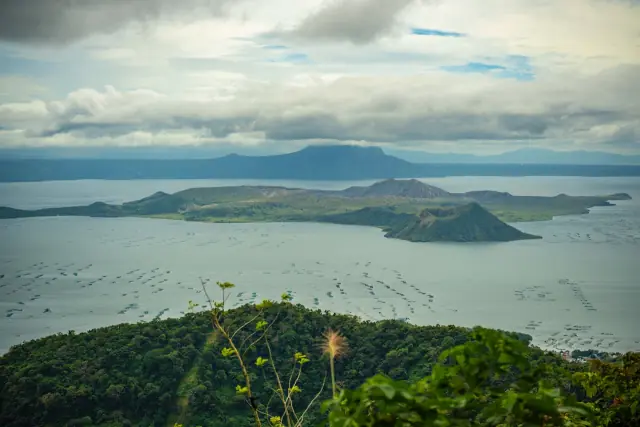
At 640 meters above sea level in Cavite province, Tagaytay runs 22–28°C year-round. You sleep under a blanket. You do not own an air conditioner. Your electric bill drops to ₱1,500–₱3,000/month from the ₱4,000–₱6,000 you'd pay anywhere in the lowlands. The Taal Volcano views from the ridge — a small active volcano sitting in a crater lake — are among the most dramatic in the country. These facts, combined, explain why people make the decision.
The cost is budget-tier if you pick the right neighborhood. A simple apartment near the Rotunda area: ₱8,000–₱18,000/month. A house in adjacent Silang (which is functionally the same area): ₱8,000–₱15,000. The gated ridge developments like Tagaytay Highlands run higher — ₱25,000–₱70,000 — but you don't need those to get the altitude benefit.
Proximity to Manila is the other structural advantage. Manila is 65 kilometers away — 90 minutes off-peak, 3 hours on a bad Saturday. For retirees with family, doctors, or business connections in the metro, Tagaytay threads a needle: genuine escape from the city, without the isolation of moving to a remote province.
The healthcare gap is real and I won't soften it. There is no major hospital in Tagaytay. Our Lady of Lourdes Hospital handles routine care and minor emergencies. For anything serious, you're driving to Manila — and in an emergency, that 90-minute drive feels very long. Asian Hospital in Alabang is about 40–50 minutes via the expressway in off-peak traffic, which helps. But if you have a serious chronic condition, this gap is the single biggest argument against Tagaytay as a full-time base.
Bottom line: Right for retirees who prioritize cool climate above everything else and have their Manila medical access sorted. Wrong for anyone with ongoing health needs that require fast specialist care.
4. Subic Bay — The Quiet Freeport Life
Subic appeals to a specific kind of retiree: someone who wants the familiar infrastructure of a former US base environment, clean streets, safe neighborhood, and access to world-class wreck diving — without the entertainment district energy of Angeles City and without the hustle of Cebu or Manila.
There are two Subics, and where you live matters. Inside the Subic Bay Freeport Zone — the old Naval Station Subic Bay — the roads are wide and maintained, the security infrastructure from the naval base days is still in place, and the trees that the US military planted decades ago are now enormous and shading streets that feel like a different country. Outside the gates in Olongapo City proper, it's a normal Philippine city with normal Philippine city conditions. Most expats live inside the Freeport or in Barretto, the beach community just outside the gates, and that's where the quality-of-life calculation holds up.
About 2,000 registered expats live in and around the Freeport — majority American, Australian, and British, many with Filipino spouses. The community is tight-knit in the way small communities are: the same faces at the same bars, the same dive clubs, the same informal networks. If that sounds appealing, it probably is for you.
Cost: budget-tier. A house in the Freeport Zone runs ₱20,000–₱45,000/month. Barretto is cheaper: ₱8,000–₱20,000 for a one-bedroom with a bay view. A comfortable monthly lifestyle — rent, food, utilities, transport — runs ₱35,000–₱65,000 ($630–$1,200). The Freeport's S&R membership store stocks imported goods and bulk groceries that make the transition easier for Americans who miss specific products.
Healthcare: adequate for routine care, limited for serious cases. James L. Gordon Memorial Hospital covers emergencies, and the Freeport has clinic options. For specialist care, Manila is 2.5–3.5 hours by expressway, or you fly from Clark airport (40 minutes away). The logistics are manageable but planned — you're not calling an Uber to St. Luke's in 20 minutes.
Bottom line: Ideal for retirees who want a clean, safe, quiet base with diving access and American-adjacent culture, and don't mind a smaller social scene than Cebu or Dumaguete.
5. Davao — Cheapest Big-City Option
Davao is the most underrated retirement destination in the Philippines, and it's consistently underrated because people don't get past "Mindanao" on the map. Let me give you the actual picture.
Davao City, population 1.85 million, is the cleanest and most orderly major city in the Philippines. Consistently ranked the safest large city in the country. The citywide smoking ban — one of the first in Asia, rigorously enforced — is a useful proxy: laws here are not suggestions. Crime rates are genuinely low. I've walked neighborhoods at 10pm that I wouldn't walk at 10pm in parts of Cebu or Manila.
The cost numbers are compelling. A good one-bedroom condo in Matina or Lanang: ₱12,000–₱22,000/month. Full comfortable lifestyle: ₱30,000–₱50,000 ($540–$900). For retirees on a fixed pension, that math transforms the retirement equation. And Davao outside the main typhoon belt — the city experiences steady, moderate rainfall year-round instead of the Category 4 panic that Cebu and Manila go through every few years.
Healthcare is real. Davao Doctors Hospital is the largest private hospital in Mindanao — cardiac, orthopedic, oncology. Southern Philippines Medical Center is the major government referral center for the entire region. English-speaking staff, modern equipment. Not Manila Medical City, but well above what the "budget city" label suggests.
The honest limitation is the expat community size. It's smaller than Cebu, much smaller than Dumaguete's retiree concentration. There are long-timers here — American and Australian retirees married to Davaoeñas, mostly — and a Facebook group ("Expats in Davao") that's active enough for basic social life. But if you want the ready-made social infrastructure of Dumaguete or the critical mass of Cebu, Davao requires you to build your own community rather than step into one.
The other thing worth noting: the US and Australian travel advisories flag Mindanao broadly. Those advisories refer mostly to provinces well outside Davao City — the conflict history in Mindanao is real but the geography matters enormously. Davao has been stable for years. I've been there and I'd go back tomorrow. But read the advisories, understand the geography, make your own call rather than reacting to the word "Mindanao."
Bottom line: Best for retirees who want a genuine big-city lifestyle at budget prices, value safety and order above social scene size, and are willing to think independently about regional security advisories.
The SRRV: Your Retirement Visa Path
All five of these cities are SRRV-eligible. The Special Resident Retiree's Visa is the Philippine Retirement Authority's flagship program — it grants permanent residency status to foreigners age 35+ who deposit a minimum amount in a Philippine bank ($10,000–$50,000 depending on age and whether you qualify for the Courtesy extension) and meet basic health requirements. The deposit isn't spent — it remains in your account as a security deposit and can be used to purchase property or invest in certain schemes.
The SRRV gives you multiple-entry, stay indefinitely, import personal effects duty-free, and exempts foreign-sourced retirement income from Philippine taxes. The Philippine Retirement Authority office handles the application. It's genuinely one of the better retirement visa programs in Asia.
More details at /visa/srrv.
Compare these cities side-by-side
Cost of living, safety scores, internet speed, and more.