
Making Friends in the Philippines as a Foreigner
Everyone told me Filipinos are the friendliest people you'll meet, and honestly, they're right. What nobody tells you is that friendly and included are two different things. I've watched foreigners land here, get invited to a birthday party in week one, and still feel like outsiders a year later. This guide is about closing that gap.
Overview
Making friends in the Philippines, especially Metro Manila, happens fast on the surface and slow underneath. Strangers will talk to you at a sari-sari store, ask where you're from, ask if you're married, ask how much you earn, sometimes in the same breath. That openness is real. But Filipino social life runs on barkada, tight friend groups formed young and held for decades, and cracking into an existing one takes more than a good first conversation. InterNations' Manila community, which counts over 41,000 members with regular events and interest groups, exists because a lot of foreigners find the informal path slower than expected. This piece covers how friendship actually works here, where it forms, and what tends to trip people up.
What Friendship Looks Like Here
In the U.S., friendship is often one-to-one: coffee with a friend, catch up, go home. Here it's more communal. Someone invites you somewhere, and there's already a group. You're folded into whoever's there that night rather than building a friendship in isolation. That's barkada logic: the unit is the group, not the pair.
It also runs warmer and faster on the surface than what Westerners are used to. InterNations' 2023 Expat Insider survey found that 84% of expats in Manila said it was easy to connect with locals, and 80% felt at home shortly after arriving. Those numbers track with what I've seen. People here will ask deeply personal questions within minutes of meeting you, your salary, your relationship status, why you're single, whether you have kids yet, and they mean nothing rude by it. That's just how conversation opens.
The catch is intensity doesn't always mean depth right away. A group might treat you like an old friend at a party and then not follow up for a month. That's not rejection, it's a lower-effort, lower-friction social style that assumes you'll show up again if you're serious. Read it as an invitation to keep showing up, not as a verdict on how liked you are.

Where Friendships Actually Form
The friendships that last come from repeated contact: same gym class, same office, same church, same volunteer group, same street. Give it enough weeks and you're not a stranger anymore, just part of the scene.
A few specific channels come up constantly from people who've actually done this:
Sports clubs are probably the single best doorway right now. Readers on r/Philippines_Expats report that running has gotten big, and they point to a group called Just Show Up Club, formerly Rockwell Run Club, as a common recommendation. Take that as a reader tip to check out yourself, not an endorsement, since the running scene shifts constantly. The same thread mentions a RECLUB app people use to find sports schedules around the city, along with a weekend badminton club and a Capoeira school in Makati. Padel is described as growing, and pickleball is apparently huge in upscale villages, with courts starting to show up around BGC. Confirm current schedules and membership status yourself before you show up expecting a match.
Meetup also has a live scene here, with listings specifically for people trying to meet others plus dedicated sports and hobby groups, a low-stakes way to test a room before committing.
Beyond structured clubs, don't underestimate your building, your neighbors, your barangay. Filipino courtesy toward neighbors runs deep, and a genuine hello to the same guard or tricycle driver every day compounds over months.

Metro Manila, Area by Area
Where you land shapes who you meet, so it's worth thinking about area before signing a lease. Check housing and safety before locking in a neighborhood, since both affect how much you'll actually be out and about.
Makati is the old-money corporate core, dense with condos, malls, and a mixed expat and Filipino professional crowd. It's walkable in patches, well served by transportation, and the bar scene around Poblacion is one of the most reliable places to strike up a conversation with a stranger, according to long-time residents on r/Philippines_Expats.
BGC is newer and glassier, popular with younger professionals and families who want cleaner sidewalks. It has its own bar cluster that functions like Poblacion's, and it's where newer padel and pickleball courts are cropping up. Good internet and a growing coworking scene make it a magnet for remote workers, which cuts both ways: easy to meet other foreigners, easier to never meet a Filipino outside your building.
Manila proper, the older districts rather than the metro as a whole, gives you more local texture and fewer foreigners around by default. That can mean slower initial footing but a faster route to real local friendships, since you're not competing with an expat bubble for anyone's attention.
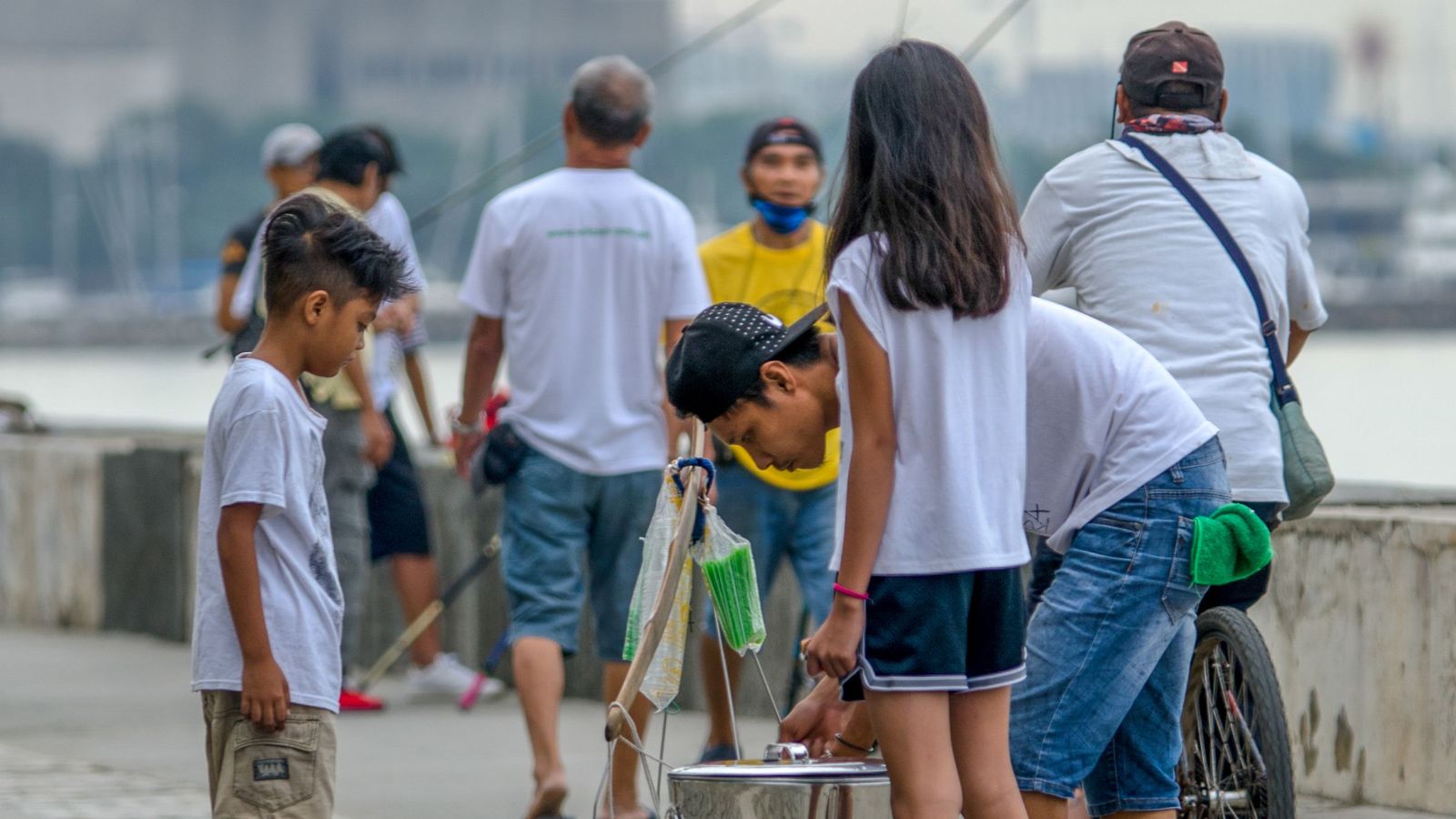
The Expat Trap
Here's the trap: it is easy to build a full social life in Manila without making a single close Filipino friend. The malls, the coworking spaces, the condo buildings, the Facebook groups, they all funnel you toward other foreigners who speak your language fluently and share your reference points. It's comfortable. It's also a dead end if the reason you moved here included actually living in the country, not a foreigner-shaped bubble inside it.
The bubble forms because it's the path of least resistance, not because anyone's excluding you. English is spoken everywhere in business and services, so you never have to push past that first layer of ease. Expat Facebook groups and coworking spaces recycle the same faces. You end up with a rotating cast of transplants and a handful of Filipino coworkers you're friendly with but never see outside the office.
Breaking out means deliberately choosing the harder option: joining a club that's mostly locals instead of the expat-run one, picking a neighborhood gym over a condo gym, going to the karaoke night your Filipino coworker mentioned instead of skipping it. It also means budgeting time for it. If your first 90 days are consumed by paperwork and setup, the bubble forms by default because you never had bandwidth to look past it.
The Money Question
I want to be straight about this one because it comes up constantly and people get weird about it. Long-term foreigners on r/Philippines_Expats describe a recognizable pattern: a conversation goes well, gets personal fast, and eventually turns into a request for a loan. It's common enough that people who've lived here a decade or more flag it as a known rhythm, not paranoia.
Here's how I'd think about it, and how most long-term residents handle it. It's not a scam in the sinister sense most of the time. It's closer to how mutual obligation works in a lot of Filipino social circles, where asking family or close friends for help is normal, not shameful. The problem is a foreigner often gets read as an easier ask than another relative, since you're assumed to have more. When it happens with someone you barely know, that's information, not an insult. Long-term folks generally set a personal rule early, small amounts they're fine losing as goodwill, nothing large, and they don't take it personally when a request ends a budding friendship. It usually tells you the connection was transactional from the start, worth knowing regardless.
The flip side is the "skin tax," foreigner pricing, which InterNations' survey respondents flagged alongside traffic and air pollution as one of the genuine downsides of expat life in Manila. Vendors, tricycle drivers, sometimes even friends-of-friends will quote you a higher number because you're foreign. It's not personal, it's just a pattern that exists, and most long-timers get better at reading it with time, usually by asking a Filipino friend what something should actually cost before agreeing to anything.
Neither of these should scare you off building real friendships. They're just part of the terrain, the same way you'd learn any other local custom.
Language Is the Real Doorway
If there's one lever that moves everything else, it's language. You can get by entirely in English here, which is exactly the problem: getting by isn't the same as getting close. Filipinos will default to English or Taglish with a foreigner out of politeness, and that politeness quietly keeps you one layer removed from how people actually talk to each other.
Learning even basic Tagalog, or picking up the rhythm of Taglish, changes the temperature of a room. It signals effort, and effort here gets rewarded generously. You don't need fluency. Knowing how to ask "have you eaten?", the standard way Filipinos check in on someone, or dropping "barkada" instead of "friend group," tells people you're paying attention to their world instead of expecting them to fully operate in yours.
This matters more once you're inside a group setting. A barkada conversation moves fast, in and out of English, full of inside jokes and regional slang, and if you can't follow even the shape of it, you end up smiling along on the outside of your own social circle. Put in the language work and that gap closes faster than almost anything else you could do.
How Your Situation Changes the Answer
A 20-something on a working visa in BGC has a different path than a retiree settling into a quieter Manila neighborhood, and the advice shifts with the situation.
If you're working here, your office is your fastest doorway. Coworkers invite coworkers to things, and saying yes consistently for a few months does more than any app. If you're remote and working from a coworking space, you'll meet other remote foreigners easily, and you'll have to work harder to meet Filipinos, since the space naturally sorts you into an international crowd.
If you're retired, sports clubs and volunteering carry more weight, since you don't have a workplace doing the sorting for you. The running and padel scenes mentioned earlier skew younger, but badminton, church groups, and neighborhood associations tend to have a wider age range and are often more welcoming to someone showing up consistently over months.
If you've got a Filipino partner or spouse, you get a shortcut most others don't: instant access to an existing barkada and family network. Show up to the family gatherings, learn the names, and that group becomes your social floor faster than anything you'd build from scratch.
If you're raising kids here, school and parent networks do the same job an office does for a working adult. Parents at pickup, at recitals, at kid birthday parties, form fast, reliable ties almost by default.
Frank's Take
If you ask me, the mistake most foreigners make isn't being unfriendly, it's being passive. You wait for Filipinos to fully absorb you into their group, and that's backwards. Show up first. Show up again next week. Bring pasalubong to the office after a trip, even something small. Say yes to the karaoke night you'd normally skip. None of this is complicated, it's effort sustained past the point where it stops feeling novel.
I'd also say: don't confuse the easy early warmth for the whole relationship. It's a real, generous starting point, not a finished friendship. Treat it as an invitation to keep investing, and within a year you'll have people checking in on you the way they check in on each other, uninvited and unbothered, the best sign you've made it in.
FAQ
Is it actually easy to make friends with locals in Manila, or is that overstated? It's easy to make first contact, and the survey numbers back that up. What's harder is turning that contact into a real barkada-level friendship, which takes repeated time together, not one great conversation.
Should I worry about being asked for money? Don't panic about it, but don't be naive either. Long-term residents describe it as a known pattern, not a universal rule. Set a personal limit for what you're comfortable giving as goodwill and don't read every request as a betrayal, but do notice if it's the only thing a "friendship" produces.
What's the fastest way to meet people if I just landed? Sports clubs and Meetup groups beat cold small talk. Running groups, badminton, padel, and pickleball all came up repeatedly from people who've done this in Manila, alongside the usual InterNations events. Confirm schedules yourself since clubs and group scenes shift often.
Do I need to learn Tagalog to have real friendships here? Not fluently, no. But even basic effort, knowing how to ask if someone's eaten, using a few Taglish phrases naturally, changes how included you feel in group settings. It's the difference between being tolerated in English and actually being part of the conversation.
More Expat Guides
- ›
ACR I-Card for Foreigners in the Philippines: Who Needs One
A plain-English guide to the Philippine ACR I-Card: who needs one, the day-59 rule, applying and renewing, BI's posted fees, the Annual Report and leaving.
- ›
How to Open a Bank Account in the Philippines as a Foreigner
What ID each visa status needs, which banks accept foreigners, and a step-by-step checklist for opening a Philippine bank account. Updated 2026.
- ›
Panglao, Dauis or Tagbilaran for a long stay
A practical comparison of where to live in Bohol for expats and digital nomads.
- ›
Can Foreigners Buy Property in the Philippines?
What foreigners can legally own in the Philippines: condo caps, land leases, marriage and former-Filipino rules, purchase taxes and fees, and moving the money.
- ›
Cebu IT Park vs Cebu Business Park
Cebu IT Park vs Business Park for expats — walkability, condos, PRA access, Sugbo Mercado, and which district fits nomads vs retirees.
- ›
Getting a Philippine Driver's License as a Foreigner
How to convert your foreign driver's license or get a new one in the Philippines — the 120-day rule, LTO requirements, fees, and what the process actually feels like.
- ›
Dumaguete, Valencia or Dauin: Which Fits Retirement?
Compare Dumaguete city, Valencia in the mountains, and Dauin on the coast — SRRV counts, hospitals, vibe, and who each spot fits.
- ›
Education and Schools in the Philippines
How to compare school places, curricula, full fees, calendars, and homeschooling options before an expat family moves.
- ›
ECC Exit Clearance: When Foreigners Need It to Leave PH
The Emigration Clearance Certificate explained: who needs it, ECC-A vs ECC-B, timing, and how to avoid getting stopped at the airport.
- ›
First 90 Days in the Philippines: A Moving Budget
Build a realistic Philippines moving budget for your first 90 days, including housing, deposits, monthly costs, visas, and setup.
- ›
GCash for Foreigners: GTourist vs Full Verification
What actually works for foreigners on GCash: the 30-day GTourist route, the resident ID list, real wallet limits, and where each path breaks down.
- ›
Healthcare and Health Insurance in the Philippines for Expats
Expat medical insurance in the Philippines, compared: PhilHealth, local HMOs and international plans — what to buy first and what each layer covers.
- ›
Finding Housing in the Philippines — Rent Bands & Trial Stays
Compare rent bands by city, then book a 2–4 week Agoda trial stay before you pay 3 months upfront — plus SafetyWing, Wise and budget next steps.
- ›
Internet in the Philippines
ISP comparison, speeds, reliability, backup options, and how to get connected as an expat.
- ›
Keeping a US Phone Number Abroad for Bank Verification
How expats in the Philippines keep a US number for bank codes: carrier Wi-Fi calling, Google Voice, NumberBarn, costs, and 2FA backups.
- ›
Moving to the Philippines with Pets
How to bring a dog or cat to the Philippines: BAI SPSIC permits, vaccination rules, airline cargo policies, fees, and arrival quarantine.
- ›
Bringing Prescription Medicine Into the Philippines
What you can legally carry, the 30-day controlled-drug limit, and how to keep a US or UK prescription running once you're based here.
- ›
Retirement & Pension in the Philippines: Getting Paid, Taxes and How Much You Need
How US Social Security and UK, Australian and Canadian pensions reach the Philippines, how they're taxed, and how much you need to retire here in 2026.
- ›
Retiring in the Philippines (2026): A Readiness Checklist
A plain checklist for retiring in the Philippines: visa, healthcare, pension income, housing and budget, plus how to test a town before you commit.
- ›
Safety in the Philippines: What Expats Actually Experience
What the crime data actually says, where risk changes by region, the scams foreigners run into most, and what to do if something happens.
- ›
SafetyWing in the Philippines: When It Fits (vs World Nomads)
Buy or skip SafetyWing for a Philippines stay: Essential vs Complete, honest World Nomads comparison, island medevac reality — plus trial stay, Wise rails, and budget next steps.
- ›
Best Way to Send Money to the Philippines (2026 Guide)
Compare Wise, bank wires, and remit apps. Why Wise is my default for Philippines transfers in 2026 — plus FBAR, domestic fees, and the paper trail.
- ›
Shipping Belongings to the Philippines: Container or Box?
A practical, opinionated comparison of shipping a container, sending balikbayan boxes, or buying new once you land in the Philippines.
- ›
SIM Cards, Mobile & Internet in the Philippines
How to get a Philippine SIM as a foreigner, register it under RA 11934, pick Globe, Smart, or DITO, and link it to GCash or Maya.
- ›
Starting a Business in the Philippines as a Foreigner
Foreign ownership rules, SEC registration, the 60-40 rule, and practical steps to launch a business.
- ›
Taxes for Expats in the Philippines
Whether foreign nationals owe Philippine tax, BIR TIN registration, the 180-day rule, current tax brackets, and how US/UK/AU/CA treaties apply.
- ›
Getting Around the Philippines
Driving, Grab, jeepneys, ferries, and domestic flights — how to get around as an expat.
- ›
Utilities in the Philippines: Electricity, Water and Internet Setup
A renter's guide to Philippine utilities: who supplies power and water, recent electricity rates, bill deposits, submetered units, brownouts and internet setup.
- ›
Philippines Visa Run vs Residency (2026): Tourist or SRRV?
Tourist extensions, HK/Singapore/KK visa runs, and when SRRV or 13(a) beats the treadmill — plus insurance, overnight stays, and money rails.