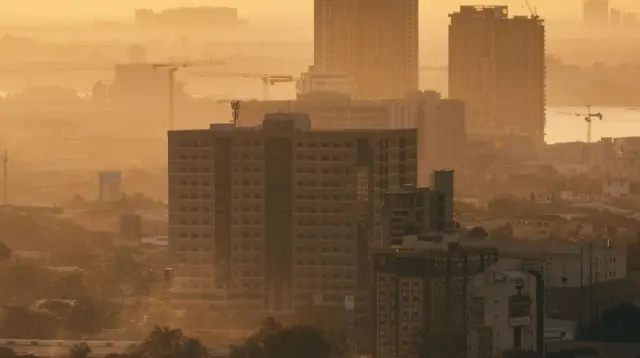
Cebu IT Park vs Cebu Business Park
I get this question every time a friend visits Cebu for the first time. They land at Mactan, take a taxi across the bridge, and then realize Cebu City is a massive, sprawling mess of traffic and concrete. Most foreigners end up choosing between two specific gated enclosures: Cebu IT Park (CITP) or Cebu Business Park (CBP).
They are only three kilometers apart. On a good day, a Grab car takes fifteen minutes. On a bad day, you are stuck in a metal box for forty-five minutes watching the meter climb. Choosing the wrong one for your lifestyle is a mistake I see a lot of nomads make. I have lived in both. I have spent my mornings working from the coffee shops in IT Park and my evenings walking the garden loops in Business Park.
Both areas feel like bubbles — gated, more orderly, and easier to walk than the rest of the city. The energy in each is completely different. One is a caffeinated, 24-hour work machine. The other is a corporate, mall-focused sanctuary.
The 24/7 Grind of Cebu IT Park
Cebu IT Park is the engine of the city. If you are a digital nomad, this is likely where you will end up. It was built for the Business Process Outsourcing (BPO) industry. This means the entire district runs on a graveyard shift schedule.
Walk around at 3:00 AM and the place is alive. You will see thousands of young Filipinos in lanyards heading to a 7-Eleven or a 24-hour McDonald’s. The lights in the office towers never go out. For a foreigner, this means you never have to worry about finding food or a place to work, no matter your timezone.
The main strip is lined with restaurants, banks, and pharmacies. For Cebu, it is one of the easiest square kilometers to live without a car — wide sidewalks are a real luxury here. Most of the city has you dodging open sewers or parked motorbikes; IT Park feels like a modern district by comparison.
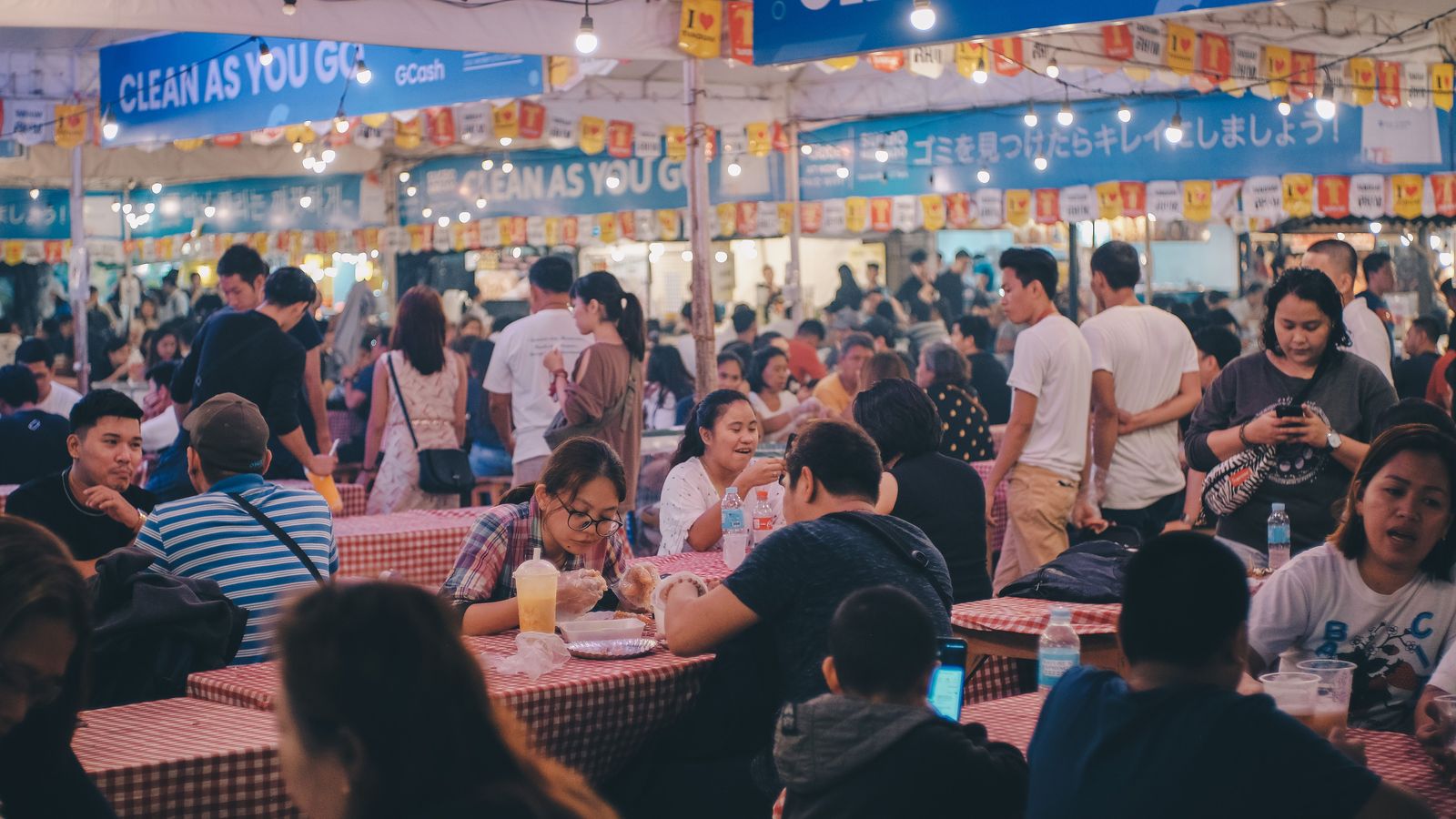
Sugbo Mercado is the centerpiece of the social scene — a big outdoor night market. Schedules shift, but recent listings usually put it open Wednesday plus Friday through Sunday evenings (roughly 4 PM to midnight) and closed Monday, Tuesday, and Thursday. Confirm on Sugbo Mercado's own page before you go. I usually show up for lechon or grilled tuna. It is crowded, loud, and smells like smoke — the opposite of a quiet dinner. If you want high energy, IT Park is your spot.
The Corporate Calm of Cebu Business Park
Cebu Business Park is the older, more refined brother. It is dominated by Ayala Center Cebu — the mall most expats use as their errand hub. If IT Park is for work, Business Park is for shopping and paperwork.
The vibe here is corporate. You will see people in suits and barongs heading into the Lexus showroom or the various bank headquarters. At night, it gets very quiet. Once the mall closes at 9:00 PM or 10:00 PM, the streets empty out.
I recommend Business Park for retirees or families who want a bit more peace. There is a large green space called the Ayala Terraces where you can actually see trees and grass. In a city as gray as Cebu, that matters. You will see expats jogging around the perimeter of the park in the early morning.
The lifestyle here revolves around the mall. You have a high-end grocery store (Rustan’s), a dozen cinemas, and every clothing brand you can think of. If you need to handle SRRV paperwork, PRA's Visayas Satellite Office is listed at Unit C1-12F, 2Quad Building, Cebu Business Park (confirm on pra.gov.ph/contact-us before you go — satellite addresses move). Walking to a visa appointment beats a cross-town Grab.
Living in Cebu IT Park: Condo Breakdown
Residential options in IT Park are mostly geared toward the mid-range and luxury market. The units tend to be smaller because they are designed for BPO managers and solo travelers.
Avida Towers (Cebu IT Park and Riala) These are the workhorses of the district. I have stayed in both. They are managed by Ayala Land, so security and maintenance are usually solid. Riala is the newer complex with a better pool area and more open space. If you want the action on a tighter budget, a furnished studio here is the common expat pick. Listing chatter as of September 2026 often lands furnished studios around ₱20,000–₱30,000 a month — treat that as a starting band, not a quote; building, floor, and inclusions move the number.
38 Park Avenue This is the new kid on the block and it is stunning. It is a high-rise with a New York-inspired design. The lobby feels like a five-star hotel. If you want the best views of the city and the ocean in the distance, this is it. It is significantly more expensive than Avida, but the build quality is much higher.
Calyx Center I like Calyx because it was one of the first "green" buildings in Cebu. It has an infinity pool on the upper floors that overlooks the entire IT Park. It is located right next to the main transport terminal, so it can get a bit loud with the sounds of beep-shuttle horns, but the convenience is hard to beat.
Living in Cebu Business Park: Condo Breakdown
Condos in Business Park feel more like homes and less like dormitories. They are generally more spacious and carry a higher price tag.
Solinea This is a multi-tower resort-style complex located directly across from the Ayala mall. It has a massive pool area that feels like a private club. If I were moving to Cebu for a year and wanted a "resort at home" feeling, I would pick Solinea. You can walk into the mall in three minutes for your morning coffee.
Park Point Residences This is the peak of convenience. It is built directly on top of the mall. You have a private entrance that leads straight into the high-end wing of Ayala. You don't even have to step outside onto the street. It is very exclusive, very quiet, and very expensive. This is where the wealthy balikbayan and long-term expats usually stay.
Sedona Parc This is a boutique condo located a bit further back from the mall noise. It is smaller and feels more private. It faces a small park area, making it one of the few places in Cebu where you can look out your window and see something other than another concrete wall.
Healthcare and Government Access
This is where Cebu Business Park wins. If you are a retiree, proximity to hospitals is usually a top priority.
The two best hospitals in the city, Cebu Doctors’ University Hospital and Chong Hua Hospital, are located in the Fuente area. From Business Park, you can get to either in ten to fifteen minutes. From IT Park, you have to cross a few major bottlenecks of traffic, which could double that time during rush hour.
As mentioned, the PRA office is in the 2Quad Building in Business Park. This is where you go for your Special Resident Retiree's Visa (SRRV) needs. Most of the major consulates and high-end law firms are also clustered around the Business Park area.
For digital nomads, IT Park has several 24-hour clinics for minor issues, but for anything serious, you are still heading toward the hospitals near Business Park.
The Commute and Getting Around
The three kilometers between these two hubs is the most congested stretch of road in Cebu. You will likely use Grab for most of your trips. A Grab car between the two usually costs around 150 to 250 pesos depending on the surge pricing.
If you want the local experience, you can take a jeepney or the modern blue beep-shuttles. There are routes that loop specifically between IT Park and Ayala. It costs about 15 pesos. It is hot, cramped, and you will be shoulder-to-shoulder with locals, but it is the fastest way to move when traffic is at a standstill because the jeepney drivers are aggressive.
Walkability within each park is great. Walkability between the parks is terrible. The road connecting them (Governor Cuenco Ave) has narrow sidewalks, heavy pollution, and lots of dust. Do not try to walk from one to the other at noon unless you want to arrive drenched in sweat and covered in road grime.
Food, Nightlife, and Daily Needs
IT Park is the winner for food variety. Beyond Sugbo Mercado, you have the "The Walk" and "Garden Row," which are strips of restaurants ranging from cheap Korean BBQ to high-end Italian. There is a sari-sari store or a 7-Eleven on almost every corner for your basic needs like load for your phone or a cold San Miguel.
Business Park is more about the mall food court and the restaurants inside the Terraces. It is a bit more sterilized. If you want a quick snack from a tindahan, you won't find many inside the Business Park gates. You have to walk out to the edges of the district where the "real" Cebu begins.
For groceries, IT Park has a Metro Supermarket inside the Central Bloc mall. It is fine, but it gets very crowded with office workers. Business Park has the Rustan’s Supermarket, which is the best place in Cebu to find imported cheeses, wines, and steaks. If you like cooking your own meals with Western ingredients, you will be spending a lot of time in Business Park.
Cost of Living Comparison
Business Park usually runs higher. Rough September 2026 listing bands I hear: a one-bedroom in a decent IT Park building around ₱35,000, and a similar Solinea unit in Business Park often starting nearer ₱45,000 — again, bands, not quotes. Furnishings, view, and whether the unit is owner-managed or through an agency all move the price.
Eating out is roughly the same, but the "lifestyle" in Business Park leans toward the mall, which always ends up costing more. In IT Park, you can grab a 100-peso meal at a carinderia just outside the gates or a 200-peso bowl of noodles at the night market.
Check out my full guide on Cebu cost of living for a more granular look at these numbers.
Frank's Take
I'm going to be honest with you. If I had to pick today, I’d live in Cebu IT Park.
Why? Because I value momentum. I like the fact that at 2:00 AM, the world is still awake. I like being able to walk to a co-working space and see other people building businesses. IT Park feels like it’s moving forward. It’s loud, it’s a bit chaotic, and Sugbo Mercado is sometimes too much, but it has a pulse.
Cebu Business Park is beautiful, but it can feel a bit soulless. It feels like a giant lobby for a bank. If I were seventy years old and my main goal was to be near the hospital and have a nice mall to walk in, I’d pick Business Park in a heartbeat. It’s the "safe" choice.
But if you are here to experience the energy of the Philippines, stay in IT Park. Just get a unit on a high floor so you don't hear the traffic.
If you are just arriving in the country, you should also look at my guide on shipping your belongings to see how to get your gear into the city without the Bureau of Customs giving you a headache.
Summary: Which One Is For You?
Choose Cebu IT Park if:
- You are a digital nomad or work online.
- You want to be able to walk everywhere.
- You like night markets and 24/7 energy.
- You are looking for mid-range condo prices.
Choose Cebu Business Park if:
- You are a retiree or value peace and quiet.
- You want immediate access to Ayala Center Cebu and the PRA satellite office.
- You need to be close to major hospitals.
- You prefer a more "corporate" and polished environment.
Cebu gets easier once you pick a district that matches how you live. Both of these are more walkable and more predictable than the congested stretches of Mandaue or downtown. Pick the one that matches your energy.
For more on getting settled, see the Cebu city guide.
More Expat Guides
- ›
ACR I-Card for Foreigners in the Philippines: Who Needs One
A plain-English guide to the Philippine ACR I-Card: who needs one, the day-59 rule, applying and renewing, BI's posted fees, the Annual Report and leaving.
- ›
How to Open a Bank Account in the Philippines as a Foreigner
What ID each visa status needs, which banks accept foreigners, and a step-by-step checklist for opening a Philippine bank account. Updated 2026.
- ›
Panglao, Dauis or Tagbilaran for a long stay
A practical comparison of where to live in Bohol for expats and digital nomads.
- ›
Can Foreigners Buy Property in the Philippines?
What foreigners can legally own in the Philippines: condo caps, land leases, marriage and former-Filipino rules, purchase taxes and fees, and moving the money.
- ›
Getting a Philippine Driver's License as a Foreigner
How to convert your foreign driver's license or get a new one in the Philippines — the 120-day rule, LTO requirements, fees, and what the process actually feels like.
- ›
Dumaguete, Valencia or Dauin: Which Fits Retirement?
Compare Dumaguete city, Valencia in the mountains, and Dauin on the coast — SRRV counts, hospitals, vibe, and who each spot fits.
- ›
Education and Schools in the Philippines
How to compare school places, curricula, full fees, calendars, and homeschooling options before an expat family moves.
- ›
ECC Exit Clearance: When Foreigners Need It to Leave PH
The Emigration Clearance Certificate explained: who needs it, ECC-A vs ECC-B, timing, and how to avoid getting stopped at the airport.
- ›
First 90 Days in the Philippines: A Moving Budget
Build a realistic Philippines moving budget for your first 90 days, including housing, deposits, monthly costs, visas, and setup.
- ›
GCash for Foreigners: GTourist vs Full Verification
What actually works for foreigners on GCash: the 30-day GTourist route, the resident ID list, real wallet limits, and where each path breaks down.
- ›
Healthcare and Health Insurance in the Philippines for Expats
Expat medical insurance in the Philippines, compared: PhilHealth, local HMOs and international plans — what to buy first and what each layer covers.
- ›
Finding Housing in the Philippines — Rent Bands & Trial Stays
Compare rent bands by city, then book a 2–4 week Agoda trial stay before you pay 3 months upfront — plus SafetyWing, Wise and budget next steps.
- ›
Internet in the Philippines
ISP comparison, speeds, reliability, backup options, and how to get connected as an expat.
- ›
Keeping a US Phone Number Abroad for Bank Verification
How expats in the Philippines keep a US number for bank codes: carrier Wi-Fi calling, Google Voice, NumberBarn, costs, and 2FA backups.
- ›
Making Friends in the Philippines as a Foreigner
How friendships actually form in Metro Manila, where they happen, and why the first easy connections rarely turn into real barkada.
- ›
Moving to the Philippines with Pets
How to bring a dog or cat to the Philippines: BAI SPSIC permits, vaccination rules, airline cargo policies, fees, and arrival quarantine.
- ›
Bringing Prescription Medicine Into the Philippines
What you can legally carry, the 30-day controlled-drug limit, and how to keep a US or UK prescription running once you're based here.
- ›
Retirement & Pension in the Philippines: Getting Paid, Taxes and How Much You Need
How US Social Security and UK, Australian and Canadian pensions reach the Philippines, how they're taxed, and how much you need to retire here in 2026.
- ›
Retiring in the Philippines (2026): A Readiness Checklist
A plain checklist for retiring in the Philippines: visa, healthcare, pension income, housing and budget, plus how to test a town before you commit.
- ›
Safety in the Philippines: What Expats Actually Experience
What the crime data actually says, where risk changes by region, the scams foreigners run into most, and what to do if something happens.
- ›
SafetyWing in the Philippines: When It Fits (vs World Nomads)
Buy or skip SafetyWing for a Philippines stay: Essential vs Complete, honest World Nomads comparison, island medevac reality — plus trial stay, Wise rails, and budget next steps.
- ›
Best Way to Send Money to the Philippines (2026 Guide)
Compare Wise, bank wires, and remit apps. Why Wise is my default for Philippines transfers in 2026 — plus FBAR, domestic fees, and the paper trail.
- ›
Shipping Belongings to the Philippines: Container or Box?
A practical, opinionated comparison of shipping a container, sending balikbayan boxes, or buying new once you land in the Philippines.
- ›
SIM Cards, Mobile & Internet in the Philippines
How to get a Philippine SIM as a foreigner, register it under RA 11934, pick Globe, Smart, or DITO, and link it to GCash or Maya.
- ›
Starting a Business in the Philippines as a Foreigner
Foreign ownership rules, SEC registration, the 60-40 rule, and practical steps to launch a business.
- ›
Taxes for Expats in the Philippines
Whether foreign nationals owe Philippine tax, BIR TIN registration, the 180-day rule, current tax brackets, and how US/UK/AU/CA treaties apply.
- ›
Getting Around the Philippines
Driving, Grab, jeepneys, ferries, and domestic flights — how to get around as an expat.
- ›
Utilities in the Philippines: Electricity, Water and Internet Setup
A renter's guide to Philippine utilities: who supplies power and water, recent electricity rates, bill deposits, submetered units, brownouts and internet setup.
- ›
Philippines Visa Run vs Residency (2026): Tourist or SRRV?
Tourist extensions, HK/Singapore/KK visa runs, and when SRRV or 13(a) beats the treadmill — plus insurance, overnight stays, and money rails.