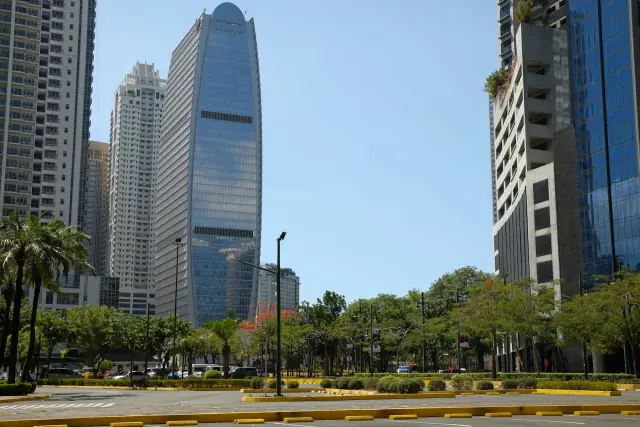
Bonifacio Global City
Metro Manila
Metro Manila's most modern district — wide sidewalks, fast internet, and the closest thing to Singapore in the Philippines.
At a Glance
Location
Monthly Budget Snapshot
Full breakdown →| Budget Level | Est. Monthly Total (USD) |
|---|---|
| Budget | $1,200 |
| Moderate | $2,100 |
| Comfortable | $3,650 |
Last updated: 2026-09-04. Amounts in USD.
Living in Bonifacio Global City (BGC) as an Expat
BGC is not actually a city. Worth saying upfront since the name implies it is: Bonifacio Global City is a district within Taguig City, which has a population of around 1.3 million and is a proper LGU (local government unit) with its own mayor and services. BGC occupies roughly 240 hectares of what was formerly Fort Bonifacio, a military reservation the Philippine government converted into a business and residential district starting in the 1990s. The Bases Conversion and Development Authority (BCDA) and Ayala Land drove the development.
Why does this matter? Primarily because BGC's services, emergency response, and local governance run through Taguig, not through some "BGC City Hall." When people say they live in BGC, they mean they live in a particular planned district — not that BGC is administratively its own city.
With that out of the way: BGC is the most modern, most expensive, most walkable, and most controlled urban environment in the Philippines. The sidewalks are wide and clear. The streets follow a legible grid. The buildings are new. The internet is fast. It feels, more than anywhere else in the country, like a different country — specifically like a smaller, warmer version of Singapore.
That is both its appeal and its problem.
Best Neighborhoods
BGC is smaller and more internally coherent than Makati, so neighborhoods are less distinct — it's really more a matter of which part of the grid you're on.
High Street is the main commercial spine — retail, restaurants, and nightlife stretching along 5th Avenue and 9th Avenue. Living adjacent to High Street means maximum access to BGC's food and entertainment scene, but also maximum noise. Buildings like One Uptown Residences and Uptown Parksuites are popular here.
Burgos Circle and Forbestown on the eastern side of BGC are the dining destinations. Mercato Centrale (the night market) runs on weekends near here. The residential buildings adjacent to Burgos Circle are among BGC's most sought-after — expect to pay accordingly.
Net Park and Bonifacio High Street Central in the core of the district house most of the tech companies, BPOs, and coworking spaces. If you work in BGC's offices, living in the central grid means zero commute.
Serendra and McKinley Hill are on the quieter southern edges of BGC, slightly removed from the commercial activity. More residential, more family-oriented, and slightly cheaper per square meter. McKinley Hill has its own mini-commercial district and is popular with Korean expats specifically — there's a significant Korean community here.
Condo prices across BGC: ₱35,000–₱60,000/month for a one-bedroom, ₱60,000–₱120,000 for a two-bedroom. Studio units start around ₱25,000. For context, that's roughly 30–50% more than equivalent Makati units.
Cost of Living
BGC is the most expensive place to live in the Philippines. Monthly snapshots:
- Studio: ₱25,000–₱40,000 ($445–$715)
- 1BR condo: ₱35,000–₱65,000 ($625–$1,165)
- 2BR condo: ₱60,000–₱120,000 ($1,075–$2,150)
- Restaurant dinner (mid-range): ₱600–₱1,200
- High-end dinner: ₱1,500–₱4,000
- Coffee: ₱180–₱280
- Monthly groceries (S&R + Marketplace BGC): ₱15,000–₱25,000
Street food options are genuinely limited. BGC is zoned in a way that doesn't naturally produce the sidewalk carinderia scene that makes Manila or even Makati cheap. You can find cheaper eats at the food courts in Bonifacio High Street or at Mercato Centrale on weekends, but your daily spending baseline is higher here than anywhere else in the country.
A comfortable BGC lifestyle runs ₱80,000–₱130,000/month ($1,430–$2,330). You can do it for less if you're disciplined about cooking at home and avoiding the upscale restaurant trap, but the environment works against you. Full breakdown at /cost-of-living/bgc.
Internet & Coworking
This is BGC's clearest advantage over the rest of Metro Manila. Fiber infrastructure here is the best in the country — 60–100+ Mbps is standard on PLDT Fibr, Globe At Home, or Converge plans. Gigabit plans are available in many of the newer buildings. Power outages are rare to the point that BGC residents sometimes forget they happen elsewhere in the metro.
Coworking options are strong:
- WeWork BGC (Net Park and Two/NEO buildings) — the flagship Manila locations, premium pricing, great for professional setups and client meetings. Monthly memberships from ₱15,000–₱20,000, day passes ₱600–₱800
- KMC Solutions BGC (multiple buildings) — solid mid-tier option, responsive management, monthly hot desks from ₱8,000–₱12,000
- Common Ground BGC — good café-style coworking, popular with freelancers and the remote-work crowd, more relaxed than WeWork
- Regus BGC — reliable corporate option for those who need a formal address
For remote workers, BGC is the easiest place in the Philippines to set up a professional work environment. The combination of fast internet, reliable power, and quality coworking spaces removes every infrastructure-related excuse.
Healthcare
St. Luke's Medical Center Global City on 5th Avenue is the best hospital in Metro Manila by most measures, and one of the best in Southeast Asia. Modern facilities, internationally trained specialists, JCI accreditation, and English-speaking staff throughout. The emergency department is significantly better-resourced than most Philippine hospitals. If I had a serious medical situation in the Philippines, I'd want to be in BGC for this reason alone.
For routine care, there are several clinics within BGC including The Medical City satellite clinics. Dental care is available and of high quality — same pricing range as Makati, which is to say cheap by Western standards.
The proximity to Makati Medical Center (15 minutes by Grab) means BGC residents have effectively two excellent private hospitals within reach.
Safety
BGC has a genuine claim to being the safest district in the Philippines. The combination of 24/7 private security patrols, comprehensive CCTV coverage, controlled vehicle entry points, and consistent street lighting creates an environment where serious crime is very rare. You can walk alone at midnight on High Street or through the residential blocks without realistic concern.
The BGC Security force (separate from Taguig police) manages the district's internal security. Response times to incidents are fast. This is partly a function of wealth concentration — BGC attracts high spending and correspondingly high security investment.
Natural disaster risk is low relative to other Philippine locations. BGC is elevated relative to much of Metro Manila, which helps with flooding. The district is outside the direct path of the West Valley Fault. Typhoon risk is the same as the rest of Metro Manila — BGC's modern buildings handle it well, and the elevated position reduces storm surge risk.
Food & Dining
BGC's food scene is good, expensive, and occasionally great. It is not authentic in any Filipino sense of the word, and I say that as a description rather than a criticism.
Mercato Centrale weekend night market is the best food event in BGC — Filipino comfort food, good BBQ, fresh lumpia, cold San Mig, and a relaxed crowd. It runs Friday–Sunday nights near the 5th and 9th Avenue corner. Go here if you want affordable BGC eating: ₱100–₱300 per dish.
For restaurants: Helm on 5th Avenue does excellent contemporary Filipino at a price point that matches its quality. Ramen Nagi near High Street is consistently good for ramen. Wildflour Café at High Street is my default for breakfast — good coffee, solid egg dishes, and the kind of bakery bread that's worth the ₱150 croissant. The Grid Food Market in Power Plant (technically Rockwell but a short Grab from BGC) has more variety than most BGC malls.
What BGC lacks is the dive-bar food culture of Poblacion and the legacy carinderia culture of Manila proper. You won't stumble onto a 1945-vintage panciteria or a noodle shop that's been in the same family for three generations. The food here is curated, air-conditioned, and priced accordingly.
Getting Around
BGC's internal walkability is exceptional by Philippine standards. The grid is legible, the sidewalks are maintained, and the Free BGC Bus — electric shuttles that loop through the district at regular intervals — means you can cross the entire BGC grid without paying anything. It runs daily, roughly 6am–11pm, and is genuinely useful for getting between Bonifacio High Street, High Street, and the residential areas on the edges.
Getting out of BGC is where things get messier. The BGC-to-Makati corridor via Kalayaan Avenue or EDSA is one of the worst traffic bottlenecks in the metro. Budget 30–60 minutes for a 4km trip to Makati during peak hours. Grab is the practical solution for leaving BGC; the pricing is slightly higher than Manila average because of demand.
NAIA is 20–35 minutes from BGC by Grab (₱250–₱450 depending on traffic). There's no rail connection.
The BGC–Bonifacio Global City area also connects to McKinley Road and toward Laguna via C5, which matters if you work in those corridors.
Expat Community
BGC has a large, corporate-leaning expat community. A significant portion are on company packages — multinationals, BPOs, banking. There's also a Korean expat community concentrated in McKinley Hill, and a Japanese community tied to the Japanese School Manila in the area.
The expat experience in BGC is more structured than in Makati's Poblacion. Socializing happens at High Street bars, InterNations events, rooftop parties, and the international school parent networks. International School Manila (ISM) and British School Manila are both in or adjacent to BGC, and the parent communities at these schools are a major social hub for expat families.
Facebook groups: BGC and Makati Expats and Expats in BGC are the main online communities. For families specifically, the ISM and BSM parent groups are more active and useful.
If you're a solo remote worker in your 30s, BGC's community can feel slightly less accessible than Poblacion's. The social scene skews toward families and corporate expats rather than freelancers and digital nomads, though that's been changing with the coworking build-out.
Climate & Weather
Identical to the rest of Metro Manila: 24–34°C (75–93°F) year-round, dry December–May, wet June–November. BGC's elevated position provides marginal improvement in flooding risk compared to low-lying Manila districts. BGC's modern buildings are well-insulated and well-cooled. The practical experience of the climate is that you move between air-conditioned spaces and a warm, sometimes humid outdoor environment — BGC's walkability means more outdoor exposure than most Metro Manila living, so factor that in.
Who Should (and Shouldn't) Move Here
BGC is right for you if: you have a family with school-age children who need ISM or British School Manila, you're on a corporate expat package with a generous housing allowance, you need the fastest and most reliable internet in the country for your work, you have a medical condition requiring top-tier hospital access, or you want the Philippine urban experience with the least friction and the most predictability.
BGC is not right for you if: you're on a budget, you want to feel like you're actually living in the Philippines rather than an international zone, you're a solo expat in your 20s–30s looking for a social scene with edges and personality, or you resent paying a 40% premium for the privilege of wide sidewalks.
I'd also add: if you've lived in Singapore or Hong Kong, BGC will feel familiar and comfortable. If you've never lived in Asia and the Philippines is your first stop, BGC might be too comfortable in the wrong way — it won't give you a realistic picture of what the country is actually like.
Compare Bonifacio Global City with other cities
Side-by-side cost, safety, and internet comparison.