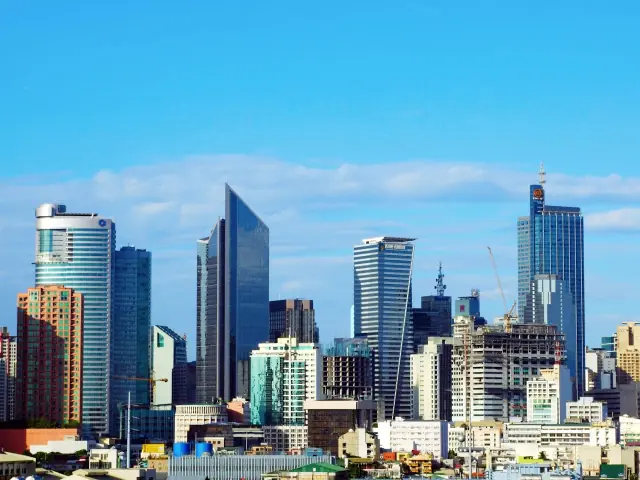
Makati
Metro Manila
Metro Manila's classic expat district — Legazpi Village markets, Poblacion nightlife, and the most walkable CBD in the Philippines.
At a Glance
Location
Monthly Budget Snapshot
Full breakdown →| Budget Level | Est. Monthly Total (USD) |
|---|---|
| Budget | $900 |
| Moderate | $1,600 |
| Comfortable | $2,750 |
Last updated: 2026-09-04. Amounts in USD.
Living in Makati as an Expat
If you ask ten expats where they first lived when they moved to the Philippines, at least seven will say Makati. That's not a coincidence. Makati is where international-grade infrastructure meets a functional street grid meets actual nightlife — a combination that doesn't exist anywhere else in Metro Manila at this price point.
Makati is the country's financial center. It has the largest concentration of embassies, multinational offices, and international restaurants outside of BGC. It's also genuinely walkable within the CBD, which sounds like a low bar but is remarkable in Philippine cities. You can live in Legazpi Village, walk to a Saturday market, walk to dinner, and walk home without once needing a Grab. That is a rarity in this country.
It's not perfect. Makati's traffic leaving the CBD can be stunning in its awfulness. Construction noise is essentially permanent somewhere within a ten-block radius. The city has real income inequality visible in the contrast between the barangay slums adjacent to Rockwell and the Porsche dealerships a few blocks north. But for most expats landing in the Philippines for the first time, Makati is the right starting point.
Best Neighborhoods
Legazpi Village is my first recommendation. Tree-lined streets, good walkability, close to the Legazpi Sunday Market, and a strong concentration of cafés, gyms, and international restaurants. One-bedroom condos here run ₱25,000–₱40,000/month ($450–$715). Buildings like One Legazpi Park and Legazpi Parkview are popular with expats. The neighborhood feels residential without being isolated from the commercial energy of Ayala Avenue.
Salcedo Village is the slightly quieter, slightly more upscale version of Legazpi. The Salcedo Saturday Market is one of my favorite things in Metro Manila — fresh bread, good coffee, quality produce, Filipino street food, and half the expat community milling around at 8am. Condos here run ₱28,000–₱50,000/month. It's a calmer neighborhood with wider sidewalks than most of Makati.
Poblacion has become Metro Manila's best neighborhood for eating and drinking, and it happened fast. Ten years ago this was a quiet residential barrio; now it's packed with craft cocktail bars, wine shops, cheap Filipino joints, and restaurants that would hold their own in any Asian capital. Rocket Room, The Back Room, and Handlebar are reliable bar destinations. For food, Metronome does excellent modern Filipino, and there are a dozen carinderia-style spots for ₱100 lunches if you know where to look. Rent in Poblacion is lower than Salcedo — ₱18,000–₱35,000/month — partly because the streets are noisier and the buildings older.
Rockwell Center is a gated mixed-use development anchored by Power Plant Mall. It's the most polished residential option in Makati — quieter, cleaner, and more family-friendly than Poblacion or Salcedo. Condo prices reflect it: ₱40,000–₱80,000/month for a one-bedroom. The trade-off is that Rockwell can feel slightly isolated; you need a Grab or a short walk to get anywhere outside the development. Good choice for families or people who want maximum predictability.
Bel-Air and San Lorenzo Village are older upscale residential areas with actual houses, not just condos. These are popular with expats on company housing packages who want garden space and a garage. Monthly rents for a house run ₱60,000–₱150,000+ depending on size.
Cost of Living
Makati is Metro Manila's moderate tier — significantly cheaper than BGC, significantly more comfortable than Manila proper. Monthly snapshots:
- 1BR condo (Legazpi/Salcedo): ₱25,000–₱45,000 ($450–$805)
- 1BR condo (Poblacion): ₱18,000–₱35,000 ($320–$625)
- Rockwell 1BR: ₱40,000–₱80,000 ($715–$1,430)
- Carinderia lunch: ₱80–₱120
- Mid-range restaurant dinner: ₱400–₱800
- High-end dinner (Legazpi/Salcedo): ₱1,200–₱3,000
- Monthly groceries: ₱10,000–₱18,000
- Grab rides within Makati: ₱80–₱200
A comfortable Makati lifestyle — decent condo in Legazpi or Salcedo, eating out most days, occasional nights in Poblacion, gym membership, Grab habit — runs ₱55,000–₱85,000/month ($985–$1,520). Budget-focused expats can live well on ₱40,000 if they cook at home and stick to Poblacion's cheaper options. Full breakdown at /cost-of-living/makati.
Internet & Coworking
Internet in Makati's CBD is genuinely reliable. PLDT Fibr, Globe At Home, and Converge all cover the major condos and commercial buildings — 50–100 Mbps on a standard fiber plan is realistic. Converge in particular has been competitive on pricing and consistently fast in the Makati corridors.
For coworking, Makati has good options:
- WeWork Ayala Triangle — the premium option, best for client meetings or corporate setup, around ₱500–₱800/day or monthly memberships starting at ₱15,000
- KMC Solutions (multiple Makati locations) — solid hot-desks and private offices, more professionally Filipino than WeWork, monthly starts around ₱8,000–₱12,000
- Regus (Ayala Avenue) — reliable for day passes, ₱450–₱600/day
- The Collective in Poblacion — smaller, more creative-industry crowd, well-suited for freelancers
Most expats working remotely just work from their condo. The internet quality in newer buildings is good enough. Coworking is more for those who need a professional address, meeting rooms, or separation between work and home.
Healthcare
Makati Medical Center on Amorsolo Street is the headline hospital and one of the best private hospitals in the country. Good specialists across most disciplines, modern facilities, English-speaking staff, and international insurance accepted. For anything serious — cardiac, orthopedic, cancer — this is where I'd go in Metro Manila. Emergency wait times are shorter than you'd expect for a major Metro Manila hospital.
St. Luke's Medical Center Global City is technically across the border in BGC but accessible from Makati in 15 minutes by Grab. Some expats prefer it for subspecialty care.
For routine care, The Medical City has a Makati branch, and there are dozens of smaller clinics in the Ayala area. The Ayala Center itself has a Generika Pharmacy and Mercury Drug for basic needs.
Dental care in Makati is excellent and cheap by Western standards. Expect to pay ₱800–₱2,000 for a cleaning, ₱4,000–₱10,000 for a crown. I get my dental work done here specifically when I'm visiting.
Safety
Makati's CBD is one of the safest urban areas in Southeast Asia for its population density. Private security guards are at every building entrance, mall, and parking structure. Streets in Legazpi, Salcedo, and Rockwell are well-lit and have consistent foot traffic at night. I've walked home at 2am from Poblacion more times than I can count without incident.
The parts of Makati to be more careful in: Guadalupe, the eastern reaches of Bangkal, and the informal settlements adjacent to the major highways. These aren't no-go zones but they're not the sanitized CBD, either. Normal urban street awareness applies.
Makati proper is not significantly typhoon-exposed relative to coastal areas, but heavy rain causes flooding in lower-lying parts of the city. The Pasig River area can flood. Main residential neighborhoods are generally fine.
Food & Dining
Makati's food scene is the best in the Philippines, and I don't think it's particularly close.
The Legazpi Sunday Market is my first stop whenever I'm back. Fresh kesong puti from a local dairy farm, tocino rolls from a home baker, longganisa from a stall that's been there for fifteen years. It runs 7am–2pm, gets crowded by 9am, and is worth setting an alarm for.
The Salcedo Saturday Market is similar but slightly more polished and higher-end — more artisan products, more Western expat vendors.
For restaurants: Metronome in Poblacion does modern Filipino that's actually interesting, not just halo-halo with a truffle upgrade. Toyo Eatery on Chino Roces is where I take anyone visiting Manila who wants to understand what Filipino cuisine can be at a high level — book ahead. Za Sauce in Poblacion is my go-to for late-night pasta. Yardbird Southern Table at Ayala if you miss American BBQ. For cheap eating, the carinderia strip on Rada Street in Legazpi Village is where I grab lunch most days — rice and two viands for ₱100.
Poblacion's bar scene warrants its own paragraph. Rocket Room for craft cocktails. The Back Room for wine and a quieter crowd. El Chupacabra for tacos and cold beer when you want to be around other expats. The density of good options within three blocks of each other is remarkable.
Getting Around
Within the CBD, walking is genuinely feasible. Legazpi to Salcedo takes 10 minutes on foot. Salcedo to Poblacion is 15 minutes. Ayala MRT station (MRT-3 line) connects Makati to Quezon City in the north and Taft Avenue/Pasay in the south — useful for cross-metro trips, less useful for getting around Makati itself since the station is on the northern edge of the CBD.
Grab is the primary way to move around and in and out of Makati. Budget ₱100–₱200 for rides within the city, ₱200–₱400 to BGC depending on traffic, and ₱300–₱600 to NAIA. Traffic from Makati to anywhere during peak hours (7–10am, 5–8pm) can be brutal — a 3km trip can take 45 minutes on a bad day.
Jeepneys and tricycles cover local routes but the routes are hard to decode without local knowledge. E-jeepneys are replacing traditional jeepneys on some corridors. For most expats, it's Grab or walking.
Expat Community
Makati has the largest, most organized expat community in the Philippines. This is where people find their first apartment, their first Filipino friends, and their first regular bar. The expat community is diverse — Americans, Brits, Australians, Koreans, Japanese, Europeans — and tends to cluster in Poblacion and around the Legazpi/Salcedo weekend markets.
Active Facebook groups: Expats in Manila Philippines and BGC and Makati Expats are the main ones, both with active members posting about apartments, jobs, and local tips. InterNations Manila holds monthly events at various Makati venues. The American Chamber of Commerce (AmCham) and British Chamber are active if you have business interests.
If you want to meet people organically, show up to Salcedo market on a Saturday morning or grab a bar stool at Poblacion on a Friday night. The community is accessible without needing to join a formal group.
Climate & Weather
Same as the rest of Metro Manila: 24–34°C (75–93°F) year-round, dry season December through May, wet season June through November. Makati is inland enough that it doesn't get coastal storm surge, but heavy rains cause flooding in some lower-lying streets near the Guadalupe area. The CBD itself drains reasonably well.
Humidity is the real climate challenge — not the temperature, but the thick air that makes stepping outside at 2pm in April genuinely unpleasant. Most expats plan outdoor activities for early morning or evening during dry season. Air conditioning everywhere means indoor life is comfortable year-round.
Who Should (and Shouldn't) Move Here
Makati is right for you if: you're new to the Philippines and want a reliable base that covers all the basics, you want excellent food and nightlife, you're working in a Manila-based office or the CBD, you want the most walkable Metro Manila experience, or you have a budget in the ₱55,000–₱100,000/month range.
Makati is not the best choice if: you have school-age children who need international schools (ISM and British School Manila are in BGC — the commute is doable but daily), you want maximum internet speed and modern infrastructure (BGC is a step up), or you're extremely noise-sensitive (construction and nightlife noise are constants).
Don't move to Makati expecting it to be cheap. It's affordable by Singapore or Hong Kong standards, not by Philippine provincial standards. If budget is the primary driver, you'll be happier in Manila proper or in Cebu City.
Compare Makati with other cities
Side-by-side cost, safety, and internet comparison.