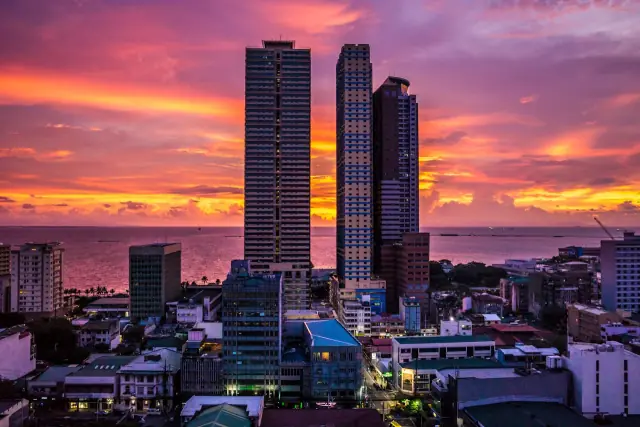
Manila
Metro Manila
The historic capital — Intramuros, Chinatown, and raw Filipino culture at Metro Manila's lowest prices.
At a Glance
Location
Monthly Budget Snapshot
Full breakdown →| Budget Level | Est. Monthly Total (USD) |
|---|---|
| Budget | $600 |
| Moderate | $1,100 |
| Comfortable | $1,950 |
Last updated: 2026-09-04. Amounts in USD.
Living in Manila (City Proper) as an Expat
I grew up in Manila. Not Makati, not BGC — Manila. The city proper, with its diesel fumes and Spanish church bells and jeepneys grinding through Quiapo traffic. So when I tell you Manila is gritty and overwhelming and cheap and deeply alive, I'm not working from a travel blog — I'm working from memory.
Manila city proper is the original Metro Manila, the one that existed before developers built Makati out of rice paddies and before the military sold off Fort Bonifacio. It's where roughly 1.9 million people live on top of each other across Intramuros, Ermita, Malate, Binondo, Sampaloc, and a dozen other districts. It is loud, dense, and relentless. It is also the cheapest place to live in Metro Manila by a significant margin, and the food — particularly in Binondo — is some of the best eating I've done anywhere.
Most expats skip Manila city proper entirely and head straight to Makati or BGC. That's a reasonable choice. But if you want authentic Filipino urban life and your budget is limited, Manila proper deserves more than a day-trip itinerary.
Best Neighborhoods
Ermita and Malate are the traditional expat and backpacker zone, sitting along Manila Bay. Malate in particular used to be the nightlife district before Poblacion took that title. Today both neighborhoods are a mixed bag — some blocks feel relaxed and walkable, others feel run-down. The baywalk along Roxas Boulevard has been cleaned up significantly and is genuinely pleasant in the evenings. One-bedroom condos here run ₱12,000–₱20,000/month ($215–$360), which is roughly half of what you'd pay in Makati. Decent mid-range options include units at Horizon Homes or along M. Adriatico Street.
Intramuros is the walled Spanish colonial city — 16th-century stone fortifications, cobblestone streets, San Agustin Church, and Fort Santiago. It's becoming a boutique tourism destination with good cafés and heritage hotels. For long-term living it's impractical — inventory is limited and the tourist foot traffic gets old quickly. But it's a beautiful neighborhood to be near, and I'd consider an Ermita apartment partly for proximity to it.
Binondo is the world's oldest Chinatown, officially established in 1594. This is where I'd eat every single day if I were living in Manila proper. More on that in the Food section, but know this: the concentration of incredible, cheap Chinese-Filipino food here is unmatched. Living in Binondo itself is possible but the streets are chaotic even by Manila standards. Most people who want Binondo access live in nearby Sta. Cruz or Quiapo and commute the few minutes over.
Sampaloc is the university belt. UST (University of Santo Tomas) anchors the neighborhood, and the population is overwhelmingly students. Rent is extremely cheap — ₱8,000–₱15,000/month for a decent room or studio. It's noisy, fast-paced, and has excellent cheap eats on every corner. Not the right neighborhood for someone who wants quiet, but if you're young and on a budget it works.
Malate/Paco is the most livable option for expats who want Manila proper at reduced intensity. Paco in particular has some quieter residential blocks and is close enough to Ermita and the bay to feel connected without being in the thick of it.
Cost of Living
Manila city proper is the budget option for Metro Manila, full stop. Monthly budget snapshots:
- Studio/1BR condo: ₱10,000–₱22,000 ($180–$395)
- Street food meals (carinderia lunch): ₱60–₱100
- Mid-range restaurant dinner: ₱300–₱600
- Monthly groceries (wet market + SM): ₱8,000–₱14,000
- Grab rides within the city: ₱100–₱250
- Gym membership: ₱1,500–₱2,500
A no-frills but decent lifestyle in Ermita — condo, groceries, eating out a few times a week, transport — runs ₱35,000–₱50,000/month ($625–$895). That's hard to beat anywhere else in Metro Manila. Full breakdown at /cost-of-living/manila.
Internet & Coworking
This is the weakest link for remote workers. Fiber coverage is patchy across Manila proper — some buildings have it, older ones don't. Where fiber exists, PLDT Fibr and Globe At Home offer plans at 35–50 Mbps. Converge has been expanding but coverage is inconsistent. Don't assume your target building has fiber until you confirm it in person.
Dedicated coworking is limited compared to Makati or BGC. Clock In Coworking (near Ermita) is one of the more reliable options. The Grid near Binondo caters to students and freelancers. WeWork and KMC don't have Manila proper branches. If remote work is your primary activity, this is a real constraint. Mobile data (PLDT or Globe prepaid) as a backup is advisable — 4G is solid across most of the city.
Healthcare
The Philippine General Hospital (PGH) on Taft Avenue is the country's largest government hospital and a teaching hospital for UP Manila's College of Medicine. The quality of care is high but the volume is staggering — long waits are standard. For most expats on private insurance, PGH is a last resort.
Manila Doctors Hospital on United Nations Avenue in Ermita is the go-to private hospital for the area. Decent facilities, English-speaking staff, and far more accessible than PGH for routine care. For anything serious — cardiac, oncology, complicated surgery — I'd recommend making the 20-minute Grab ride to Makati Medical Center or St. Luke's Global in BGC. Manila proper hospitals are adequate but not at the level of those two.
Safety
I'm going to be direct here because I grew up navigating this city: Manila proper requires more awareness than Makati or BGC, and a few neighborhoods require real caution.
Tondo is the district most expats hear about first. Parts of it are genuinely dangerous — not theoretical danger but the kind with documented gang activity and high crime rates. I would not recommend living in Tondo. Passing through on the way to the port is fine; wandering on foot at night is not.
Quiapo around the market area and especially near the mosque district gets dense and chaotic. Pickpocketing is common. Don't carry a visible camera or have your phone out on the street.
Ermita and Malate are safer but still require street-smart behavior. Don't flash expensive gear, be aware of who's around you at night, and take Grab after dark rather than walking more than a couple of blocks.
The Manila Bay area and Intramuros feel relatively safe during the day. Ermita's main streets have security presence. The university belt in Sampaloc has lots of foot traffic which provides some natural safety.
Manila proper has no significant earthquake fault running directly through it (the West Valley Fault runs closer to Marikina), but it is low-lying and historically flood-prone. Typhoon season (July–November) brings flooding risk in parts of Malate and Sampaloc. Check flood maps before committing to a ground-floor unit anywhere in this area.
Food & Dining
This is where Manila proper wins, and it's not close.
Binondo is the main event. Wai Ying on Benavidez Street does dimsum that I think about when I'm eating a $17 dumplings plate in Manhattan. President Grand Palace on Ongpin Street is the classic upscale Chinese-Filipino spot — whole roast pig, lobster with egg tofu, the works. For something chaotic and delicious, walk into any of the noodle shops off Ongpin and order the pancit molo or the beef tendon soup. You will spend ₱100–₱200 for a full meal.
For a more refined Binondo experience, Sincerity Cafe & Restaurant on Carvajal Street has been there since 1945 and hasn't needed to change.
Ermita and Malate have a range of local restaurants, some good, some catering to tourists. Aristocrat Restaurant on Roxas Boulevard has been serving Filipino comfort food since 1936 — the chicken barbecue and java rice are iconic. For everyday eating, the carinderias along M.H. del Pilar and A. Mabini are honest, cheap, and quick. A tray of rice with two viands is ₱80–₱120.
The Manila Bay boardwalk has cleaned up its food options — there are a few decent open-air spots for a beer and fried seafood at sunset, which is genuinely one of the nicer things you can do in the city for almost no money.
Getting Around
Manila's internal transport is a mix of jeepneys, tricycles, UV Express vans, and Grab. The LRT-1 light rail runs along Taft Avenue and connects Baclaran in the south to Monumento in the north, passing through Ermita, Paco, and Quiapo. It's cheap (₱30–₱35) and avoids traffic entirely — I used it constantly as a kid. The MRT-3 connects Taft Avenue to North Edsa, useful for getting to Makati or Quezon City.
Grab is available and reliable. Budget ₱150–₱300 for most trips within Manila proper; ₱300–₱500 to reach Makati during off-peak hours, more in traffic.
Ninoy Aquino International Airport (NAIA) is effectively in Manila — Terminal 1 is in Paranaque, about 20–30 minutes from Ermita by Grab (₱200–₱350). No rail connection to the airport exists yet as of early 2026, though the NAIA Expressway cuts transit time significantly.
Walking is possible in Intramuros and the Ermita/Malate strip but Manila's sidewalks are inconsistent — vendors, parked motorcycles, broken pavement. I wouldn't plan to walk more than 10–15 minutes for any regular commute.
Expat Community
The expat community in Manila proper is smaller and less organized than Makati or BGC. You'll find some long-timers in Ermita — mostly older retirees who have been here for decades, a few budget travelers who extended their stay, and some English teachers. There's no dominant expat hub or bar scene the way Poblacion serves Makati.
The Facebook group Expats in Manila Philippines has a few thousand members and covers all of Metro Manila, but most activity is Makati/BGC-focused. For Manila proper specifically, you're more likely to meet people through the hostel scene in Malate, through language exchange meetups, or through university-adjacent events in Sampaloc. It's a more organic expat experience — less curated, more accidental.
Climate & Weather
Manila proper sits at sea level facing Manila Bay. Temperatures run 24–34°C (75–93°F) year-round. The dry season runs roughly December through May; the wet season from June through November.
Typhoon exposure is real. Manila is not in the typhoon belt the way the eastern Visayas are, but it sits in the path of storms making landfall across Luzon. A strong typhoon bringing heavy rain and wind happens at least once or twice a season. The bigger practical risk is flooding — low-lying areas of Malate, Ermita, and Sampaloc can flood significantly during heavy rain even without a typhoon. The 2009 Ondoy flooding was catastrophic here. Climate-related flooding risk has not gone away.
Who Should (and Shouldn't) Move Here
Manila proper is right for you if: you're on a tight budget, you want to actually live in Filipino culture rather than adjacent to it, you care deeply about food (Binondo specifically), you're drawn to history and layered urban texture, or you're already in the Philippines and want the most affordable Metro Manila option.
Manila proper is not right for you if: you need fast reliable internet for work, you have kids who need international schools, you have health conditions that require premium hospital access, or you find chaotic urban environments genuinely stressful rather than interesting. BGC or Makati will serve you better.
I'll also say this: don't move to Manila proper as your first base if you've never been to the Philippines. The city rewards familiarity. Come here after you know the country a little — after you've spent time in Makati or Cebu and have calibrated what normal looks like. Then Manila proper makes sense as a deliberate choice rather than an accidental one.
Compare Manila with other cities
Side-by-side cost, safety, and internet comparison.