Batangas
Batangas
Batangas is the province Metro Manila commuters use when they want a cheaper house and a slower week, with Taal Volcano sitting in the middle of it.
Safety and expat-friendliness scores are editorial judgments. Internet figures are planning references, not a speed guarantee for your address.
At a Glance
Location
Monthly Budget Snapshot
Full breakdown →| Budget Level | Est. Monthly Total (USD) |
|---|---|
| Budget | $800 |
| Moderate | $1,250 |
| Comfortable | $2,000 |
USD estimate data updated: 2026-10-05. Amounts in USD.
Living in Batangas as an Expat
Batangas sits south of Cavite and Laguna, about two hours by expressway from Metro Manila, and most foreigners choose it because it offers some of the closest affordable real estate to the capital. The province recorded 2,994,795 residents in the 2024 census across 34 cities and municipalities covering 3,163 square kilometres. Population growth averaged 0.70 percent annually between 2020 and 2024. That pace is low for a province in Manila's orbit, helping it maintain a provincial rhythm.
Unlike Cebu or Baguio, Batangas is divided into distinct hubs rather than centering on a single metro area. Where you live dictates your day-to-day experience. Lipa, an inland city of 387,392, is the largest locality in the province and attracts most retirees and families. Batangas City (358,267) is an industrial port city at the head of Batangas Bay. Along the coasts, Nasugbu (141,063) in the west and San Juan (115,118) in the east host the main beach resorts, while Anilao in Mabini is the province's dive hub. To the north, Sto. Tomas (226,772) absorbs suburban overflow from Metro Manila.
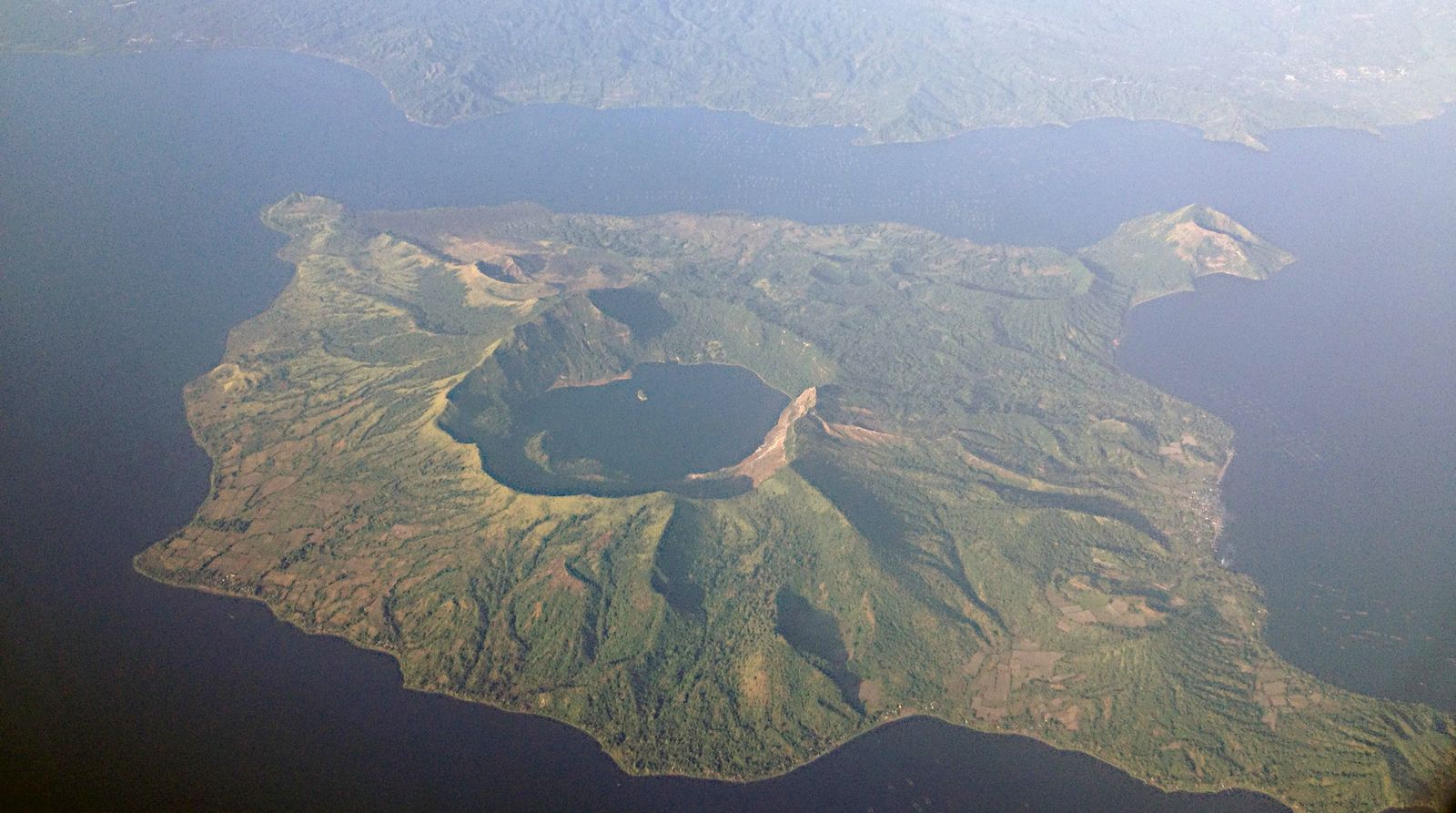
Taal Volcano shapes the entire province. One of the smallest active volcanoes in the world, it sits inside Lake Taal with hundreds of thousands of people living in the towns around the lake. Any honest evaluation of Batangas starts with the reality of living next to an active caldera.
Where to base: Lipa, Batangas City, or the coast
Lipa is the most practical base for a long stay. Sitting about 300 metres (roughly 1,000 feet) above sea level, it usually runs a few degrees cooler than Manila. It also hosts the province's primary medical and commercial services: the ISO-certified Mary Mediatrix Medical Center on J.P. Laurel Highway, universities, shopping malls, and a compact downtown district. Rents remain low. Wise reports median rents in Lipa at $81 a month for an inner-city one-bedroom apartment, $62 outside the center, and $252 for a three-bedroom unit. Those crowd-sourced medians reflect basic local stock; furnished units of the kind most foreigners rent cost more, as the cost section below shows. For retirees and families, Lipa offers low provincial overhead with a full-service hospital ten minutes away.
Batangas City makes sense for residents tied to the shipping industry or who want the ferry port to Mindoro on their doorstep. As the provincial capital, it serves as the ferry terminal for Puerto Galera and Oriental Mindoro. It is hotter and flatter than Lipa, with an industrial port setting rather than tree-lined residential neighborhoods. Its tertiary public facility, the Batangas Medical Center on Bihi Road, is a DOH-operated regional referral and training hospital capable of managing major medical emergencies locally.
Nasugbu and Laiya (San Juan) cater to coastal life. Nasugbu has an established residential and resort footprint, including developments such as Punta Fuego and Hamilo Coast. Laiya is a strip of beachfront resorts in San Juan, on the province's east coast, known for calm water. The main dive area, Anilao in Mabini, is on the opposite side of the province on Balayan Bay. Housing costs run high along this coastal strip due to resort demand, and communities experience seasonal tourist crowds. These towns suit residents who prioritize boating, diving, or sea views over proximity to urban conveniences.
Sto. Tomas and the northern towns accommodate commuters. Sitting on the Laguna border at the top of the STAR Tollway, the closest part of the province to the Metro, their new housing subdivisions target people working in the capital who sleep in Batangas.
Cost of Living
Batangas costs considerably less than Makati or BGC, and rent is where most of the savings show up. Current cost-of-living data for the province estimates a single person's monthly spending at roughly $800 on a lean budget, $1,250 on a moderate budget, and $2,000 on a comfortable budget. According to Numbeo's October 2026 figures for Batangas, a one-bedroom apartment outside the city center rents for ₱4,500, a basic restaurant meal costs ₱135, and taxi fares start with a ₱50 flag-down rate.
Housing provides the main financial advantage. In Lipa, furnished one-bedroom units cost $120–300 per month, while two-bedroom houses or apartments range from $200–550. Batangas City runs slightly higher for modern builds, while Nasugbu and Laiya reflect beachfront pricing. The key difference compared to the capital is space: the rent for a small studio in Makati secures a detached house with a private garden in Batangas.
Utility bills can run higher than expected because of heavy air conditioning use and provincial electricity rates. Numbeo records basic monthly utilities for a 915-square-foot apartment at ₱10,379.55. Wise lists typical Lipa utility costs at $141 monthly, with broadband adding about $24. Food budgets vary by venue: local carinderia meals cost a couple of dollars, while sit-down Western meals in Lipa or coastal resorts run $8–15.
Internet & Coworking
Fiber connections are widely available across Lipa, Batangas City, and Sto. Tomas through national telecommunications providers, with home packages typically running $20–45 a month for speeds between 35–100 Mbps. The northern corridor has the most consistent service because it supports commuter estates and remote staff. Coastal internet is less reliable, with resort Wi-Fi speeds ranging from fast to unusable. Anyone depending on remote employment should verify line speeds at the exact rental address prior to leasing.
The province lacks the organized coworking spaces found in Cebu or Metro Manila. Several cafés in Lipa and Batangas City accommodate remote workers during the day, but most people work from home and maintain a local SIM and data plan for mobile hotspot backup.
Healthcare
Two major tertiary hospitals handle severe health conditions locally. In Batangas City, Batangas Medical Center is a tertiary public facility and DOH regional referral center with medical residency programs. It handles complex surgical and trauma cases that previously required transit to Manila. In Lipa, Mary Mediatrix Medical Center on J.P. Laurel Highway is a large private, ISO-certified tertiary hospital offering the province's deepest roster of clinical specialists. Together, these two facilities cover routine surgery, cardiac interventions, and specialist consultations.
Batangas lacks Metro Manila's deep network of sub-specialists. Patients needing specialized oncology treatments, organ transplants, or rare disease management must travel one to two hours by highway to Manila hospitals. Securing an international health insurance policy with emergency medical evacuation is advisable. Foreign residents who qualify can enroll in PhilHealth; application steps are detailed in the healthcare guide.
Safety
Batangas has a low crime rate by national standards, and street violence is uncommon. Practical safety concerns stem almost entirely from local geography and weather.
Taal Volcano poses the primary geographic hazard, as covered in the next section. Coastal waters introduce hazards including rip currents and offshore diving risks, while provincial transit is complicated by unlit two-lane highways where vehicles overtake aggressively. Batangas also sits directly in the path of seasonal typhoons. Severe weather brings regular flooding to low-lying communities near Lake Taal and along mountain river basins.
Taal Volcano and the risk you have to price in
Taal Volcano directly influences where it is sensible to settle in Batangas. Volcano Island within Lake Taal is an uninhabitable Permanent Danger Zone, and PHIVOLCS monitors the surrounding basin continuously. The baseline Permanent Danger Zone covers a four-kilometre radius, expanding up to eight kilometres under Alert Level 3 and reaching nine kilometres or more under Alert Level 4. Eleven lakeshore municipalities and cities have barangays that can fall inside an expanded danger zone: Talisay, San Nicolas, Agoncillo, Laurel, Balete, Mataasnakahoy, Alitagtag, Cuenca, Santa Teresita, Tanauan, and Lipa.
This alert perimeter directly impacts residential safety. Shoreline residences risk mandatory evacuation orders with minimal warning. Homes in central Lipa or Batangas City lie outside the immediate danger zone, yet remain exposed to heavy ashfall during volcanic events. In 2020, an explosive eruption deposited dense ash over Lipa, Batangas City, and large parts of Calabarzon, requiring mass evacuations. Check current volcano bulletins on the PHIVOLCS portal and consult the local barangay hall before purchasing land or signing a residential lease. Taal has spent long stretches at Alert Level 1 (low-level unrest), but the level changes, so check the latest bulletin rather than this page.
Food & Dining
Batangas has a distinct culinary culture centered on regional specialties. The province is famous for bulalo, a slow-simmered beef shank and bone marrow soup, as well as Batangas lomi, an egg-noodle dish served in a thick, savory broth. Roadside eateries and dedicated restaurants throughout Lipa specialize in both dishes. Coastal fish markets sell fresh seafood at low prices, while lakeside stalls sell freshwater tilapia and tawilis from Lake Taal. Lipa retains an active coffee heritage centered on locally grown kapeng barako (Liberica beans), with regional roasteries and modern cafés operating across town.
Day-to-day dining at neighborhood carinderias costs a couple of dollars a meal. Lipa and Batangas City offer the widest variety of eateries, ranging from traditional Filipino grill houses to Korean and Japanese restaurants that cater to international industrial staff. Dining options on the coast consist mostly of resort-run restaurants with higher menus.
Getting Around
Batangas has no commercial airport. The closest international hub is Manila's NAIA, located two to three hours away by road, making an overland drive necessary for any flight. Within the province, intercity bus lines and point-to-point (P2P) vans run multiple times per hour from terminals in Lipa, Batangas City, and Sto. Tomas into Metro Manila.
Local transit relies on jeepneys and motorized tricycles, which run frequent routes along primary roads. Crossing between provincial towns usually requires a private car or scooter, as public routes do not connect every municipal pair directly. Batangas Port is the primary sea terminal for ferries bound for Puerto Galera and Oriental Mindoro. Review the transportation guide for local road rules and the driver's licence guide for steps on converting an international license.
Commuting to Metro Manila
Living in Batangas while working in Manila requires realistic expectations. The area offers an affordable alternative to the capital: families priced out of Makati, Taguig, or Alabang can purchase a house in Sto. Tomas or Lipa at a fraction of those costs. Driving via the South Luzon Expressway (SLEX) and STAR Tollway takes about an hour to Lipa from the southern edge of Manila during off-peak hours, and two hours or more in traffic. Provincial commuter buses average two hours under normal conditions, with substantial delays on Friday evenings and holiday weekends.
This commute is manageable for remote employees making occasional trips to the city. Making the trip daily is exhausting, and cumulative toll fees and fuel costs quickly erode monthly housing savings.
Climate & Weather
Batangas follows a Type I climate cycle, with a dry season running from November through April and a wet season lasting from May through October. High humidity persists year-round due to the surrounding sea and Lake Taal, and intense rainfall produces localized flooding in low-lying towns. Lipa sits at about 300 metres (roughly 1,000 feet), providing cooler evening air than coastal areas or Metro Manila.
Typhoons represent the most frequent operational challenge. Tropical storms pass through the province most years, bringing grid outages, blocked roadways, and landslides and mudflows on the slopes around Lake Taal. Consult municipal flood maps before choosing a building lot, as drainage quality changes dramatically between adjoining barangays.
Getting settled: the paperwork reality
The Philippine Retirement Authority maintains no regional branch in Batangas. The closest PRA location is the head office in Makati. Its other offices are in Angeles/Clark, Baguio, Cebu City, and Davao, so SRRV holders living in Batangas should plan on handling PRA paperwork in Makati (confirm the current office list on the PRA site). The Bureau of Immigration field office in Batangas City handles routine transactions such as tourist visa extensions. If you hold or are applying for a 13(a) permanent resident visa, ask the field office which steps it can process, since many 13(a) filings still go through the BI main office in Intramuros.
Check which banks open accounts for foreigners at a commercial bank branch in Lipa or Batangas City, where retail services are concentrated. Secure a SIM and data plan upon arrival. Budget carefully for your first 90 days, since lease deposits, advance rent, and motorcycle purchases occur before monthly expenses stabilize. For relocating household goods from abroad, consult the shipping guide for clearance regulations.
Frank's Take
Batangas offers the strongest value within driving distance of Manila. Lipa belongs near the top of any retiree's list: cooler elevation, a capable tertiary hospital, low rent, and the capital two hours away. Batangas City makes sense if your work ties you to the international port or industrial facilities. The coast appeals to divers and boat owners willing to pay resort prices and accept quiet off-seasons. Never buy lakeside land without checking the active Taal hazard maps first — the same volcano that keeps land accessible can make an evacuation zone out of your front yard. Batangas offers excellent value, provided you live here for the province itself and avoid a daily commute to Manila.
Who should (and shouldn't) move here
Batangas suits retirees and families seeking an affordable, cooler home within reach of Manila's international airport and tertiary hospitals; remote professionals independent of coworking spaces; and divers or boaters who want coastal living without inter-island flights. It appeals to residents who prioritize residential space and low living expenses over the amenities of Cebu or Baguio.
It is a poor fit for anyone requiring daily peak-hour access to Manila, rapid access to tertiary sub-specialists, or an established foreign social circle. Batangas has no large expat club or formal foreign community; meeting people happens organically through neighbors, local businesses, and personal interests. See making friends in the Philippines for practical suggestions on integrating. Finally, it will not suit anyone uncomfortable living near an active volcano.
Compare Batangas with other cities
Side-by-side cost, safety, and internet comparison.