Baguio
Benguet
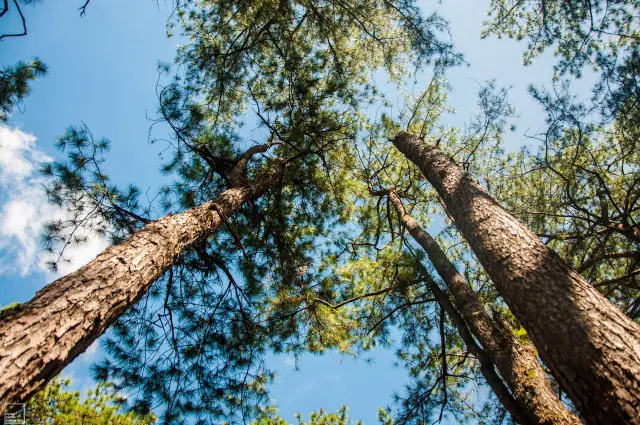
The only city in the Philippines where you don't need AC — pine trees, cool mountain air, and strawberry farms at 1,500 meters.
At a Glance
Location
Monthly Budget Snapshot
Full breakdown →| Budget Level | Est. Monthly Total (USD) |
|---|---|
| Budget | $550 |
| Moderate | $1,000 |
| Comfortable | $1,750 |
Last updated: 2026-09-04. Amounts in USD.
Living in Baguio as an Expat
Every Filipino who grew up in Manila has a Baguio story. A family trip during Holy Week, the car windows fogging up on the Kennon Road switchbacks, the smell of pine hitting you like something from a different country. Baguio was where Manileños went to remember that the Philippines had weather.
At 1,500 meters in the Cordillera Mountains, Baguio runs 15–23°C year-round. The rest of the Philippines is somewhere between warm and punishing. Baguio is the exception, and that exception changes everything about daily life.
For expats: you will not need air conditioning. That one sentence has real financial weight — electric bills run ₱600–₱1,500/month instead of the ₱3,000–₱6,000 you'd pay in Cebu or Manila. You will sleep under a blanket. You will want coffee every morning. You will develop a relationship with fog.
Best Neighborhoods
Camp John Hay is the premier expat address. The former US military base — turned over to the Philippines in 1991 — was redeveloped as an eco-tourism and residential zone, and the grounds are genuinely beautiful: manicured pine forests, jogging paths, a golf course, and a cluster of good restaurants and cafes. The Manor Hotel and a handful of high-end condo developments sit here. It's Baguio's most expensive area and still affordable by international standards. Rents for a furnished one-bedroom start around ₱20,000–₱35,000/month.
Outlook Drive and Dominican Hill offer valley views that justify the winding roads to get there. Long-term expats who want a house rather than a condo tend to land in this area — residential, quiet, genuinely scenic. A house rental here runs ₱15,000–₱30,000/month depending on size.
City center near Session Road is for people who want to walk everywhere. Apartments run ₱8,000–₱15,000/month. You're within walking distance of the market, the main commercial strip, and public transport. Noisier, more urban, more stimulating — the trade-off is a real one.
Mines View and Burnham Park vicinity are popular middle-ground zones. Residential, accessible, not as quiet as Camp John Hay but not as loud as the center.
Cost of Living
Baguio is budget tier with a slight asterisk. The AC savings are real and significant. But some goods cost a bit more than lowland cities because everything gets trucked up a mountain. Imported items, fresh meat, electronics — all slightly pricier than Manila.
On balance: a comfortable expat lifestyle — apartment, groceries, eating out regularly, local transport — runs ₱25,000–₱45,000/month ($450–$800 USD). The lower end of that range is genuinely achievable if you rent near the city center and cook at home. The upper end reflects a Camp John Hay condo with regular restaurant meals.
Baguio Public Market is excellent and cheap for highland produce: strawberries (₱80–₱150 per kilo, depending on season), broccoli, carrots, sayote, and highland leafy vegetables. This is genuinely good food at genuinely low prices.
Internet & Coworking
Internet in Baguio is serviceable but not exceptional. PLDT and Converge fiber cover the main residential areas — Session Road, Camp John Hay, the central districts. Expect 25–50 Mbps on a good day. Reliability is reasonable; outages during storms are more frequent than in lowland cities. Budget ₱1,500–₱2,000/month for a home fiber plan.
There's no established co-working hub the way IT Park serves Cebu. A handful of coffee shops near Session Road and around the city center function as informal work spots — some have decent WiFi, most have outlets. If you need guaranteed uptime for serious work, test your home connection thoroughly before canceling your hotel.
The university population (UP Baguio, Saint Louis University, Baguio University, and others) means the city has tech literacy and a café culture oriented around studying and working. You won't be the only person with a laptop open.
Healthcare
Baguio General Hospital and Medical Center (BGHMC) is the major government hospital — the referral center for the Cordillera Administrative Region. It handles high patient volumes and has expanded significantly over the years. Notre Dame de Chartres Hospital and Saint Louis University Hospital are the main private options.
For routine care, emergencies, and standard procedures: Baguio handles it. The private hospitals are solid. English-speaking staff is the norm given the university environment.
The honest limitation: for complex specialized care — major cardiac surgery, advanced oncology — some cases go to Manila. The 4–5 hour drive down the mountain is the logistical reality. For a healthy retiree or a remote worker in their 30s–40s, this is a background concern rather than an urgent one. For someone managing a serious chronic condition, factor it into your decision carefully.
Safety
Safety score is 8 out of 10. Baguio is consistently among the safer cities in the Philippines.
The city center around Session Road is busy and well-lit and I've walked it at 10pm without incident. The university presence keeps a certain energy alive without the rough edge that comes with more transient populations. Barangay security is visible in most areas.
Petty theft happens — wallets, phones, bags in crowded places like the public market. Standard precautions. Nothing that should deter anyone who's lived in any major city.
The Kennon Road approach to the city has a history of landslides during heavy rain — this isn't crime, but it's a safety reality for mountain living. Marcos Highway is generally more stable. Know your alternate routes.
Food & Dining
Baguio's food scene is good and it leans local in the best way.
Baguio Public Market is the real food anchor. Fresh highland strawberries from La Trinidad, enormous broccoli heads, herbs and vegetables that don't grow in the lowlands, ukay-ukay sections, longganisa (local sausage), and dried goods stalls. Spend a morning here weekly and you'll eat well cheaply.
Session Road has everything from fast food to proper restaurants. Hill Station at Casa Vallejo is the heritage dining spot — good Filipino continental food in a beautiful old building. Café by the Ruins is the local institution for a relaxed lunch and decent coffee. Vizcos has been doing grilled meats and bulalo (bone marrow soup — deeply right in the cool Baguio air) for decades.
For bulalo specifically: Baguio is one of the best cities in the country to eat it. The beef bone marrow soup makes particular sense when it's 18°C outside. This is not a coincidence.
La Trinidad Strawberry Farm (a 10–15 minute drive north) is a legitimate outing — you pick strawberries yourself, buy strawberry jam and wine, and understand why the highland produce is special. Best during peak season (January–March).
Western comfort food is available — pizza, burgers, Korean, Japanese — throughout the city and especially in Camp John Hay. The selection is decent without being wide.
Getting Around
Baguio has no commercial airport. Let that sink in before you plan your life here.
Loakan Airport exists but has not had scheduled commercial flights for years. Getting to and from Baguio means one of two things: the mountain bus (Victory Liner or Genesis from Manila, 4–5 hours via the TPLEX North Luzon Expressway, then the mountain road up) or driving yourself. Some expats fly into Clark International Airport (about 2–3 hours away by car) and drive up from there.
Every trip out of Baguio is an event. Every visit from family or friends requires logistics planning. If you travel frequently — multiple times a month — this is a real friction point. Some expats manage it with a car and genuine comfort on the mountain roads. Others find it wears on them after a year.
Within the city: traffic is genuinely bad now. The one-way system in the center is a puzzle. The roads weren't built for the population Baguio currently has, and Holy Week and December bring tourist gridlock that locals dread. Most expats walk within the center or use Grab and taxis for city trips. A car is useful but also a problem — parking downtown is miserable.
Expat Community
Smaller than Cebu's, smaller than Dumaguete's. Baguio's expat community is real but not prominent.
There are Western retirees — many married to Filipinas who are from the Cordillera region — and a small number of academics and artists who have attached themselves to Baguio's university and creative culture. The connection to US colonial history (Camp John Hay, the Philippine Military Academy) means some American families with military or government backgrounds end up here.
The social scene is more integrated with Filipino life than in expat-heavy Cebu or Dumaguete. Expats here tend to have Filipino friends and move in mixed social circles rather than operating within a dedicated foreign community. Depending on what you want, this is either ideal or isolating.
The BenCab Museum (National Artist Benedicto Cabrera's museum and studio in Asin Road, about 20 minutes from the city center) is excellent — one of the genuinely best art institutions in the country. The arts and craft market culture in Baguio — woodcarving, weaving, silver jewelry from the Cordillera peoples — gives the city a cultural texture you don't find in more commercial Philippine cities.
Climate & Weather
This is Baguio's defining characteristic and I'll give it its due.
Temperatures average 15–23°C year-round. The coolest months are December and January, where nights can drop to 12–14°C — cold enough that Baguio residents bring out sweaters and blankets that the rest of the Philippines owns but never uses. The warmest months (April–May) still rarely exceed 25°C.
You do not need air conditioning. This is not a marketing statement. You genuinely will not install it.
The rainy season (June–October) brings serious precipitation. Baguio is one of the rainiest cities in the Philippines — the Cordillera geography captures moisture from the Pacific. The fog during the wet season rolls through the pine forests and creates an atmosphere that is either romantic or oppressive depending on your mental state. I find it beautiful for two weeks and then I want to see the sun.
Typhoons: Baguio's elevation means it doesn't get typhoon storm surge, but the city sits in the path of storms crossing Luzon from the Pacific. Strong typhoons bring heavy rain and occasional landslides. Kennon Road closures during storms are routine.
Who Should (and Shouldn't) Move Here
Move here if: The climate is your top priority and you're willing to compromise on connectivity and mobility to get it. You want cool air, pine trees, and a creative city atmosphere without paying tropical-city prices for it. You're a retiree or remote worker who doesn't travel more than once or twice a month. You want to be on Luzon — close enough to Manila for logistics — without being in Manila.
Don't move here if: You travel frequently (no airport, remember). You need fast, reliable internet for intensive work. You want a beach. You want nightlife. You want a large expat community with organized social infrastructure. You struggle with extended periods of grey, foggy weather — the Baguio wet season is real, and it lasts five months.
The no-airport situation is genuinely disqualifying for a certain type of expat. Be honest with yourself: if "I need to get out of the city easily" is important to you, Baguio will frustrate you. The mountain road is beautiful. It is also unavoidable, every single time.
Compare Baguio with other cities
Side-by-side cost, safety, and internet comparison.