Boracay
Aklan
Boracay is a small resort island where long-stay life is real but narrow: monthly rents, one hospital, no cars, and a wet season that empties the beach.
Safety and expat-friendliness scores are editorial judgments. Internet figures are planning references, not a speed guarantee for your address.
At a Glance
Location
Monthly Budget Snapshot
Full breakdown →| Budget Level | Est. Monthly Total (USD) |
|---|---|
| Budget | $900 |
| Moderate | $1,500 |
| Comfortable | $2,400 |
USD estimate data updated: 2026-10-01. Amounts in USD.
Living on Boracay as an Expat
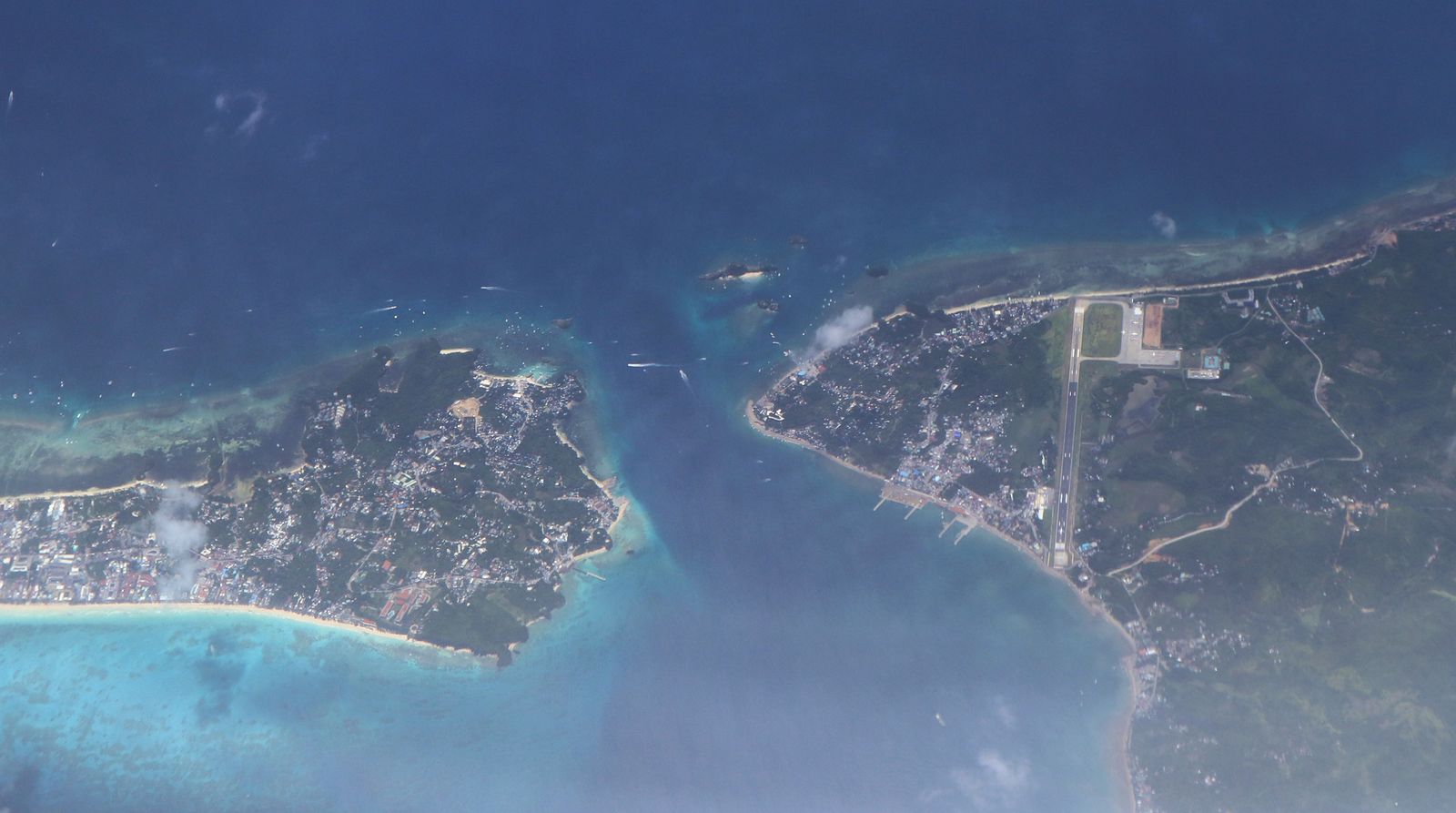
Boracay is 1,032 hectares of island in the municipality of Malay, Aklan. Most people know it as a beach. A smaller number live on it year-round: dive instructors, hotel and restaurant managers, a few retirees, and remote workers who want the water at the end of the workday.
The 2024 census puts the island's three barangays — Balabag, Manoc-Manoc and Yapak — at 32,627 people, about 61% of Malay's 64,723 residents. Manoc-Manoc alone is the largest barangay in Western Visayas by population at 22,207. That is the resident count, not the visitor count. The island has schools, a barangay hall, a fire station and a permanent working population; it is not a resort with a few staff houses.
What separates Boracay from Bohol, Cebu or Siargao is scale. You are not picking a neighborhood inside a city. You are picking a stretch of a small island, and everything you do — a dentist, a hardware store, a decent router — is either on the island or a boat ride away. That constraint is the whole story of living here.
Best Neighborhoods
Long-stay life clusters in a few places, and they are genuinely different from each other.
Station 1 (Balabag, north end) is the quiet, upmarket stretch of White Beach. Villas and boutique resorts, widest sand, fewest vendors. Monthly rentals here are the most expensive and the hardest to find.
Station 2 (Balabag, center) is the commercial heart — D'Mall, restaurants, the highest foot traffic on the island. Convenient, loud, the least restful. Some long-stayers take it for a month to learn the island, then move.
Station 3 (Manoc-Manoc, south end) is the backpacker end. Cheaper rooms, more local businesses, a long walk to D'Mall but the same water. Most budget long-stay rentals sit here.
Bulabog Beach is the east side, the kiteboarding beach. Cheaper than White Beach, windier in season, and home to a cluster of apartments and guesthouses that quote monthly rates.
Diniwid and Yapak (north) are the quietest pockets, with cliff-side properties and a handful of serviced apartments. Transport is thinner here.
Mainland Caticlan and Malay town are the practical alternative. You are off the island, but rent is lower, there is a real market, and you are ten minutes from the jetty. Some long-stayers who tire of island pricing move here and cross for the beach.
Cost of Living
Outside Metro Manila's BGC and Makati, Boracay is the most expensive place on this site, and freight is the reason. Almost everything you eat, drink or plug in arrives by boat, and the price reflects it.
Monthly rent is the line that surprises people. Long-stay listings in the island's rental groups run roughly ₱12,000 to ₱25,000 a month for a studio or small one-bedroom, about ₱20,000 to ₱40,100 for a proper one-bedroom, and ₱45,000 to ₱50,000 and up for a two-bedroom. That is roughly $190 to $400 for a studio and $320 to $640 for a one-bedroom at about ₱62.6 per US dollar. At the top end — beachfront, serviced, monthly — you can spend more than a Metro Manila condo.
Prices are seasonal and property-managed, so treat any single figure as a starting point for a negotiation, not a market rate. Most long-stay landlords want six months minimum, and many quote utilities on top of rent.
A single remote worker in a studio, cooking some meals and using a fan instead of air conditioning, can hold the line near $900 a month. Add a one-bedroom, air conditioning running most nights, regular restaurant meals and a scooter on the mainland, and $1,500 is realistic. Comfortable — beachfront-ish, Western dining, a serviced apartment — is $2,400 and up. The cost-of-living breakdown has the line items.
Internet & Coworking
Internet is the biggest practical complaint about Boracay, and it has been for years. Reports from long-stayers range from "fine, I work every day" to "1 Mbps and it drops". The island has fiber from the main providers and Starlink is now an option, but coverage varies street by street and property by property. Brownouts still happen, so a place with a generator is worth paying for.
If your income depends on a stable connection, do not sign a six-month lease from a photo. Rent for a month in the building you are considering, run a speed test at 9am and 9pm, and ask what happens to the router when the power blips. The island's cafes and coworking-friendly spots are backup, not a plan. See the internet guide and the digital nomad setup post for what to test.
Healthcare
For years the standard line was "there is no hospital on Boracay". That is no longer accurate, but it is not a full solution either.
Saint Gabriel Medical Center runs a 24-hour facility on the island with emergency care, a lab and X-ray, and there are 24-hour clinics in Balabag and Manoc-Manoc for the routine things — a fever, a sprain, a prescription. What the island still lacks is depth. Complex cases, surgery needing a specialist team, and intensive care are referred off-island.
The provincial referral hospital is Dr. Rafael S. Tumbokon Memorial Hospital in Kalibo, the Aklan capital, on the mainland. Kalibo also has the larger airport, which matters if a serious case needs a flight on to Manila or Iloilo.
The practical consequence: buy evacuation-inclusive health insurance before you commit to living here, and know that a medical emergency on Boracay involves a boat and a road. The healthcare guide covers how expat cover works in the Philippines.
Safety
Boracay is a small, well-lit, heavily patrolled island, and violent crime against foreigners is rare. The risks are ordinary ones: petty theft in the busy parts of Station 2, drink-spiking in nightlife venues, and a persistent scam problem around motorcycle and e-trike rentals.
Two island-specific hazards are worth naming. Rip currents on White Beach are real, and drownings happen every year — swim near a lifeguard station. The roads are narrow and shared with e-trikes, scooters and delivery bikes; if you ride, wear a helmet and expect traffic.
The general safety guide covers the country-level picture. Boracay is not a risky place. It is a busy tourist town with the crime profile of one.
Food & Dining
The island's food economy splits in two. Local carinderias and the market in Manoc-Manoc and behind D'Mall serve Filipino food at ₱100 to ₱200 a plate. The White Beach strip serves international menus at Manila-plus prices — ₱400 to ₱900 for a main course, cocktails to match.
Long-stayers cook. The island has small groceries and a wet market, but selection is thinner and dearer than the mainland, so a Caticlan or Kalibo market run becomes routine for anyone who cooks seriously. Fresh fish is the exception: cheap and excellent.
Getting Around
There are no private cars on Boracay. Since the 2018 rehabilitation the island runs on e-trikes — electric tricycles — and they are the only way to move along the main road. You flag a shared one, name your destination, and pay per ride; a short hop is around ₱20 to ₱30 per person, and a cross-island run or a chartered trip costs more. Night rates are higher.
Between White Beach and Bulabog, and along the beach path, you walk. Distances are short. The heat is not.
Getting to the island is its own sequence. You fly into Caticlan (Godofredo P. Ramos Airport) or, for more flights, Kalibo, then take a van or bus to the Caticlan jetty port, then a short boat to Cagban or Tambisaan on Boracay. At the jetty you pay the Aklan terminal fee (₱150) and the Malay environmental fee (₱150 for Filipinos, ₱300 for foreign passport holders), with the boat fare on top. The fees are collected through the Boracay iPass system. The transportation guide covers the country-level version of this.
Expat Community
Boracay's foreign community is smaller and more transient than Cebu's or Manila's, and it skews toward people who work in tourism — dive shops, kite schools, hospitality. There is no big expat club scene. The connective tissue is the dive community, the kite beach at Bulabog, and a set of active Facebook groups where long-term rentals get posted.
Whether that suits you is a personal call. If you want a large, organised retirement circle, Boracay is thin. If you want a handful of people who will know your name, it is easy to find.
Climate & Weather
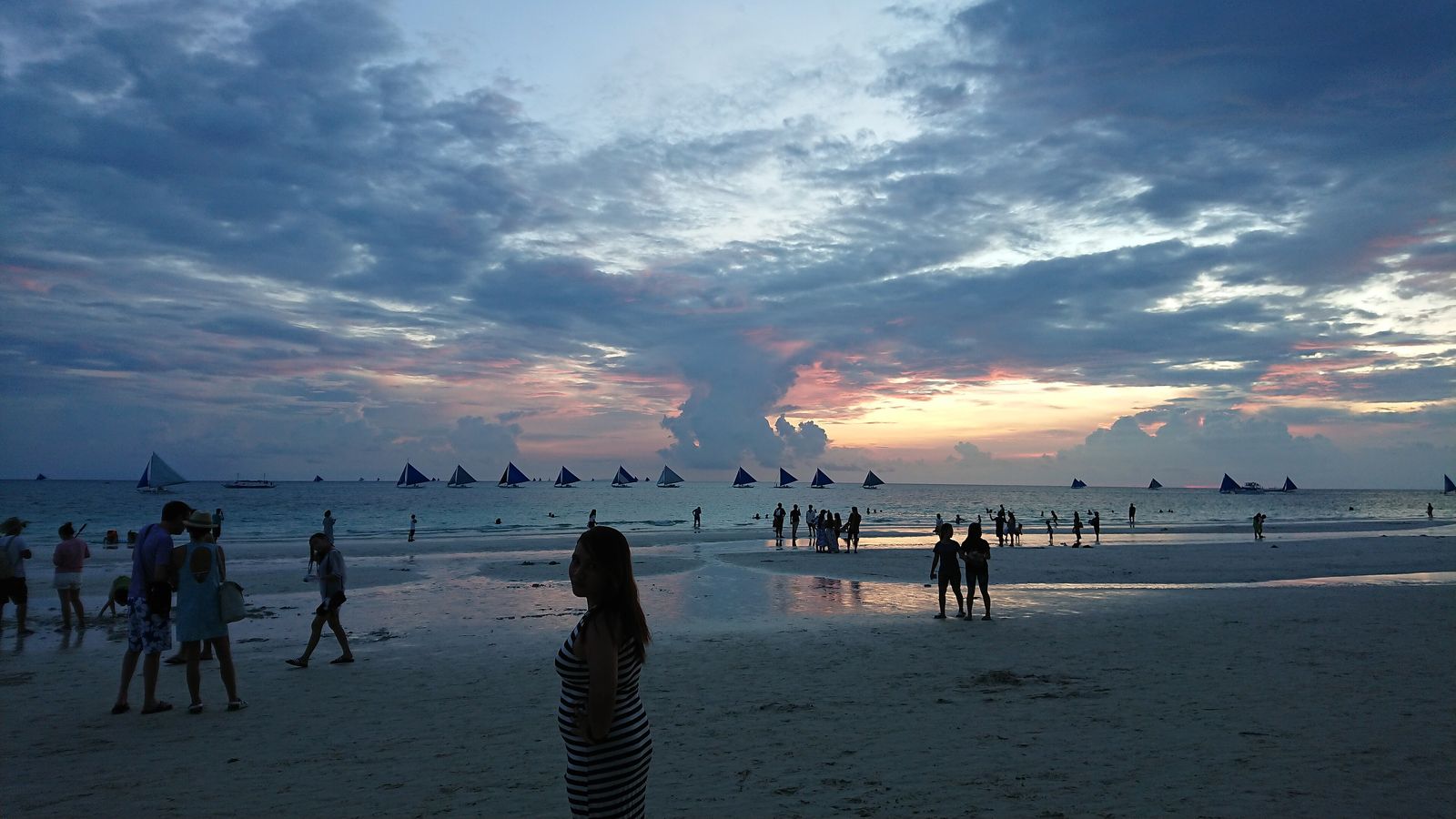
Two seasons govern the island. Amihan (roughly November to May) brings the dry, breezy weather and the high season — calm water on White Beach, wind on Bulabog for the kite crowd. Habagat (roughly June to October) brings rain, humidity and rougher seas, and the tourist population thins noticeably. The wet season is when long-stayers get the island to themselves, and when accommodation is cheapest.
Aklan sits in the country's typhoon belt, and the province has taken direct hits before. The 2018 closure was environmental, not storm-related, but the island's exposure is real: plan for the possibility of a storm shutdown, keep a go-bag, and check the forecast before committing to a long lease in the peak of the wet season. Green algae on White Beach is a seasonal phenomenon that appears in the warmer months and clears with the weather.
Frank's Take
Boracay is the one place on this site where I would tell most people to visit first and commit second. It is beautiful, convenient by Philippine island standards, and small. The people who love living here wanted a beach town and got one. The people who leave thought they were buying a city and discovered they had bought a beach.
If you work remotely, test your connection before you sign anything. If you are retiring, decide honestly whether you can live with a boat-and-road trip to a specialist. If you are in tourism or hospitality, this is one of the best places in the country to build a career.
Who Should (and Shouldn't) Move Here
Move here if you work in dive, kite or hospitality, you want a small island where you walk everywhere, you value beach access over city amenities, and you can handle a wet season that empties the place out.
Do not move here if you need a large hospital within twenty minutes, you depend on a bulletproof internet connection for meetings, you want a big organised expat community, or you expect to keep a car.
If you fall in the second group, look at Bohol, Cebu or Dumaguete. They trade some of Boracay's beauty for services and stability the island cannot match.
Settling in: the paperwork reality
Boracay is governed by the municipality of Malay, so local paperwork runs through the Malay municipal hall and the barangay offices in Balabag, Manoc-Manoc and Yapak. If you are staying on a tourist entry, the Bureau of Immigration's Boracay field office in Balabag handles one- and two-month extensions, ACR I-Card issuance and the Annual Report; longer or unusual cases go to the mainland or Manila.
For long-stay or retirement status, the SRRV and 13(a) routes are the ones that fit, and both are processed through Manila or a regional hub such as Cebu rather than on the island. The tourist visa extension walkthrough covers the short-stay path.
If you are shipping household goods, remember the island freight step: everything arrives through Caticlan or Kalibo and crosses by boat. The shipping guide explains the customs side; budget for the island leg on top of it. Before any lease, check the housing guide for deposit and viewing checks. The same advice that protects you in Manila protects you here, where the landlord is more likely to be a management company.
Compare Boracay with other cities
Side-by-side cost, safety, and internet comparison.