
Bohol
Bohol
Bohol swaps big-city hospitals and nightlife for cheap rent, warm water, and a small expat circle split between Tagbilaran's errands and Panglao's beaches.
Safety and expat-friendliness scores are editorial judgments. Internet figures are planning references, not a speed guarantee for your address.
At a Glance
Location
Monthly Budget Snapshot
Full breakdown →| Budget Level | Est. Monthly Total (USD) |
|---|---|
| Budget | $500 |
| Moderate | $850 |
| Comfortable | $1,400 |
USD estimate data updated: 2026-09-28. Amounts in USD.
Last verified: September 28, 2026
Living in Bohol as an Expat
Bohol is the island I'd point you to if you want the Philippines without Metro Manila's volume. It's in the Visayas, Central Visayas, Region VII — the country's 10th-largest island, with one city, Tagbilaran, and 47 municipalities. Population hit 1,412,726 at the 1 July 2024 census, up 0.33% a year from 1.39 million in 2020, per PIA's write-up of the PSA release; the PSA province profile has the administrative detail. Slow growth. Nobody's overrunning the place.
The tourist lap — Chocolate Hills, the tarsier at Corella, the Loboc River, Baclayon Church, the 1565 Sandugo — is a sliver of what living here is. In 2023 Bohol became the Philippines' first UNESCO Global Geopark, all karst, caves, sinkholes, and cone karst. A real UNESCO designation — and not why anybody moves here.
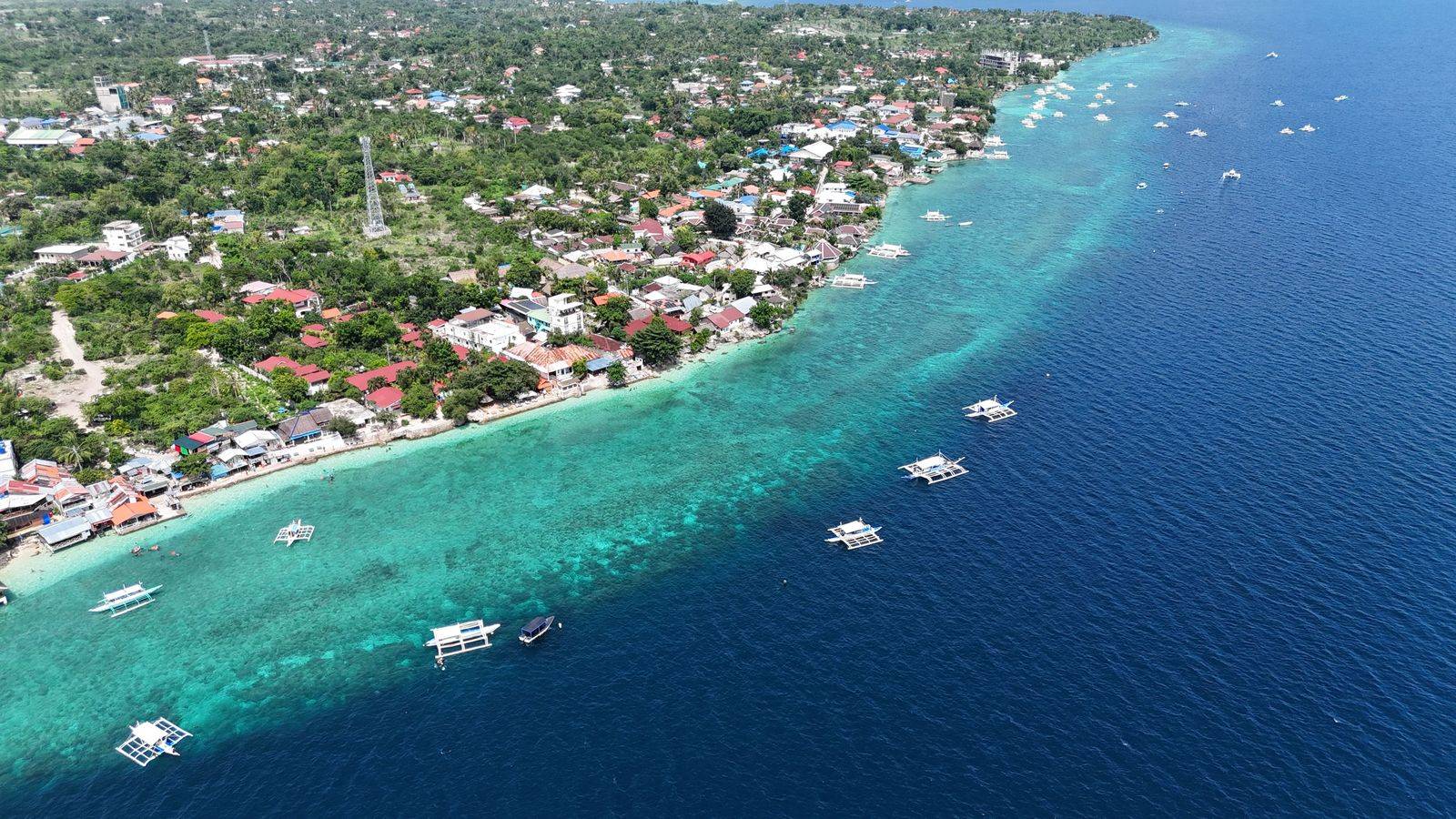
The split you'll feel in a week: Tagbilaran has the malls (ICM, Alturas, BQ), the hospitals, the Port of Tagbilaran, and the cheapest rent — no beach. Panglao, the separate island to the south-west joined by two bridges, has Alona Beach, dive shops, restaurants, and most foreign residents — and the highest rents. Dauis, the part of Panglao closest to the mainland, sits between them.
I run this comparison for nearly everyone who asks. The side-by-side is in the Bohol living comparison.
Best Neighborhoods
Tagbilaran City is where you base if logistics win. Population 106,120 in 2024, the most populous LGU in the province, and the commercial core — malls, hospitals, port, and the cheap end of the rental market. What you trade is the sea. Expect concrete, tricycle noise, and a city that drains toward the water on weekends.
Panglao is the expat hub: Alona has the restaurants, dive operators, bars, and the biggest cluster of foreign residents. It's also a nightly-let market — Airbnb pressure means plenty of landlords would rather rent by the night than sign a lease. Budget time for that. Read the Bohol housing guide before you start viewing.
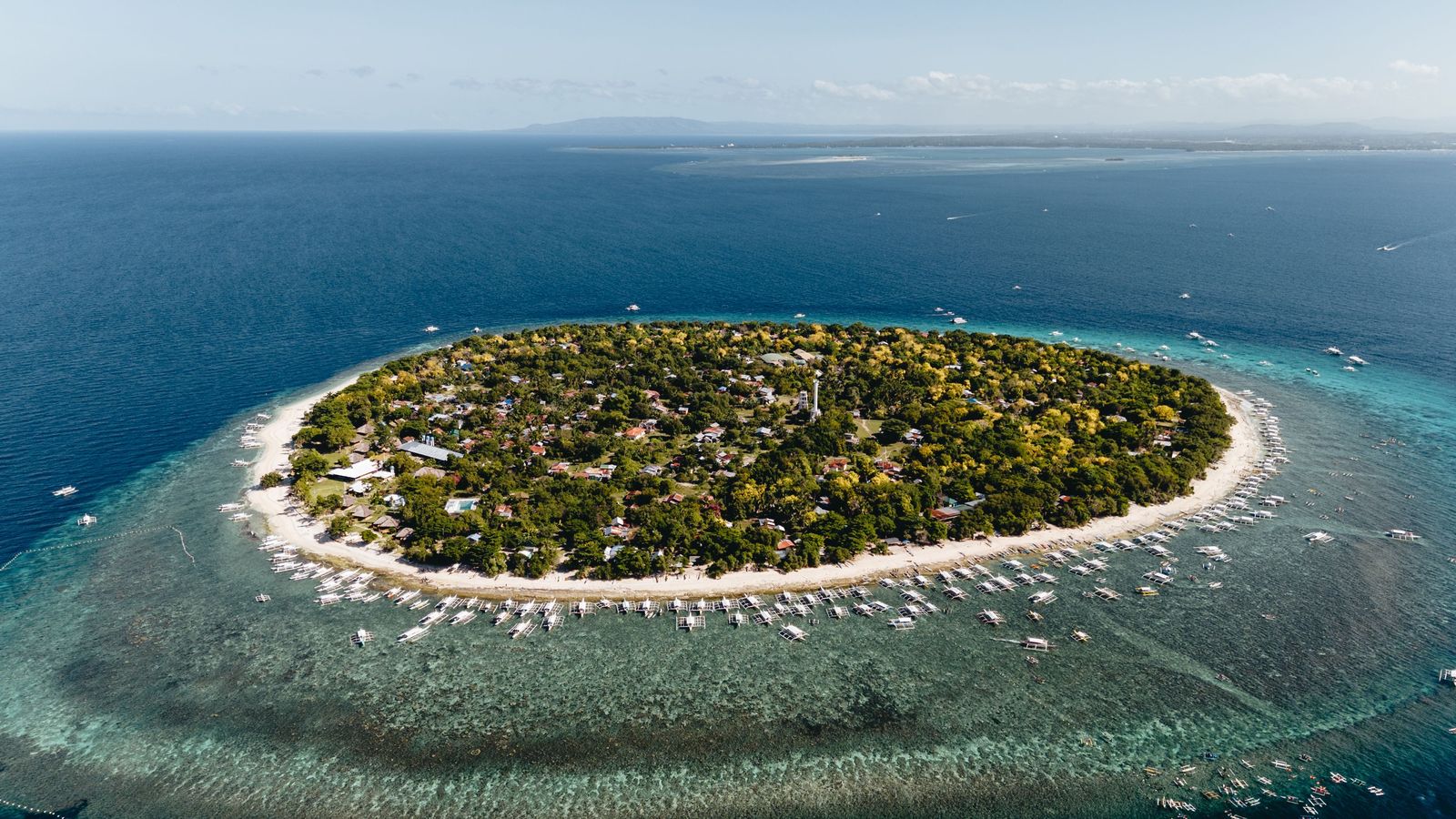
Dauis gives you a house instead of a unit — residential, quiet, sitting between Panglao's beaches and Tagbilaran's errands. The trade is that a scooter stops being optional.
Most foreigners never consider the rest. Ubay, the second city in the north-east, runs the province's other big market and a seaport — a working town, not a resort. Anda, on the far eastern peninsula, is rural and quiet with good beaches and little else. Cheap and empty, or convenient — pick.
My rule: Tagbilaran for logistics and savings, Panglao for people and the sea, Dauis for a house and a scooter. Choose by what you'll actually do on a Tuesday.
Cost of Living
Bohol is a budget island, and the numbers show it. Wise's 2026 data for Tagbilaran puts a one-bedroom in the city centre at $195 a month on average, ranging $130 to $244; outside the centre it drops to $141, range $98 to $163. A three-bedroom averages $489 in the centre and $353 outside, range $326 to $407. Basic utilities for an 85 m² apartment — power, water, garbage — run about $57 a month; internet about $28.
Food compounds it. An inexpensive restaurant meal is about $4; a three-course dinner for two at a mid-range place about $18. Eat from carinderias and the public market and you'll do very well on very little. One number to hold: the average monthly net salary in Tagbilaran is $179. You're not competing with local wages, but your money lands in an economy built on them. Be a good guest.
For context, Wise's city totals run $1,494 a month in Makati, $1,175 in Manila, $1,104 in Cebu, $950 in Baguio, $930 in Cagayan de Oro, $869 in Davao, and $793 in Dumaguete. Bohol sits under almost all of them. The full Bohol cost of living breakdown is here, and the cost of living calculator lets you model your own numbers.
The exception is Panglao: Alona-side long-stay rent commonly lands at two to three times the Tagbilaran equivalent for less space. If you want the beach address, budget for it honestly.
Internet & Coworking
Fiber from PLDT, Globe, and Converge reaches Tagbilaran and the whole Panglao/Alona corridor, and the tourism-driven Panglao side gets the most attention because a dead connection costs bookings. Starlink is a common backup where fiber hasn't reached — parts of Dauis, Anda, and the inland municipalities.
I can't give you a verified Bohol-only speed number, and I won't invent one. Residents report the pattern you'd expect: solid fiber in Tagbilaran and Alona, workable-with-Starlink farther out, a real gap address to address. Test the actual connection at the actual house before you sign.
There's no established coworking scene beyond Panglao's café-and-villa culture. Remote workers run from cafés in Alona or their own rentals. Need desks and meeting rooms? That's Cebu.
Healthcare
Healthcare is the honest weak point. Know it before you fall for a beach.
Gov. Celestino Gallares Memorial Medical Center (GCGMMC) is the DOH-run regional and tertiary hospital in Tagbilaran City and the province's referral centre. The private options are Ramiro Community Hospital and Allied Care Experts (ACE) Medical Center – Bohol, plus a new Gov. Celestino Gallares Multi-Specialty Medical Center in Cortes, soft-launched in 2026.
For genuinely complex care — cardiac surgery, advanced oncology — the realistic move is Cebu, about two hours by fastcraft, or Manila. Panglao has no hospital of its own; the nearest serious facility is in Tagbilaran, 30 to 40 minutes from Alona on a good night.
Dental work is cheap and good, as it is most places in the Philippines. The healthcare guide has the detail — and if you're 50-plus, insuring against the Cebu trips is the part people underestimate.
Safety
Bohol is a low-crime, calm province, and it's earned that. Wise's index for Tagbilaran puts its safety index at 89 out of 100. On my own scale, 8 out of 10.
Standard precautions apply, the same as anywhere unfamiliar: don't flash cash or gear, lock the scooter, mind your barangay. That's the list. I won't hand you a threat assessment beyond it, because Bohol doesn't warrant one — it's quiet and neighbors watch out. I won't claim the risk is zero, either. It never is.
Food & Dining
Boholanos eat well and cheaply. Kinilaw — raw fish cured in vinegar and citrus — is the dish to know. Calamay, sticky rice cooked in coconut milk and sold in a coconut shell, is the island's sweet signature, alongside peanut kisses and broas. The cheap, real version of all of it lives at Tagbilaran's public market and the food areas around ICM. Start there.
Seafood on the mainland is fresh and inexpensive: buy it at the market in the morning, eat it at night.
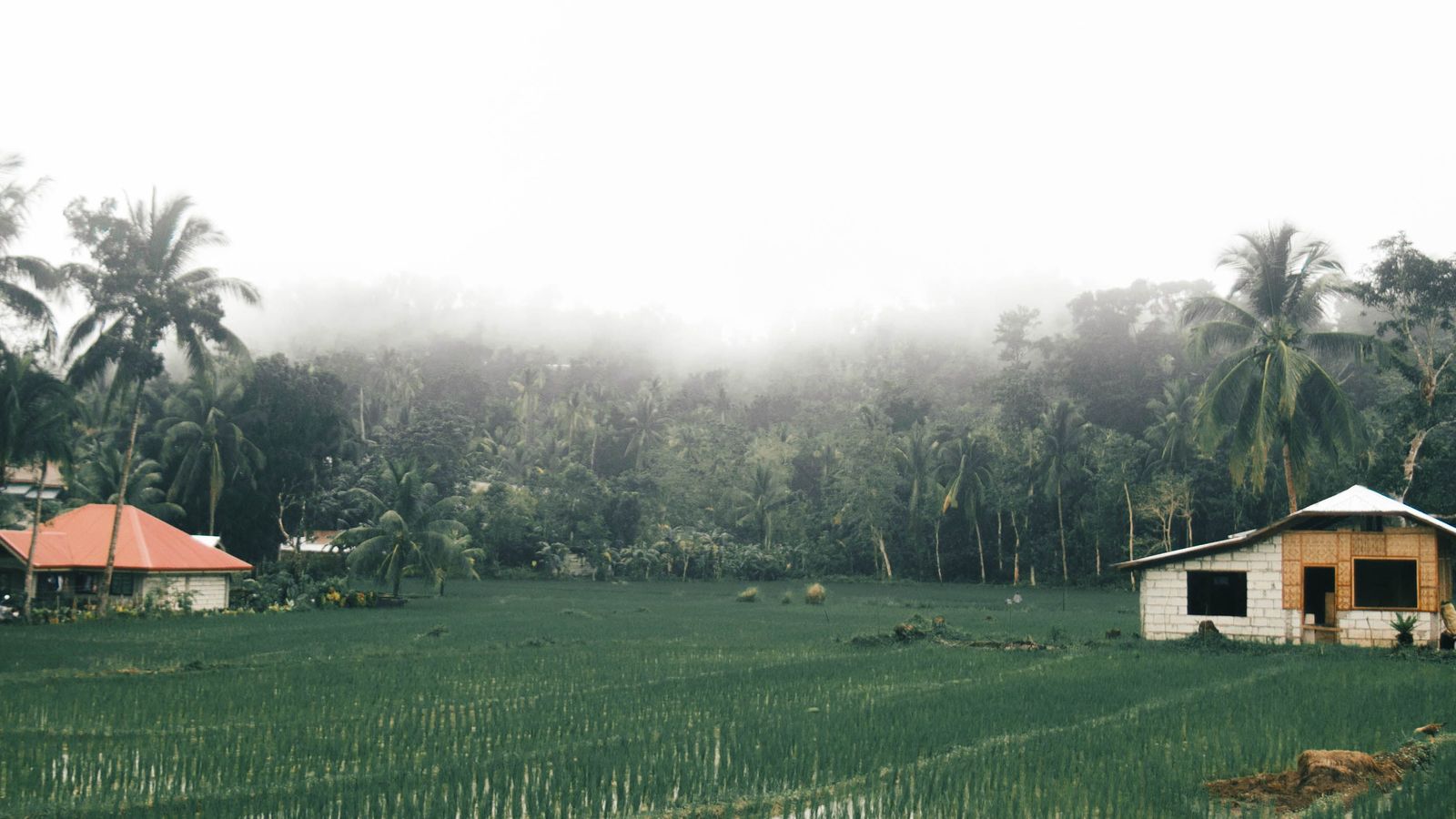
Panglao and Alona are where Western and international food concentrates — pizza, European, Korean, Japanese, health food — at Western prices. Alona runs roughly double or triple mainland carinderia prices for a comparable plate. That's a tourist economy doing what tourist economies do. Pay it for a proper dinner; don't pay it for lunch daily unless your budget is built for it.
My pattern: eat local on the mainland most of the week, splurge in Alona for the scene. That's how the people I know who live here actually run it.
Getting Around
Bohol-Panglao International Airport (BPIA, code TAG) sits in Barangay Tawala, Panglao. It opened in 2018, replacing the old Tagbilaran Airport, and CAAP files it under Area Center 7 with the Mactan facility, Dumaguete (Sibulan) Airport, and Siquijor Airport. Scheduled traffic is dominated by the Manila and Cebu routes, with seasonal international service to South Korea having operated at times. For most international trips you connect through Manila or Cebu.
The Port of Tagbilaran is the other exit. OceanJet fastcraft runs to Cebu (Pier 1) in about two hours, roughly a dozen departures each way daily, and links to Dumaguete and Siquijor too. Fares move, so check the OceanJet schedule rather than a number someone quoted you last year.
On land, tricycles are the workhorse for short hops; jeepney and multicab routes cover the mainland. Grab is not a reliable option across most of Bohol. Outside central Tagbilaran a scooter or car is close to essential, and in Dauis it's mandatory. Monthly scooter rental is the normal arrangement — the best money you'll spend.
The island's strongest argument: Siquijor, Cebu, Dumaguete, and Camiguin are all within half a day by fastcraft or a short flight. Island life without island isolation.
Expat Community
The foreign community clusters in Panglao, with a smaller, older retiree presence in Tagbilaran. It's thinner and less institutionally organized than Cebu's or Dumaguete's — no decades-old retiree club holding it together. Retirees, Filipino-American balikbayans, and a rising remote-work crowd. You meet people by showing up at the same dive shop or café twice.
That thinness cuts both ways. Easy to become a regular fast, just as easy to tire of the same twenty faces. Want a big, structured expat scene with events and committees? Look at Cebu or Dumaguete. Want a small pond where your face is known? Panglao delivers.
Weigh it against Siargao if you're after surf-town energy. And browse the other city guides before you commit.
Climate & Weather
PAGASA classifies Bohol under Climate Type IV: rainfall spread fairly evenly through the year, no pronounced dry season. The practical version is wet afternoons and no dry season to plan around. Temperatures run roughly 25–32°C year-round, with no altitude relief — no Baguio-style hill station to escape to.
Bohol sits inside the typhoon belt, full stop. Typhoon Odette in December 2021 proved it: provincial damage estimated at ₱5 billion, at least 63 deaths, power across the province taking weeks to restore. That's why backup power is a normal household item here, not a luxury. A landlord who can't explain their generator or inverter isn't being straight about how the island lives.
Water is its own small project. Bohol Water Utilities, Inc. (BWUI) serves Tagbilaran, with municipal water districts elsewhere, and scheduled interruptions are routine and published. Verify continuity at the specific address — the same house can be fine on a Tuesday and dry by Friday.
Frank's Take
If I were choosing, I'd pick Dauis. It's the compromise that actually works: ten minutes to Tagbilaran for the hospitals, port, and malls, fifteen or twenty to Alona when you want the water and the people. You get a real house with a yard for less than an Alona studio, and you sleep in a neighborhood instead of on a resort strip. The honesty tax is that a scooter becomes mandatory and nothing is walkable. You'll drive more than you expect, and that's the trade.
What I'd tell you to skip is basing in Alona long-term. It's fun for a month and expensive forever. Nightly-let pressure means your lease is never fully yours, and you're paying resort rent to live somewhere that empties between seasons. Visit all you want; sleep in Dauis. If you're a retiree who values a walkable daily life and hates driving, Tagbilaran's core beats both, and I'd argue that with anyone. The Philippines rewards compromise. It punishes people who chase the postcard and then resent the reality.
Who Should (and Shouldn't) Move Here
Move here if you're a remote worker with stable income, a retiree who's healthy and fine with a Cebu trip for a specialist, a diver, or anyone who wants cheap island living with real infrastructure a short drive away.
Don't move here if you need advanced medical care close to home routinely. Don't move here if you need big-city nightlife, or a large structured expat scene with a calendar. Don't move here if you can't or won't ride a scooter — outside Tagbilaran's center that's a real limitation. And don't expect Manila-level convenience; Bohol moves at its own speed. If that's what you want, nothing in the Visayas beats it on value.
Settling in: the paperwork reality
Most people start on a tourist visa and extend. If you're 50-plus with the right pension or deposit, the SRRV through the Philippine Retirement Authority is the long-stay route many retirees take.
The BI Bohol Field Office is at E. Lustados St., Panglao Heritage Complex, Poblacion Panglao, Bohol 6340 — direct line (038) 500-0278, hours 08:00–17:00. Note where that is: Panglao, not Tagbilaran, 30 to 40 minutes from the city. The airport (BPIA) also has its own BI desk in Barangay Tawala, Panglao. The BI office directory has current details.
Annual Report isn't optional: all BI-registered foreign nationals and ACR I-Card holders report in person within the first 60 days of the calendar year.
Here's the friction nobody mentions. There's no PRA satellite office in Bohol. PRA's only satellites are Baguio, Cebu City (Unit C1-12F, 2Quad Bldg, Cebu Business Park), and Davao City, with the head office in Makati — see the PRA contact page. Every SRRV errand is a Cebu or Manila trip. Build that in before you file.
Compare Bohol with other cities
Side-by-side cost, safety, and internet comparison.