
Puerto Princesa
Palawan
Puerto Princesa pairs low rents and vast green space with isolated utilities, frequent power cuts, and no provincial retirement office.
Safety and expat-friendliness scores are editorial judgments. Internet figures are planning references, not a speed guarantee for your address.
At a Glance
Location
Monthly Budget Snapshot
Full breakdown →| Budget Level | Est. Monthly Total (USD) |
|---|---|
| Budget | $500 |
| Moderate | $800 |
| Comfortable | $1,300 |
USD estimate data updated: 2026-09-29. Amounts in USD.
Living in Puerto Princesa as an Expat
Puerto Princesa is big, green and cheap, and the trade-offs are infrastructure and distance: power interruptions, a water district that runs scheduled shutdowns, no PRA office in the province, and tertiary healthcare that means flying out.
Administratively, Puerto Princesa is a highly urbanized city and the only HUC in the MIMAROPA region. The PSA 2024 Census records 316,384 residents living across 82,134 households, growing at 0.72% per year from 307,079 in 2020. Together, the province of Palawan and Puerto Princesa reach about 1.2 million people.
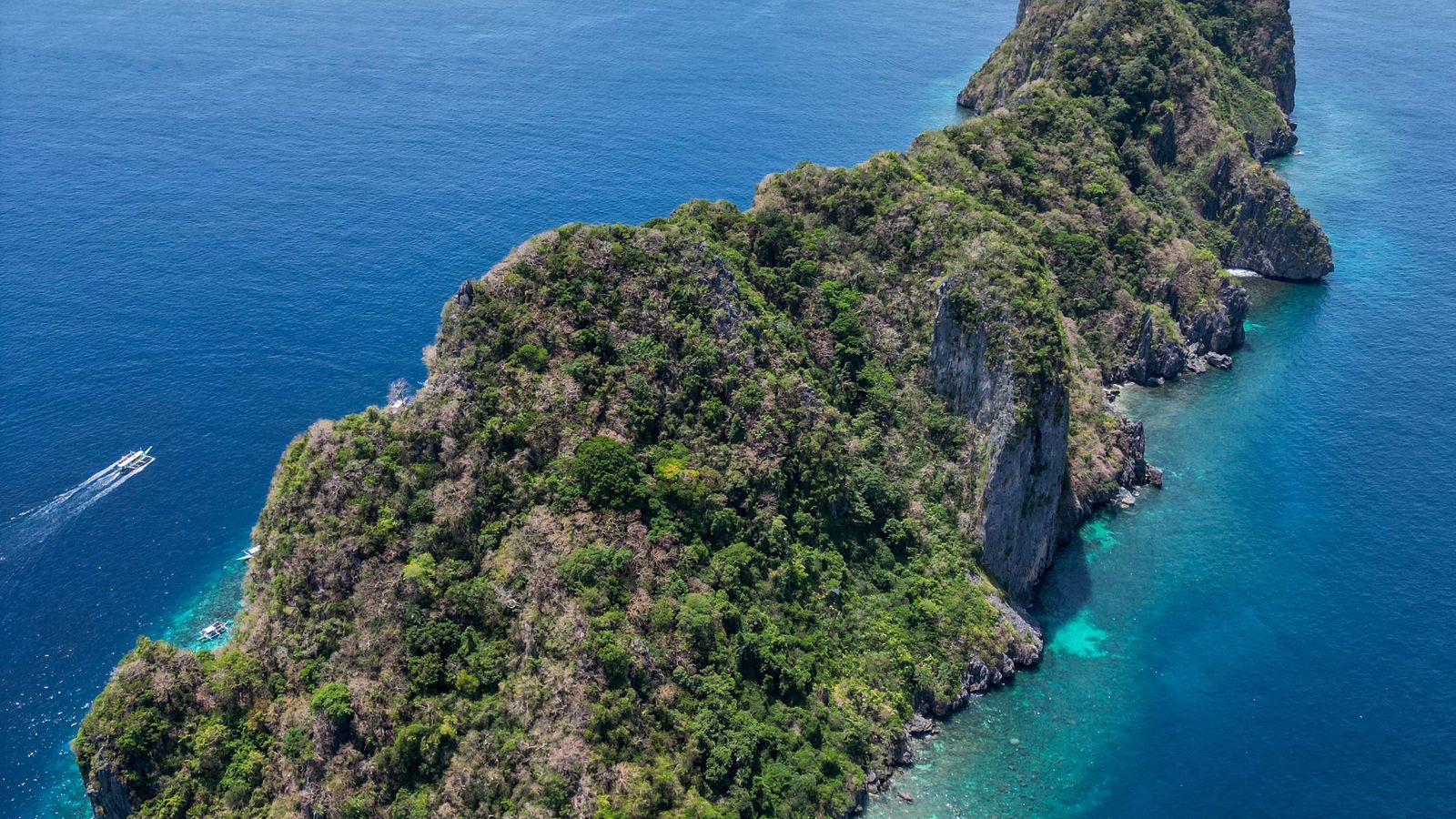
Puerto Princesa covers 2,381.02 square kilometers, making it the second-largest city in the Philippines by land area after Davao City. With roughly 130 people per square kilometer, it is also the least densely populated city in the country. The municipal boundary takes in 66 barangays stretching across mountains, rainforest, and long tracts of coast at an average elevation of about 98 meters. While marketing material calls it the "City in the Forest," the official tourism title is "Eco-Tourism Center of the Philippines."
If you are comparing island options on /cities, Puerto Princesa offers space and quiet that denser hubs cannot match.
Who Puerto Princesa Suits, and Who It Doesn't
Puerto Princesa suits self-reliant retirees, long-stay couples, and remote workers who want coastal living on a modest budget and do not mind managing backup systems. It fits someone who wants a quiet house with a yard, clean air, and access to fresh produce without paying resort prices.
It does not suit anyone who requires predictable, uninterrupted municipal utilities. Remote workers with strict corporate schedules or mandatory video calls during North American daytime hours will find the electrical grid an ongoing source of stress unless they spend capital on batteries, an inverter, or a generator.
The city also fails anyone who needs tertiary medical care within driving distance. If you manage chronic cardiac disease, advanced cancer, or mobility limitations that make commercial air travel difficult, basing here is a bad plan. For structured foreign social circles, check Cebu, Dumaguete, or Iloilo for retirement.
The Neighborhoods Foreigners Actually Choose
Because the city is so spread out, choosing where you live decides whether errands take ten minutes or most of your morning.
San Pedro is the commercial heart and the city's largest barangay, with 29,825 residents in the 2024 census. It is also the largest barangay in the entire MIMAROPA region. San Pedro sits right next to the airport, contains Adventist Hospital Palawan at Junction 2, and holds supermarkets, banks, and hardware stores. Foreigners who settle in San Pedro do so because everything is reachable by tricycle in five minutes.
San Manuel, home to Robinsons Place Palawan, is another frequent choice for long-term rentals. Living near San Manuel gives you walkable access to air-conditioned retail, restaurants, and the Bureau of Immigration field office.
Bancao-Bancao curves along the coast south of the airport runway. It offers a cooler breeze, seaside eateries, and a mix of modest family homes, foreign-built houses, and boutique lodging.
PhilAtlas data shows that the fastest-growing barangays between 2015 and 2020 included Sicsican (reaching 22,625 people), San Pedro (22,089 in 2020), and Tiniguiban (13,565). Tiniguiban hosts several government offices, colleges, and medical clinics.
Sicsican and Irawan sit farther out along the north and west corridors. These areas attract foreigners who want detached houses with extensive garden space, fruit trees, and mountain views. Living in Sicsican or Irawan means private transport is mandatory.
Cost of Living in Puerto Princesa
Wise tracks cost of living data for the city, though Wise warns its Puerto Princesa data is limited and some categories are incomplete.
Rent is where the savings show up. According to Wise's September 2026 data, a one-bedroom apartment in the city center averages $290 per month, with a range of $244 to $326. Move outside the center, and a one-bedroom drops to an average of $202 per month, ranging from $163 to $244. For families or those wanting a dedicated office space, a three-bedroom apartment in the city center averages $529 per month. A three-bedroom outside the center drops to $326 per month.
Monthly utility bills for an 85 m² apartment covering electricity, cooling, water, and garbage run about $63 per month, with fixed home internet adding about $25 per month. Wise puts the average monthly net salary in the city at $228.
A meal at an inexpensive neighborhood restaurant runs about $4. A regular coffee is $2. If you take someone out for a three-course dinner for two at a mid-range restaurant, expect the bill to land around $33.
Wise scores Puerto Princesa with a safety index of 72 and a healthcare index of 54 out of 100. You can model your overall monthly outlay using our cost of living calculator. For broader regional comparisons, our Bohol living comparison highlights how provincial island rents stack up against the Visayas.
Renting and Buying Property
Most leases follow standard Philippine practice: one or two months of security deposit plus one month of advance rent. Look for "House for Rent" signs posted in residential subdivisions in San Manuel, San Pedro, and Tiniguiban.
When evaluating a rental property, inspect utility connections before discussing lease terms. Look for an elevated water storage tank (locally called an overhead tank) and a working pressure pump. Inquire whether the house has a generator transfer switch installed.
On property purchase, Philippine national law restricts foreign nationals from owning private land outright, though foreigners can own condominium units or lease land on long-term contracts. If you look at purchasing property structures or units, Wise quotes average purchase prices at $1,629 per square meter in the city center and $1,140 per square meter outside the center. Due diligence on land titles, local zoning, and right-of-way access in Palawan is mandatory before any money changes hands. For American expats planning property transactions, our overview on moving to the Philippines from the USA covers practical legal precautions.
Getting Around, and Getting Off the Island
Puerto Princesa International Airport, located right in Barangay San Miguel, is the primary lifeline connecting the city to the rest of the republic. Under the Civil Aviation Authority of the Philippines (CAAP), the airport is designated as one of the four facilities comprising Area Center 4, along with Francisco B. Reyes (Busuanga) Airport, Cuyo Airport, and San Vicente Airport. You can verify this administrative grouping on CAAP's area centers directory.
For daily transport inside the city limits, motorized tricycles handle short hops and neighborhood errands. Public utility jeepneys and multicabs run fixed routes between the city market and outlying barangays like Irawan, Sicsican, and Santa Monica.
Owning or leasing a semi-automatic scooter or small motorcycle is the practical choice for most expats. Roads along the national highway running north and south are generally well-paved, but inland mountain routes and coastal access roads can deteriorate into gravel and mud during heavy rain.
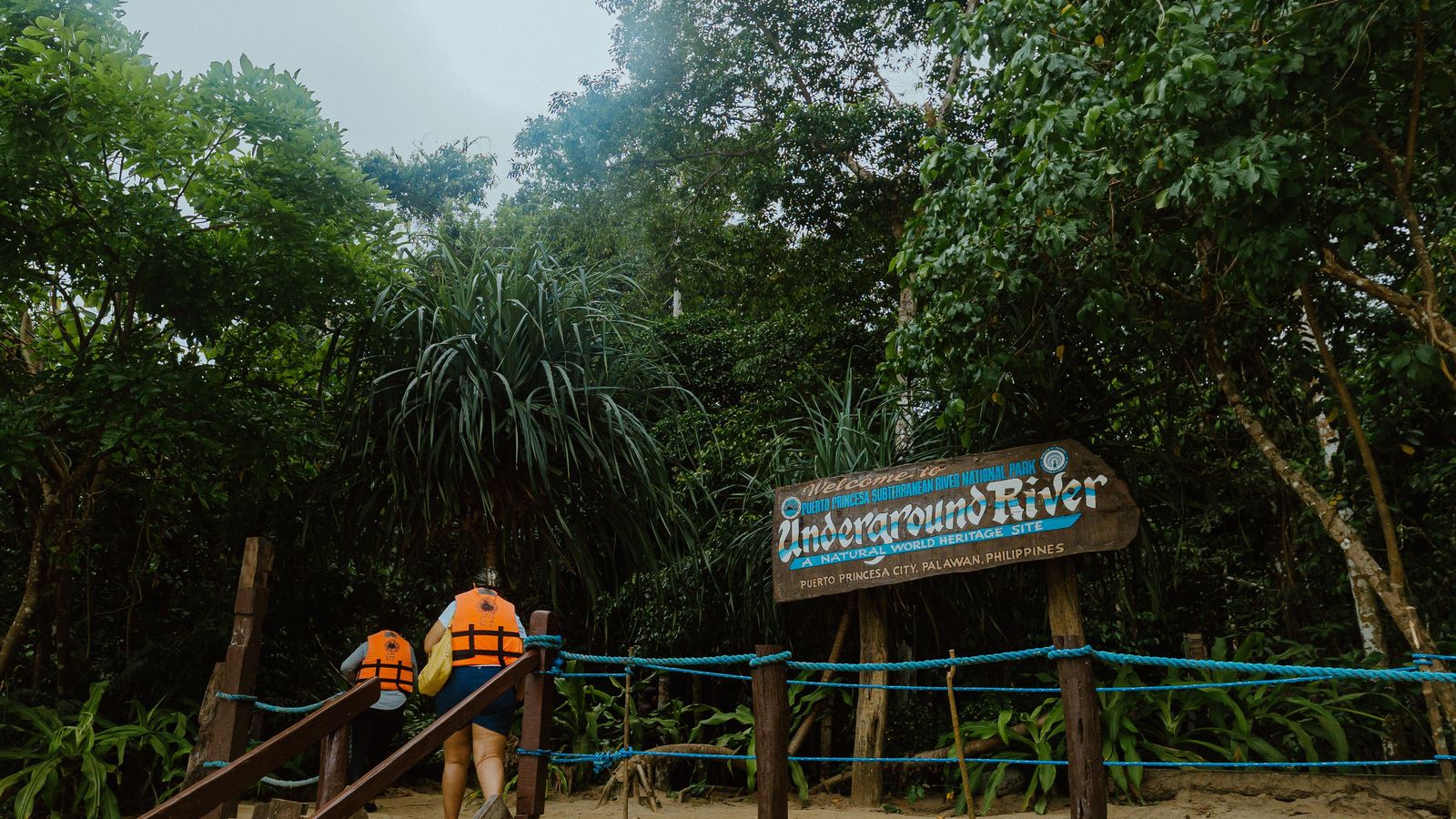
The Puerto Princesa Subterranean River National Park was inscribed as a UNESCO World Heritage site in 1999 for its limestone karst landscape and navigable underground river. UNESCO's site documentation records a visitor ceiling of 600 people per day to safeguard the cave system. You must secure a visitor permit from the booking office near the city coliseum a day or two prior to making the trip.
Healthcare: What's Here and What Isn't
Healthcare in Puerto Princesa operates at a provincial hospital tier: capable of handling common infectious illnesses, routine fractures, minor surgery, and basic emergencies, but inadequate for advanced medical crises.
There are two primary hospitals that foreign residents rely on:
- Ospital ng Palawan, the provincial government hospital, located centrally on Malvar Street. You can verify its institutional operations through the Ospital ng Palawan portal.
- Adventist Hospital Palawan, a private institution located at Junction 2 in Barangay San Pedro.
The United States Embassy's Region 4 medical facility directory lists Holy Child Clinic on Rizal Avenue. You can review the embassy's medical listings directly on the US Embassy medical providers page.
If you experience a catastrophic cardiac event, require advanced neurological intervention, or need full cancer staging and specialized chemotherapy, Puerto Princesa does not possess the clinical equipment or specialist rosters to care for you. The referral centers for complex procedures are in Metro Manila or Cebu.
In an acute emergency requiring advanced tertiary care, medical evacuation is a commercial flight or a chartered air ambulance trip. If you are over fifty or managing underlying medical conditions, having a policy that covers emergency domestic transport is essential. Read our guide on health insurance for expats to ensure your coverage will fund an emergency air transfer to Manila.
Power, Water and Internet
Electric distribution across the city is managed by the Palawan Electric Cooperative (PALECO). Unlike Luzon's main provinces, Palawan is not connected to the national power grid. The island operates on its own isolated grid system, which leaves it vulnerable to generation shortfalls and line trips. PALECO maintains a rolling schedule of power maintenance, listing scheduled power interruptions across its network for most weeks in August and September 2026 on the PALECO portal.
On 22 July 2026, a partial system blackout struck the Palawan grid, knocking out electricity across the entire corridor from Puerto Princesa City all the way north to Taytay. If you intend to work online from home, budgeting for a dedicated uninterruptible power supply (UPS) for your router and computer, or investing in a small gas generator or solar inverter system, is a mandatory operational cost.
Water service is administered by the Puerto Princesa City Water District (PPCWD), which publishes service advisories and outlines utility rules on its official site at ppcwater.gov.ph. The system relies primarily on surface water drawn from the Irawan River, which has historically suffered from low water flow during prolonged dry spells.
PPCWD regularly conducts system maintenance and valve replacements that interrupt household supply. PPCWD ran a scheduled valve-replacement shutdown from 7:00 p.m. on 1 July to 5:00 a.m. on 2 July 2026, affecting central corridors including Junction 2, Wescom Road, Malvar Street, Rizal Avenue, Manalo Street, Bancao-Bancao, and coastal barangays. PPCWD also executed an emergency shutdown on 15 April 2026 from 1:00 p.m. to 5:00 p.m. Under Rule 3.2 of its published utility rules, PPCWD is authorized to shut off water during emergencies and seeks to broadcast warnings via local radio. Foreign households keep reserve water storage tanks and 5-gallon bottled drinking water on hand at all times.
Fixed broadband internet has improved across the urban core. Fiber connections from national telecommunication providers serve the central barangays, though real-world speeds trail Metro Manila and Cebu, especially in the evening. For remote workers living outside the main fiber coverage zones, mobile data or satellite terminals provide dependable backup rails.
Work, Business and Daily Errands
Robinsons Place Palawan in San Manuel and SM City Puerto Princesa downtown serve as the primary retail hubs. They house full-service supermarkets, pharmacy chains, hardware shops, opticians, and bank branches. You will find major domestic retail banks such as BDO, BPI, and Metrobank operating branches across the city, equipped with automated teller machines accepting foreign cards.
For details on branch requirements, opening deposits, and setting up Wise transfers, read our guide on opening a Philippine bank account.
The Old Public Market and the New Public Market offer produce, poultry, and freshly caught seafood at prices far below supermarket shelves.
Starting a small local enterprise as a foreigner comes with standard Philippine commercial barriers. Foreigners face strict restrictions regarding retail trade capitalization and land ownership. Most foreign residents who work do so remotely for overseas clients, earning foreign currency while spending locally, which bypasses local business permitting headaches.
Immigration Errands: Where You Actually Go
The single most critical immigration fact about retiring or living in Palawan is that the Philippine Retirement Authority (PRA) has no satellite office in the province.
If you hold a Special Resident Retiree's Visa under the SRRV retirement visa, any official business requiring direct PRA action cannot be handled locally. PRA maintains its head office in Makati at 29/F BDO Towers Valero, and four satellite offices: Baguio City for North Luzon, Angeles City (Clark) for Central Luzon, Cebu City (2Quad Building, Cebu Business Park) for the Visayas, and Davao City for Mindanao. You can verify these operational locations on the PRA official directory. This means any deposit modification, original document submission, or passport restamping requires you to board a flight, usually to Manila or Cebu.
Routine immigration matters, however, are easily handled in town. The Bureau of Immigration maintains the Puerto Princesa Immigration Field Office on the 2nd Level of Robinsons Place Palawan, inside the Lingkod Pinoy Center in Barangay San Manuel. The office operates Monday through Friday, 8:00 a.m. to 5:00 p.m., reachable at (048) 433-2248 and (048) 433-0764, or via email at puerto.princesa@immigration.gov.ph.
At the Robinsons Place field office, foreign residents can process one- and two-month tourist extensions under the standard tourist visa process, register for their Alien Certificate of Registration (ACR I-Card), and complete the mandatory Annual Report within the first 60 days of each calendar year.
The Bureau of Immigration also operates a dedicated desk at Puerto Princesa International Airport in Barangay San Miguel, reachable by email at ppia@immigration.gov.ph, as confirmed on the Bureau of Immigration contacts page. Foreigners married to Philippine citizens can also process their spouse status through the field office; our guide to the 13(a) marriage visa details the civil paperwork required.
For a broader perspective on how foreign retirees balance visa mechanics across different regions, read our guide to the best places for retirees.
Food and Daily Life
The public markets receive daily catches from the Sulu Sea and the West Philippine Sea. Tuna, lapu-lapu (grouper), squid, shrimp, and mud crabs arrive early each morning. Local carinderias serve traditional dishes like sinigang, adobo, and inasal alongside mounds of white rice for about $2 to $4 per plate.
For dining out, Puerto Princesa has homegrown restaurants along Rizal Avenue and South National Highway that cater to both locals and international visitors, featuring wood-fired pizza, Vietnamese noodle houses, Korean barbecue, and seafood grills. If you crave specialized imported cheeses, European cured meats, or niche health foods, you will find limited selections on local supermarket shelves.
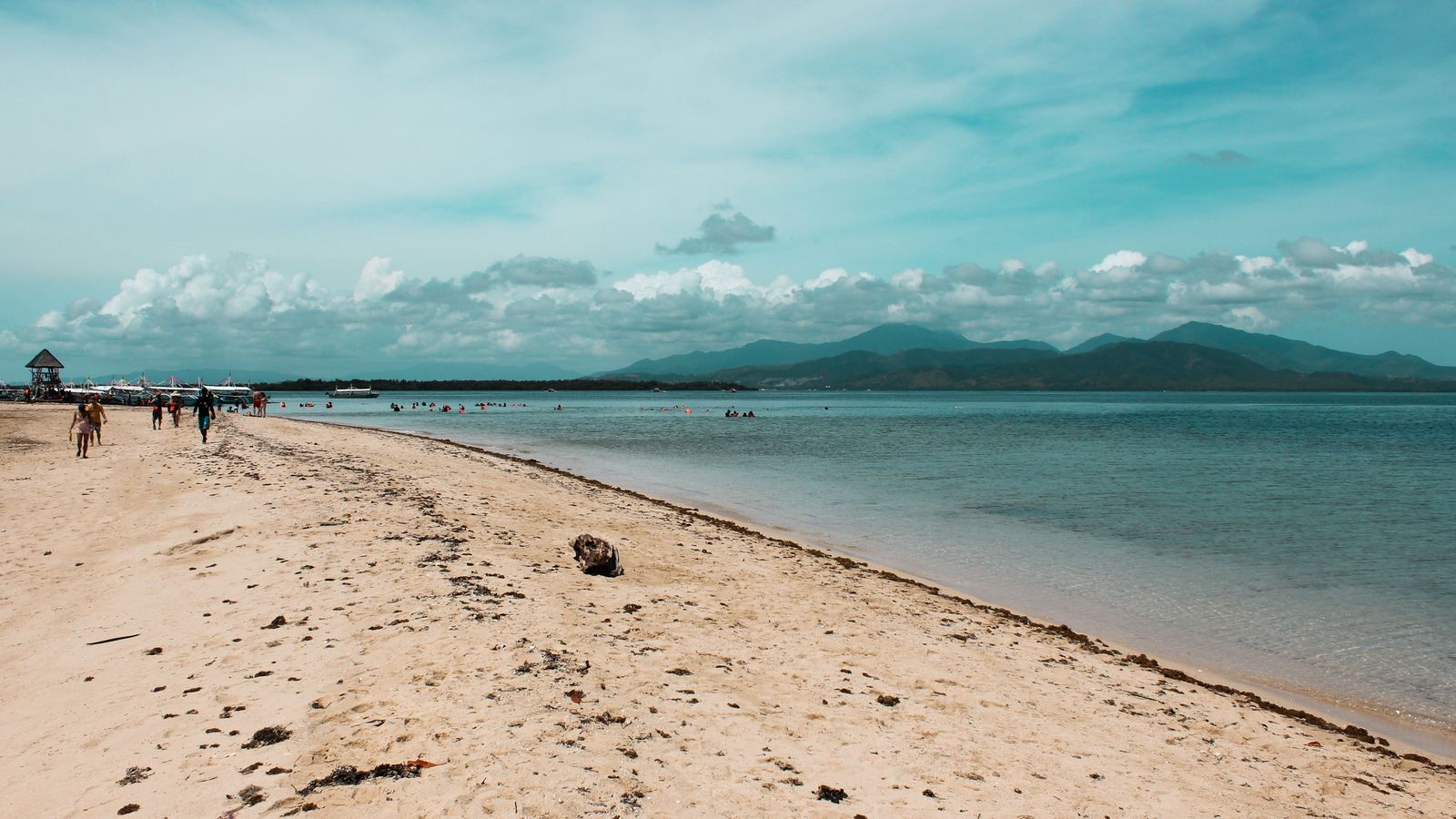
Recreation in Puerto Princesa leans heavily into outdoor pursuits. Living here means having uncrowded beaches, mangrove forests, and jungle trails within a short drive. On weekends, residents ride out to Nagtabon Beach or Talaudyong Beach on the western coast for swimming and sunset views, or arrange private boat charters through Honda Bay for island hopping and snorkeling.
The local lifestyle is unpretentious and quiet. Nightlife consists of casual open-air bars, live acoustic music venues, and local beer gardens rather than late-night dance clubs.
Frank's Take
If you ask me whether Puerto Princesa makes sense, my answer depends entirely on how often you need to leave the island.
On pure value, it is the best deal in the country for someone who wants genuine space, clean air, and coastline rather than shopping malls and traffic. A one-bedroom rental outside the center at two hundred dollars a month is impossible to match in any major city, and living in a place with 130 people per square kilometer feels like a different planet compared to Metro Manila. You get real peace.
The honest reason more foreigners do not live here is errands. In the Visayas, if you need a specialist doctor or a PRA document stamp, you hop on a two-hour ferry from Bohol to Cebu. In Puerto Princesa, every serious administrative or medical escalation requires booking an airline ticket to Manila or Cebu. If you hold an SRRV, you will feel that friction immediately. If you have an unstable heart condition, that flight requirement should eliminate the city from your list.
If you are healthy, work online with a reliable battery backup, and prefer a quiet house near the sea over a city condo, move here and do not look back. Just be honest about the trade-offs before you pack your bags.
Frequently Asked Questions
Is there a Philippine Retirement Authority office in Puerto Princesa? No. PRA satellite offices operate in Baguio, Angeles (Clark), Cebu City, and Davao City, alongside the head office in Makati. Direct SRRV paperwork requires travel to one of those regional hubs.
Where do I extend my Philippine tourist visa in Puerto Princesa? The Puerto Princesa Immigration Field Office is located inside the Lingkod Pinoy Center on the 2nd Level of Robinsons Place Palawan in Barangay San Manuel. The office is open Monday through Friday from 8:00 a.m. to 5:00 p.m.
What hospitals are available for expats in Puerto Princesa? Foreign residents primarily use Ospital ng Palawan on Malvar Street or Adventist Hospital Palawan at Junction 2 in San Pedro. The US Embassy also lists Holy Child Clinic on Rizal Avenue.
How do I get a permit for the Puerto Princesa Underground River? Secure a visitor permit from the booking office located near the city coliseum in Puerto Princesa a day or two prior to your visit. The Puerto Princesa Subterranean River National Park limits entry to 600 visitors per day to safeguard the cave system.
Compare Puerto Princesa with other cities
Side-by-side cost, safety, and internet comparison.