Best Places for Digital Nomads in the Philippines
Ranked by internet speed, coworking spaces, café culture, cost, and nomad community.
The Ranked List



Why These Cities?
The Philippines runs on three things: family, food, and the firm belief that tomorrow's internet problems will sort themselves out. For digital nomads, that last point is the one that requires serious management.
The good news: several Philippine cities have genuinely solved the internet problem, at least relative to what they were five years ago. The bad news: those cities are not the ones that photograph well for Instagram. The surf paradise with the stunning coastline is Starlink-or-nothing. The walkable mountain city with the pine trees and cool air has no airport. The tradeoffs are real and this list doesn't pretend otherwise.
I'm ranking by what actually matters for work: internet reliability, coworking infrastructure, cost per month, and a social scene worth leaving your laptop for at the end of the day.
Before choosing a base, check what your workday would look like. Our free Philippines Workday Planner converts your team's hours into Philippine time for your chosen date, accounts for daylight saving changes in their time zone, and lets you save a workday to your calendar. Use it to see whether your calls leave room for the lifestyle you're moving for.
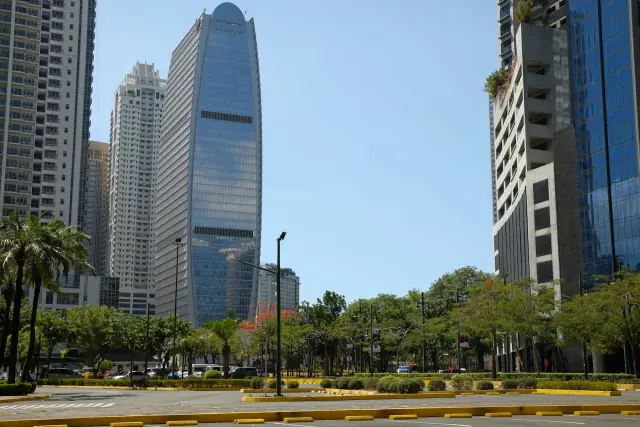
1. Makati — The Nomad Sweet Spot
Makati has no single feature that blows the competition away. It just has everything at a level that works, which turns out to be harder to find than you'd think.
Internet: PLDT Fibr, Globe At Home, and Converge cover the major condo buildings and commercial areas. 50–100 Mbps on a standard fiber plan is realistic. Converge in particular has been consistently fast in the Makati corridors. In a newer building in Legazpi or Salcedo, you can expect that connection to hold through video calls and file uploads without drama.
Coworking: WeWork Ayala Triangle for the premium option — client meetings, corporate setup, ₱500–₱800/day or ₱15,000+/month. KMC Solutions for solid mid-tier with multiple Makati locations, starting around ₱8,000–₱12,000/month. The Collective in Poblacion for a smaller, more creative-industry crowd. Most expats working remotely just work from their condo — the internet quality in newer buildings is good enough, and coworking is more useful when you need a professional address or meeting rooms.
Cost: moderate by Philippine standards, cheap by Western ones. A comfortable Makati lifestyle — Legazpi or Salcedo one-bedroom, eating out most days, occasional nights in Poblacion — runs ₱55,000–₱85,000/month ($985–$1,520). You can do it for ₱40,000 if you live in Poblacion and cook at home. That's a real nomad budget in a genuinely functional urban environment.
Poblacion is the kicker. The neighborhood has become Metro Manila's best for eating and drinking, and it happened fast. Craft cocktail bars, wine shops, cheap Filipino joints, and restaurants that would compete in any Asian capital — all within three walkable blocks. When the workday ends, Makati gives you somewhere worth going. That's not nothing.
What it's not: Makati is not cheap, not beachy, and not exciting in the way a surf island is exciting. The traffic leaving the CBD is brutal at peak hours. If cost is your primary driver, Iloilo will make you happier. If you need the fastest internet available, BGC beats Makati. But for the combination of working infrastructure, cost, food, and social life, Makati is the most complete package.
2. BGC — Fastest Internet, Highest Price
BGC is the city that removes every infrastructure excuse. The fiber speeds are the best in the Philippines — 60–100+ Mbps standard, gigabit plans available in many newer buildings. Power outages are rare to the point that BGC residents occasionally forget they happen elsewhere in the metro. St. Luke's Medical Center is on 5th Avenue, which matters if you're prone to anxiety about healthcare access.
Coworking is strong: WeWork BGC at Net Park is the flagship Manila coworking location — premium, professional, ₱15,000–₱20,000/month for membership, ₱600–₱800/day. KMC Solutions BGC is the mid-tier option, reliable, multiple buildings. Common Ground BGC for a more café-style setup popular with freelancers.
Why is it #2 and not #1? Cost and culture.
BGC is the most expensive place to live in the Philippines. A comfortable lifestyle runs ₱80,000–₱130,000/month ($1,430–₱2,330). That's not a nomad budget — that's a corporate expat-package budget. The condo prices reflect it: ₱35,000–₱65,000 for a one-bedroom. The restaurants reflect it: coffee at ₱180–₱280 per cup, dinners that start at ₱600 before drinks.
The other issue is the culture gap. BGC was designed to be frictionless and it succeeds at that — but frictionless also means culturally thin. The street food scene barely exists; the carinderia culture that makes the rest of the Philippines cheap and social got zoned out. You can spend a week in BGC and leave feeling like you could have been in Dubai or Singapore. If you're a nomad who moved to Asia to actually be in Asia, BGC partially defeats the purpose.
My honest recommendation: BGC makes sense if you're doing video-heavy work that genuinely requires maximum uptime, if you're on a company housing stipend that covers the premium, or if you have a family with kids in ISM or British School Manila. For a solo nomad optimizing for cost and experience, Makati is better.
3. Cebu — IT Park as a Nomad Base
Cebu is where IT Park saves everything.
IT Park (Cebu IT Park) in Lahug is a compact, walkable district purpose-built around BPO companies that need real fiber infrastructure. The side effect: the residential and commercial areas within IT Park have the kind of internet that actually works. I've clocked 150+ Mbps on a fiber plan in IT Park and had it hold steady through a video call. That's a genuine anomaly by Philippine standards.
Cost is real. A studio or one-bedroom in IT Park: ₱15,000–₱35,000/month ($270–$630). A comfortable monthly lifestyle — condo, groceries, eating out several times a week, gym — runs ₱45,000–₱75,000 ($800–$1,350). That's less than Makati, less than BGC, and you get beach access 30 minutes away that neither of those cities can offer.
KMC Cebu and Clock In Coworking are the main coworking options in IT Park — solid dedicated lines, day passes and monthly memberships, air-conditioned. The coffee shop culture in IT Park (Bo's Coffee, Abaca Baking Company) means informal work spots with decent wifi exist for lighter tasks.
The airport is the other selling point: Cebu-Mactan International has direct flights to Hong Kong, Singapore, Kuala Lumpur, Tokyo, Seoul. For nomads who travel regionally, the ability to get out of the country from your base city matters.
The honest caveat: outside IT Park, Cebu's internet consistency drops. Mactan is serviceable. Outlying areas are a gamble. And the city traffic on Osmeña Boulevard at 6pm is the kind of frustration that makes you reconsider what "quality of life" actually means. If you're based in IT Park and working from home or coworking, you'll barely notice the traffic. If you're commuting across the city daily, it grinds.
4. Siargao — Surf First, Work Second
I'm including Siargao because people keep asking about it and it deserves an honest answer rather than a polished one.
Siargao works as a nomad base if, and only if, you accept what it actually is: a surf island where coworking is a secondary priority, Starlink is the functional internet solution, and the whole infrastructure is more fragile than the photos suggest. Typhoon Odette in 2021 flattened significant parts of the island. The rebuild has gone well — by March 2026 it's considerably recovered — but "fragile" is still the right word.
The traditional internet on Siargao is unreliable for serious work. Fiber is limited to the southern part of the island; Globe and PLDT have presence in General Luna but speeds and consistency are inconsistent at best. Starlink has effectively become the functional solution. Before you commit to any accommodation in GL, ask directly whether they have Starlink. The better coworking spaces — Alter Space (₱2,800/month) and COCO Space (₱6,700/month) — both have it. On a good Starlink day: 50–150 Mbps. On a cloudy or rainy day, speeds drop. During a storm, don't schedule anything important.
Cost: moderate and higher than it looks. Almost everything is imported to the island, and prices reflect logistics. A decent villa or one-bedroom in GL: ₱15,000–₱55,000/month. Full monthly lifestyle: ₱35,000–₱80,000. That's comparable to Cebu costs but you get significantly less urban infrastructure for the money.
There's no hospital on the island. I'm saying it here because it belongs in every section: the nearest proper hospital with real capability is in Surigao City, 1.5–3 hours away depending on sea conditions. Travel insurance with medical evacuation is not optional.
So why is it on this list at all? Because the experience is real. Cloud 9 in the morning. Coconut water for ₱40. The particular calm of a place that doesn't care about your career trajectory. For a month or a season, it's hard to beat. For a year-round permanent base where you need consistent work output, most people eventually leave for somewhere more functional and come back for visits. Siargao is better as a destination than a headquarters.
Nomad verdict: Go for 4–8 weeks. Don't make it your year-round base unless you have async work and Starlink confirmed.
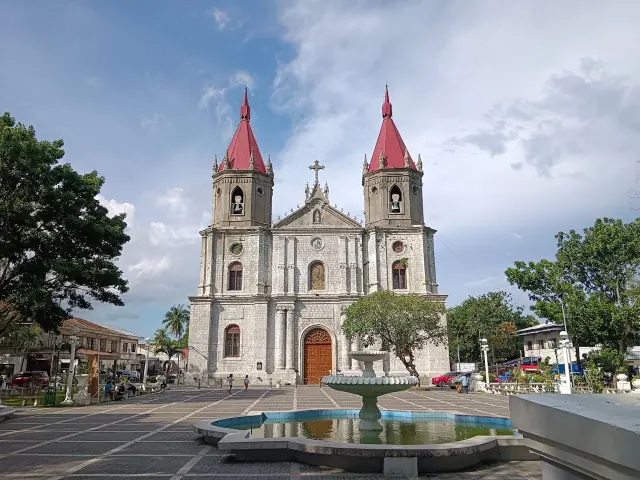
5. Iloilo — The Underrated Option
Every list needs the choice that nobody talks about but probably should. Iloilo is it.
Iloilo City is the cleanest, most organized mid-sized city in the Philippines, with better food than almost anywhere except Pampanga, internet infrastructure driven by its growing IT-BPO sector, and costs that make even Dumaguete look pricey by comparison.
Internet: solid because the BPO sector demanded it. PLDT and Converge both operate in the city with real fiber. Expect 30–50 Mbps in the Business Park and newer residential areas. Not BGC speeds, but absolutely workable for video calls, file sharing, and everything a normal remote job requires. Idealist, Hive Net Work Hub, and Hubworx are the established coworking options — professional setups with fiber, day passes available.
Cost is the headline. A comfortable lifestyle in Iloilo — one-bedroom in the Business Park, groceries, eating out regularly — runs ₱28,000–₱55,000/month ($500–$1,000). At the upper end of that range you're living well, not carefully. A ₱15,000–₱20,000/month condo in the Business Park is a decent apartment in a planned district that actually has working streets and restaurants downstairs.
The food is excellent and inexpensive in a way that changes daily quality of life. La Paz batchoy — the thick noodle soup with pork and crushed chicharon that Iloilo invented — is ₱80–₱150 at Deco's or Ted's Old Timer. Seafood from the Iloilo Fish Market lands at restaurants fresh and cheap. Tatoy's Manokan for a full seafood dinner for two at ₱1,500–₱2,500.
The honest limitation: the expat and nomad community is small and growing, not established and thriving. If you need a ready-made social scene with a coworking café buzzing with laptop people, Iloilo won't give you that immediately. You build it yourself, and the upside is that you end up knowing Ilonggos instead of living in an expat bubble.
Nomad verdict: Best choice if cost is a priority and you're self-sufficient socially. The secret isn't fully out yet, and the window to be in before it gets crowded and expensive is probably 2–3 more years.
What I'd Actually Do
If I were a nomad starting fresh in the Philippines and needed to work seriously: I'd spend my first month in Makati to get oriented, move to Cebu IT Park for a longer stint to test whether the lifestyle fits, and take a 4-week break in Siargao at some point because it's genuinely extraordinary.
Iloilo is where I'd end up if I stayed long enough to care about cost. BGC is where I'd be if the company was paying for it.
The worst nomad mistake I see people make in the Philippines: they optimize for the photo and end up in Siargao or a remote island, discover the internet is unreliable, miss deadlines, get stressed, and leave the country convinced the Philippines "doesn't work" for remote work. It works. You just have to choose the right city.
Compare these cities side-by-side
Cost of living, safety scores, internet speed, and more.