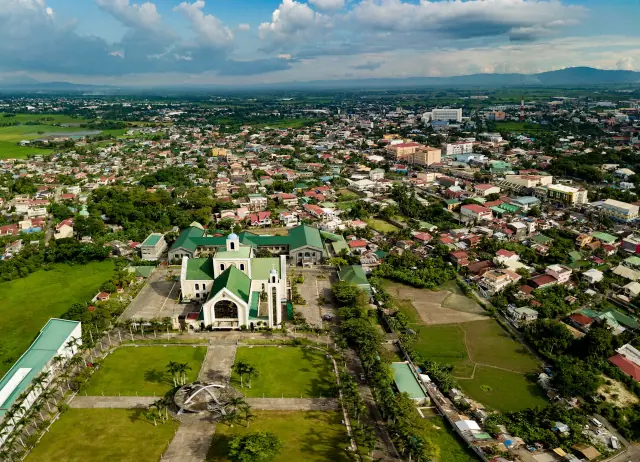
Angeles City
Pampanga
Former US Air Force base town — cheap, English-friendly, and the largest American expat community outside Manila.
At a Glance
Location
Monthly Budget Snapshot
Full breakdown →| Budget Level | Est. Monthly Total (USD) |
|---|---|
| Budget | $600 |
| Moderate | $1,000 |
| Comfortable | $1,800 |
Last updated: 2026-09-04. Amounts in USD.
Living in Angeles City as an Expat
Angeles City has a reputation. Let's deal with it upfront.
Fields Avenue, the entertainment strip that runs through the city's center, is a red-light district. Has been since the US military was based at Clark Air Base next door. The bars, the hostess clubs, the scene that attracts a certain kind of Western sex tourist — that's real and it's not going away. If you're the kind of person who finds that deeply off-putting, Angeles City probably isn't for you.
But here's the thing: the tens of thousands of expats who've built actual lives in Angeles City — mostly American veterans and retirees, but also working-age remote workers and families — chose it for reasons that have nothing to do with Fields Avenue. Clark Freeport Zone has some of the best road infrastructure in the Philippines, the city has reliable electricity (Clark's power infrastructure dates to US military standards), the airport is growing fast, English is everywhere, costs are low, and the food is flat-out excellent. Kapampangan cuisine is arguably the best regional cooking in the country.
You can live well here while staying completely clear of everything around Fields Avenue. Most long-term expats do.
Overview
Angeles City sits in Pampanga province, about 80 kilometers north of Manila. The city grew up alongside Clark Air Base, the largest US air force installation in Asia until it was closed in 1991 after the Mount Pinatubo eruption. The military left; the infrastructure stayed.
Clark Freeport Zone — the area that was the old base — is now an economic zone with a mix of residential communities, golf courses, international schools, industrial parks, and Clark International Airport. It's run under a separate administration from the rest of Angeles, which is why you feel the difference as soon as you enter the gates: proper roads, functioning traffic lights, and none of the typical Philippine municipal chaos.
The surrounding city of Angeles — Balibago, Hensonville, Malabanias — is denser, busier, and more Filipino in character. Both have expat populations, and most long-termers end up somewhere in between.
Best Neighborhoods
Clark Freeport Zone is the premium option. Inside the old base, the roads are wide and well-maintained, there are actual bike paths, greenery, golf courses (Mimosa, Fontana), and quiet residential subdivisions. It's more expensive than Angeles proper — ₱20,000–₱45,000/month for a good apartment or house — but infrastructure quality is genuinely higher. The downside: you're inside a special economic zone, which means you need a vehicle or Grab to get in and out easily.
Hensonville is the main expat neighborhood in Angeles City proper — a grid of streets with condos, small restaurants, cafes, and convenience stores. Walking distance to most things expats need. Rents: ₱10,000–₱25,000/month for a 1–2BR.
Balibago is where Fields Avenue is. Also has legitimate residential options for people who want the city energy and don't care about proximity to the entertainment zone.
Malabanias is further from the entertainment strip and has more regular residential character — houses with yards, lower rents. Good for families.
Cost of Living
Angeles is budget-tier and I'd call it the better value proposition compared to Manila for most expat lifestyles.
- Rent (1BR, Hensonville or Clark): ₱10,000–₱35,000/month ($180–$630)
- Utilities: ₱3,000–₱6,000/month (Clark power is reliable; electric bills reflect AC usage)
- Groceries: SM Clark, Puregold, and Robinsons give full supermarket access
- Eating out: A proper Kapampangan lunch at a local restaurant: ₱200–₱400; dinner at a decent restaurant: ₱400–₱800
- Monthly total (comfortable single person): ₱33,000–₱55,000 ($600–$1,000)
US veterans receiving pension or Social Security live very comfortably here. The VA-connected expat community has infrastructure — English-speaking doctors familiar with American health insurance, pharmacies that stock familiar medications.
Internet & Coworking
Clark Freeport Zone gets priority for solid internet. PLDT and Converge fiber are available in Clark and the main expat neighborhoods; expect 35–60 Mbps reliably. This is better than what most Philippine cities outside Manila offer.
Coworking infrastructure is limited compared to Cebu or Manila — most expats who work remotely either work from home or use the cafes in Clark and Hensonville. iMet Coworking and some business centers in Clark offer day passes and monthly options.
For entrepreneurs, Clark Freeport offers streamlined business registration under SBMA/Clark Development Corporation — fewer bureaucratic layers than dealing with the LGU.
Healthcare
Two solid hospital options:
Angeles University Foundation Medical Center (AUFMC) is the most expat-familiar hospital in the city. English-speaking specialists, modern equipment, and experience dealing with expat patients and international health insurance. Consultation fees: ₱600–₱1,500.
The Medical City Clark opened inside Clark Freeport and caters specifically to the international and expat community. Newer facilities, familiar with American insurance billing, good for routine and moderate-complexity care.
For serious cardiac or neurological cases, Manila hospitals are 1.5–2 hours away depending on traffic. Some expats make day trips to Makati Medical Center or St. Luke's in BGC for specialist consultations.
The VA system doesn't operate in the Philippines, but many American expats use the Tricare program or private international health insurance. Doctors in Angeles are experienced with this paperwork.
Safety
Angeles City is a 6/10 on safety, and the score requires context.
Clark Freeport Zone is well-secured — you pass through security checkpoints entering the zone, and the internal streets are well-lit and monitored. Crime inside Clark is genuinely low.
Angeles City proper has higher crime statistics than places like Dumaguete or Iloilo. Petty theft, occasional muggings around the entertainment areas, and the general elevated risk that comes with a city that has a large transient population passing through. Standard Philippines urban precautions apply, amplified slightly.
Most long-term expats who've been here a decade have no incidents to report. They know which areas to avoid at which hours, and they live within Clark or in Hensonville where the risk is lower. Know the geography before you walk around at 2am.
Food & Dining
This is where I get enthusiastic and stay there.
Kapampangan food is the greatest regional cuisine in the Philippines — I'll take that debate anytime. Pampanga is where sisig was invented, where kare-kare (oxtail and tripe in peanut sauce) is at its highest form, where morcon (beef roll), dinuguan (pork blood stew), and tamales have been refined over generations. The Kapampangans are proud of their food and the pride is warranted.
Aling Lucing's on Sto. Rosario Street is where sisig was invented. The original Lucia Cunanan, now deceased, created sizzling sisig from pig face and ears — the version you find everywhere in the Philippines that isn't really sisig started here. The current operation keeps the legacy. Go. Eat sisig. Order extra rice.
Bale Dutung (the house of wood) is the famed restaurant of artist and food writer Claude Tayag. It's reservation-only, prix-fixe, and serves the most refined Kapampangan table I've had anywhere. Not cheap for Angeles standards (₱2,000+/person), but if you're serious about Philippine food, this is required.
Razon's of Guagua — the original location is in nearby Guagua but there are branches in Angeles — for halo-halo that's different from the Manila version: simpler, milkier, no purple yam and neon ice cream. Try both and form an opinion.
For daily eating, the carinderias and local restaurants around Hensonville feed you well for ₱150–₱300 per meal.
Getting Around
Clark International Airport (CRK) is Angeles's major advantage over most Philippine cities. It has a growing roster of direct international flights — Kuala Lumpur, Singapore, Hong Kong, Macau, South Korea, and domestic routes — and it's a low-stress airport. No Manila traffic to fight. Check CRK first before reflexively booking through NAIA.
Getting to Manila: the NLEX expressway makes the drive about 1.5 hours off-peak. Add an hour during Manila rush hour. RORO buses run from Dau terminal to Manila. There's a TPlex extension in development that will improve connectivity further.
Within Angeles: Grab is reliable. Jeepneys cover the main routes cheaply. Inside Clark Freeport, some expats use golf carts and bicycles because the roads actually permit it. A car or scooter is useful if you're going to live here long-term and want to explore the region.
Day trips: Pampanga is rich territory. Mount Arayat National Park (dormant volcano, 45 minutes). San Fernando's Giant Lantern Festival in December (the best Christmas lights tradition in the Philippines). Hot springs in Mabalacat. The flamingo colony at Candaba Swamp during migratory season.
Expat Community
The largest American expat community outside Manila lives in Angeles City. This is not a small gathering — this is a real, multi-generational community with its own infrastructure. VFW Post 2485 has been operating here for decades. There are American Legion posts, expat social clubs, church groups, and organized activities running every week.
The community skews older and is heavily veteran-and-retiree. If you're 35 and working remotely, you'll find people your age, but the social gravity here is older Americans who came for the familiar culture, the cheap cost of living, and the Filipino-American connection that Clark Air Base created. Some are married to Filipinas they met in the 1980s or 1990s; others are newer arrivals following the same path.
There's also a Korean community in Clark Freeport, tied to business interests and language school students.
Climate & Weather
Pampanga is lowland Luzon — hot, humid, tropical. No escape from the heat here. Temperatures run 24–36°C, and the dry season (November–April) is pleasant; the wet season (June–October) is very wet.
Clark is particularly susceptible to ash and dust from Mount Pinatubo. The 1991 eruption is why the base was abandoned, and while major eruptions aren't a current concern, smaller lahar events during heavy rains are occasionally an issue for roads in the region. Worth knowing.
Typhoons track toward Luzon regularly but Angeles, being inland and slightly protected by the Cordilleras to the north, takes less direct hits than coastal areas.
Who Should (and Shouldn't) Move Here
Move here if:
- You're an American retiree or veteran who wants a familiar social environment and cheap costs
- You want excellent airport access and a functional road network
- Kapampangan food is your idea of paradise
- You want a base that's Manila-adjacent without actually living in Manila
- You're pragmatic about the city's reputation and don't need to perform virtue about it
Don't move here if:
- You're deeply uncomfortable with the entertainment industry presence in the city
- You want a quiet, small-town feel — Angeles is a real city with city noise and complexity
- You prioritize safety above most other factors (Angeles is safe enough but not Dumaguete-level)
- You want beach access anywhere near you (the nearest beach is a long drive; Clark is inland)
Compare Angeles City with other cities
Side-by-side cost, safety, and internet comparison.